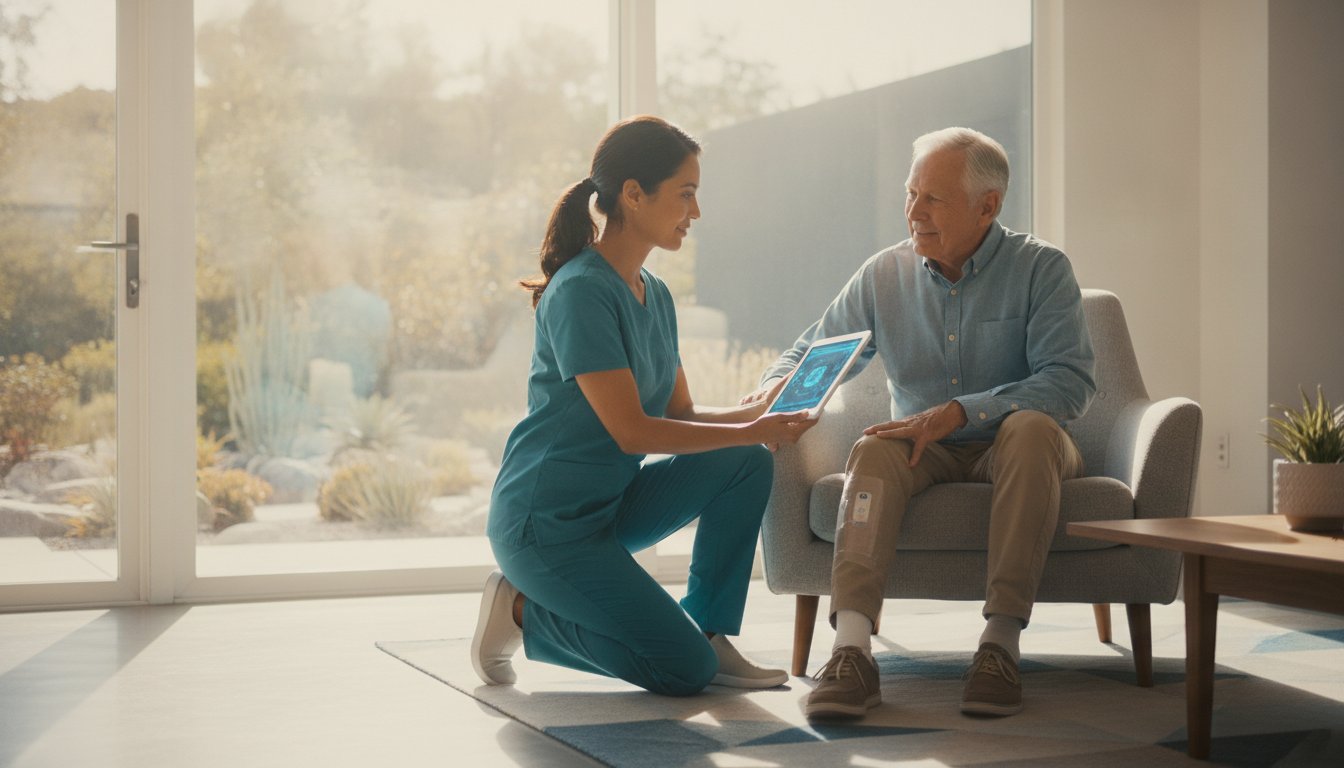
For decades, the traditional hospital clinic was viewed as the ultimate destination for complex healing, yet in 2026, the most sophisticated medical interventions are no longer confined to institutional settings. When weighing the benefits of a wound care clinic vs at-home service, it's easy to assume that a large facility is the only place to find elite clinical expertise. You likely know the physical exhaustion that comes with navigating Southern California traffic for a brief appointment, as well as the persistent anxiety regarding exposure to hospital-acquired infections in crowded waiting rooms.
This comparison reveals how advanced mobile specialists now deliver amniotic membrane grafts and bio-engineered skin substitutes with the same scientific rigor as a major medical center. You'll learn how to leverage the 2026 Medicare reimbursement updates and new CPT codes for remote monitoring to optimize your recovery. We will detail the methodology behind bringing hospital-grade debridement directly to your bedside while ensuring seamless coordination with your existing care team. This analysis provides a clear roadmap to achieving faster healing trajectories without the logistical burdens of traditional outpatient visits, allowing you to prioritize both clinical excellence and your daily quality of life.
Key Takeaways
- Understand the clinical and logistical differences between a wound care clinic vs at-home service, focusing on how bedside specialist visits eliminate the friction of Southern California hospital travel.
- Learn how mobile wound care matches hospital standards by delivering advanced interventions like amniotic membrane grafts and bio-engineered skin substitutes in a residential environment.
- Evaluate the physiological benefits of home-based recovery, where lower stress levels and reduced exposure to hospital-acquired infections support faster healing outcomes.
- Clarify how 2026 Medicare Part B updates apply to mobile specialist consultations, ensuring your treatment remains both clinically superior and financially seamless.
- Discover the Healix360 approach to chronic wound management, which combines high-tech diagnostic tools with a personalized roadmap for long-term vitality.
Wound Care Clinic vs. At-Home Service: Defining the Modern Choice
The choice between a wound care clinic vs at-home service represents more than a logistical decision; it's a strategic shift in how we approach systemic recovery. For decades, the outpatient clinic was the only venue for advanced procedures, but the landscape of 2026 has been reshaped by the decentralization of medical technology. Today, regenerative breakthroughs like bio-engineered skin substitutes and amniotic membrane grafts are no longer tethered to hospital infrastructure. This evolution allows board-certified specialists to bring the entire clinical theater to the patient's bedside, ensuring that the process of wound healing isn't interrupted by the physical and emotional toll of frequent travel. For Southern California residents, this transition marks the end of compromising between high-level clinical outcomes and personal comfort.
The Outpatient Clinic: A Legacy Model
Outpatient clinics often carry hidden burdens that extend far beyond the medical bill. In a sprawling metropolis like Los Angeles, a simple 20-minute debridement can translate into four hours of travel and waiting room time. This logistical friction isn't just an inconvenience. It's a physiological barrier. Institutional environments can inadvertently increase patient stress and cortisol levels, which directly inhibits the body's natural inflammatory response and slows cell proliferation. For patients managing diabetic ulcers or pressure injuries, the physical strain of being moved into a vehicle can cause micro-trauma to the wound site, potentially resetting the clock on weeks of progress. The legacy model relies on the patient coming to the technology, but modern medicine has reversed this requirement.
The Rise of the Mobile Wound Specialist
A new era of elite care has emerged as specialists embrace mobile-first delivery models to bypass the inefficiencies of fixed-location facilities. It's vital to distinguish between general home health nursing and specialized mobile wound intervention. While home health provides essential supportive care, a mobile specialist performs high-acuity procedures that were once exclusive to the hospital. Mobile wound care is a specialist-led, procedural medical service that delivers hospital-grade diagnostics and regenerative treatments directly within a patient's residential environment. This model serves three primary profiles in Southern California particularly well:
- High-achievers: Individuals who view their health as their most valuable asset and refuse to lose hours to transit.
- The Immunocompromised: Patients who must avoid the pathogens and hospital-acquired infections often found in high-traffic clinical settings.
- Post-Surgical Patients: Those whose mobility is temporarily limited and for whom any unnecessary movement poses a risk to surgical site integrity.
By placing the specialist at the center of the home environment, the care plan becomes a seamless part of the patient's lifestyle rather than a disruptive event. This proactive approach ensures that no detail of the recovery journey is overlooked, from the precision of the debridement to the optimization of the local wound environment.
Clinical Parity: Hospital-Grade Technology in a Residential Setting
A common misconception persists that "real" medical procedures require the sterile coldness of a hospital wing. In reality, the technological gap between a wound care clinic vs at-home service has effectively closed. Modern mobile units are equipped with the same high-acuity tools found in premier outpatient departments, allowing specialists to perform complex interventions at the bedside. We maintain clinical excellence through rigorous sterile protocols, utilizing single-use surgical instruments and specialized lighting to create a controlled environment within your home. This approach ensures that your recovery is supported by the highest standards of safety and scientific precision.
Regenerative Medicine at the Bedside
Regenerative science has moved beyond the laboratory and into the residential space. Specialists now apply amniotic membrane grafts directly to compromised tissue, providing a biological scaffold that accelerates the body's natural repair mechanisms. This level of care is a cornerstone of chronic diabetic ulcer treatment, where the introduction of stem cell-derived factors can restart the healing process in stagnant wounds. For patients requiring continuous management, portable negative pressure wound therapy (NPWT) systems provide the same sub-atmospheric pressure as hospital-grade pumps but with the freedom of a wearable device. These bio-engineered skin substitutes and advanced therapies are documented through real-time digital imaging, ensuring that every millimeter of progress is analyzed and recorded.
Sharp Debridement and Diagnostic Testing
Precision interventions like sharp debridement are performed safely outside of a traditional surgical suite. By expertly removing devitalized tissue, the specialist creates an environment where new cells can thrive. To guide this process, we utilize in-home wound culture and sensitivity testing to identify bacterial loads and select the most effective antibiotic protocols. This diagnostic rigor extends to vascular health, where mobile assessments help manage edema in legs to ensure adequate blood flow to the wound site. While Medicare-covered home health services provide essential general care, our mobile specialist model offers a higher tier of procedural intervention. You can secure this level of mastery by choosing specialized mobile wound care that prioritizes both your health and your time.
Healing Outcomes: Why Home Environments May Accelerate Recovery
The biological environment is a primary determinant of healing speed. When debating a wound care clinic vs at-home service, patients often focus on the hardware, yet the physiological state of the individual is equally critical to the outcome. Healing isn't a passive event; it's an energy-intensive process that requires the body to be in a parasympathetic state. Clinical environments, while sterile, often induce a "white coat" stress response. This elevation in cortisol can directly inhibit the inflammatory phase of repair, stalling the migration of essential healing cells. By transitioning care to the home, we align medical intervention with the body’s natural rhythm, ensuring that every biological resource is dedicated to tissue synthesis.
The Biological Advantage of the Home Setting
A home environment offers a level of stability that a busy clinic cannot replicate. Consistent nutrition and undisturbed rest are the twin pillars of recovery, yet these are frequently disrupted by the logistical demands of outpatient travel. For those managing fragile bed sores and ulcers, the physical trauma of being moved into a vehicle can cause shearing forces that damage delicate new granulation tissue. In contrast, bedside visits allow for personalized care cadences that adjust to the wound’s daily progression. This consistency ensures 100% compliance with treatment plans, as the specialist arrives on your schedule, removing the risk of missed appointments due to exhaustion or transportation hurdles.
Mitigating the Risk of Cross-Contamination
The microbial landscape of a private residence is significantly more predictable than that of a public waiting room. For immunocompromised patients or those with multi-drug resistant organisms (MDROs), avoiding high-traffic medical facilities is a strategic necessity rather than a mere convenience. In a clinical study on at-home wound care, researchers highlighted that treating patients in their own environment minimizes exposure to the pathogens responsible for hospital-acquired infections. Specialized mobile care protocols reduce the risk of secondary infections by bypassing the high-microbial density of communal treatment areas and shared medical equipment. This protective barrier is essential for maintaining a clean wound bed and preventing the complications that lead to hospital readmissions. When you choose a wound care clinic vs at-home service, you're choosing which microbial ecosystem will influence your recovery. The privacy of your home provides a controlled sanctuary where science and comfort converge to produce superior healing trajectories.

Insurance and Logistics: Navigating Medicare in Southern California
Financial clarity is just as essential as clinical precision when managing chronic recovery. Navigating the choice between a wound care clinic vs at-home service requires a clear understanding of how 2026 Medicare policies impact your access to advanced biologics. While traditional clinics often operate as hospital outpatient departments with complex facility fees, mobile specialists provide a streamlined alternative that integrates directly with your existing coverage. We ensure that the administrative process remains as seamless as the medical intervention itself, allowing you to focus entirely on your long-term vitality.
Understanding Medicare Part B vs. Part A
A common point of confusion for patients involves the distinction between general home health and specialized intervention. Many assume that in-home care is strictly covered under Medicare Part A. However, mobile specialists typically bill under Medicare Part B as a "physician-level" service. This distinction is vital. It allows you to receive high-acuity procedural care, such as amniotic membrane grafts, while still working with a Home Health Agency (HHA) for general nursing and physical therapy. To qualify for these mobile specialist visits in 2026, the following criteria generally apply:
- Clinical Necessity: A physician’s order confirming the need for specialized wound management.
- Chronic Status: Documentation of a non-healing wound, such as a diabetic or pressure ulcer, that requires advanced intervention.
- Coverage Verification: An initial assessment to confirm that specific regenerative products meet the flat national reimbursement rates established for 2026.
Healix360 manages the intricate billing for high-value regenerative grafts and procedures. This includes navigating the 2026 CMS flat reimbursement rates of approximately $127.14 per square centimeter for skin substitutes, ensuring that you receive hospital-grade technology without unexpected financial friction.
Seamless Coordination with Your Healthcare Team
We act as a visionary strategist for your recovery, bridging the gap between hospital discharge and daily life. Our team partners with your primary care physician and hospital discharge planners to maintain a continuous narrative of care. This coordination extends to the logistical management of Durable Medical Equipment (DME), such as Negative Pressure Wound Therapy pumps, which we order and manage on your behalf. By serving Glendale, Beverly Hills, and the greater Los Angeles area, we bring elite care to your doorstep, eliminating the stress of urban transit. You can initiate this partnership today by requesting a Medicare-compliant wound evaluation to determine your eligibility for at-home specialist care.
The transition from a hospital to a residential setting should never result in a drop in clinical standards. Our data-driven approach ensures that every vascular assessment and debridement is documented and shared with your entire medical team. This transparency creates a sense of stability and thoroughness, reinforcing the idea that your health is being managed by an elite guide who values both scientific rigor and your personal quality of life.
The Healix360 Difference: Visionary Wound Care in Los Angeles
Elite health management requires a partner who views recovery as a foundational component of long-term physical excellence. When evaluating a wound care clinic vs at-home service, the deciding factor isn't just the location; it's the depth of the clinical strategy. Healix360 stands as a visionary strategist for patients in Beverly Hills, Glendale, and the greater Los Angeles area, blending clinical authority with a philosophy of personal empowerment. We don't just manage symptoms. We orchestrate a precise biological response that prioritizes your systemic health and long-term vitality. This approach ensures that your journey toward healing is both data-driven and deeply human centric.
A Roadmap to Total-Body Vitality
Our methodology goes beyond the bandage to address the underlying metabolic and vascular causes of chronic wounds. By integrating stem cell therapy and amniotic allografts into our standard mobile protocols, we provide a level of regenerative precision that was once reserved for elite research institutions. This focus on advanced cellular science is critical for preventing amputations and long-term systemic complications. We treat the individual as a whole system, recognizing that a non-healing ulcer is often a signal of broader physiological imbalances. Los Angeles high-achievers choose Healix360 because they view their health as their most valuable asset and demand a care plan that mirrors their own commitment to excellence. Our success stories are defined by restored quality of life and the return to active, unencumbered lifestyles for Southern California residents who refused to accept the limitations of traditional outpatient care.
Getting Started with Healix360
The transition to specialized mobile care is designed to be as effortless as the recovery itself. We've streamlined our intake process to ensure that clinical intervention begins without the delays often found in hospital systems. Your journey starts with a simple three-step process to secure your bedside evaluation in Los Angeles or the surrounding communities:
- Initial Inquiry: Contact our team to verify your insurance and establish your clinical needs.
- Expert Coordination: We partner with your existing physicians to gather medical history and synchronize your care roadmap.
- Bedside Assessment: A board-certified specialist arrives at your residence for a comprehensive medical evaluation and diagnostic workup.
During this initial assessment, you'll receive a personalized wound care treatment plan that outlines the specific regenerative therapies and diagnostic cadences required for your unique recovery. This thoroughness ensures that no detail of your health is overlooked. You can take the first step toward a superior healing trajectory by choosing a model where cutting-edge science meets the personal journey of self-actualization. Schedule your advanced bedside wound evaluation today.
Choosing between a wound care clinic vs at-home service is ultimately a choice about how you value your time and your biological potential. By placing the specialist at the center of your private environment, Healix360 eliminates the logistical friction of the traditional medical model. We provide the mastery and technology needed to navigate complex health data, translating it into a clear, actionable roadmap for your recovery. Your health deserves the precision of a visionary partner who is dedicated to your physical excellence and long-term vitality.
Embracing a New Standard of Clinical Excellence
The evolution of decentralized medicine has transformed the choice between a wound care clinic vs at-home service into a strategic decision for lifestyle optimization. You don't have to sacrifice hospital-grade technology for the comfort of your own residence. By integrating specialists in regenerative amniotic grafts directly into your home environment, you align advanced science with your body's natural healing rhythms. This shift effectively eliminates the physical strain of transit while leveraging the latest Medicare Part B reimbursement structures to ensure your care remains both elite and accessible.
Healix360 serves as your visionary strategist throughout Los Angeles, Glendale, and Beverly Hills, providing a seamless roadmap to total-body vitality. As a dedicated Medicare Part B provider, we orchestrate every detail of your treatment plan, from sharp debridement to vascular assessments, all within a sanctuary that minimizes infection risks. Your health is your most valuable asset, and it deserves a proactive approach that values both scientific precision and your personal time. Experience the future of wound healing with a Healix360 bedside consultation. We're ready to partner with you to restore your mobility and confidence.
Frequently Asked Questions
Is at-home wound care as effective as a hospital-based wound center?
Yes, mobile care is clinically equivalent to hospital-based centers. By bringing regenerative technologies directly to the bedside, we match the outcomes of a traditional facility while removing the physiological stress of travel. This stability is a key differentiator when comparing a wound care clinic vs at-home service, as it allows your body to remain in a restorative state throughout the recovery process.
Does Medicare Part B cover mobile wound specialist visits in Southern California?
Medicare Part B covers mobile wound specialist visits as a physician-level medical service. Unlike general home health nursing which falls under Part A, these specialist visits are billed under the Physician Fee Schedule. This allows Southern California patients to access advanced procedural care and high-value biologics while remaining in their residential environment.
What kind of procedures can be performed by a mobile wound care specialist?
Specialists perform a wide range of advanced interventions including sharp debridement and the application of amniotic membrane grafts. They also manage negative pressure wound therapy (NPWT) and conduct bedside diagnostic testing, such as wound culture and sensitivity assessments. These procedures are designed to restart the healing process in chronic or non-healing ulcers.
Can I receive mobile wound care while also having a home health nurse?
You can receive mobile specialist care while simultaneously working with a home health agency. These services are complementary; the home health nurse provides general wound dressing changes and monitoring, while the mobile specialist performs the high-acuity procedures. This partnership ensures a seamless coordination of care that addresses every detail of your recovery.
How do mobile wound specialists prevent infections during in-home debridement?
We prevent infections by utilizing single-use surgical instruments and adhering to strict aseptic protocols during every bedside procedure. The home environment often presents a lower risk of cross-contamination compared to a high-traffic wound care clinic vs at-home service. By avoiding public waiting rooms, you minimize your exposure to the pathogens responsible for hospital-acquired infections.
What areas of Southern California does Healix360 serve for mobile visits?
Healix360 provides mobile specialist visits across the greater Los Angeles area, specifically serving Glendale, Beverly Hills, and surrounding Southern California communities. Our team is organized to bring elite clinical mastery directly to your doorstep. This geographical focus ensures that high-achieving patients can prioritize their health without the logistical friction of navigating regional traffic.
Are amniotic membrane grafts and skin substitutes available for home patients?
Amniotic membrane grafts and bio-engineered skin substitutes are fully available for in-home application. These regenerative therapies provide a biological scaffold that supports rapid tissue synthesis and cell proliferation. Our specialists integrate these advanced materials into your personalized treatment plan to optimize long-term healing outcomes and prevent systemic complications.
How quickly can a Healix360 specialist see a patient in Los Angeles or Glendale?
We prioritize a rapid transition from your initial inquiry to your first bedside evaluation. Once we verify your insurance and receive a physician's order, our team coordinates the logistics to schedule your assessment in Los Angeles or Glendale. This efficient intake process ensures that your recovery roadmap is established with scientific precision and minimal administrative delay.


