What if the week you spend waiting for a wound to heal is actually the critical window where your body loses its ability to repair itself? It's natural to feel hesitant about navigating a sterile hospital or managing the logistical strain of transporting an elderly parent to a specialist. You might assume that a wound that isn't actively worsening is simply in a resting phase, but the risks of delaying wound treatment involve a silent, systemic decline that observation alone cannot halt.
We recognize the confusion that arises when healing stalls and the desire for expert care that doesn't require leaving your home. This article explores the biological point of no return for chronic wounds and how mobile advanced care utilizes regenerative technology to preempt these risks. You'll discover how bedside specialists use sharp debridement and bio-engineered skin substitutes to restore your vitality, providing a clear roadmap to prevent amputation and maintain your long-term physical excellence.
Key Takeaways
- Identify the biological point of no return where a wound stalls in the inflammatory phase and ceases its natural healing progression.
- Recognize the systemic risks of delaying wound treatment, including the dangerous escalation from localized bacteria to deep-tissue cellulitis and bone infections.
- Compare the high costs and physical strain of emergency room visits against the precision and convenience of proactive mobile wound assessments.
- Understand how regenerative interventions like amniotic grafts and bio-engineered skin substitutes jumpstart your body’s cellular repair mechanisms.
- Learn how to access specialized bedside care that eliminates transport trauma and prioritizes the preservation of your mobility and independence.
Understanding Chronic Wound Stagnation: The Biological Point of No Return
True healing is a sophisticated biological symphony that requires every "instrument" to play in perfect time. When a wound stalls, it isn't simply resting; it has entered a state of chronic wound stagnation. This transition signifies that your body is trapped in the inflammatory phase, a high-alert state where the immune system is stuck in a loop of trying to clear debris without moving toward repair. One of the major risks of delaying wound treatment is the onset of cellular senescence. In this state, the cells at the wound site stop dividing and lose their ability to respond to growth signals. While a standard bandage offers basic protection, it lacks the biological "jumpstart" needed to restart a stalled clock. Without expert intervention, the wound remains a static, open door to infection and systemic vulnerability.
The 30-Day Rule in Wound Management
Specialists utilize the four-week mark as a definitive clinical threshold for diagnostic assessment. If a wound has not achieved a 50% reduction in size within 30 days, the biological trajectory has shifted from acute recovery to a chronic state. This distinction is vital because a chronic wound represents a complete breakdown of the body’s regenerative signaling. It's no longer a matter of time; it's a matter of biological failure. By acknowledging this 30-day window, we can pivot from passive observation to proactive, specialized care that addresses the underlying cellular dysfunction before the damage becomes irreversible.
Biofilms: The Invisible Barrier to Healing
Stagnation is frequently maintained by the presence of biofilms, which are complex, microscopic bacterial colonies that construct a physical, protective shield over the injury. These structures are incredibly resilient; simple washing at home or over-the-counter ointments cannot penetrate their dense matrix. Biofilms effectively "blind" your immune system, preventing it from identifying and neutralizing the bacteria within. This is where specialized wound debridement becomes the primary tool for recovery. By manually removing this invisible barrier and the surrounding senescent tissue, specialists physically clear the path for new, healthy cells to populate the area. This reset is essential to prevent the risks of delaying wound treatment from escalating into deep-tissue infections or systemic crises.
Escalating Physical Risks: From Localized Infection to Systemic Crisis
A wound is never just a surface-level concern. It's a dynamic environment where bacteria can rapidly migrate from the epidermis into the deeper fascial layers. One of the most immediate risks of delaying wound treatment is the development of cellulitis, a spreading bacterial infection that causes painful swelling and can quickly overwhelm the local immune response. When clinical intervention is postponed, these pathogens don't remain stagnant. They often penetrate deeper, reaching the bone to cause osteomyelitis. This condition is notoriously difficult to treat, often requiring months of aggressive intravenous antibiotics and, in many cases, surgical intervention to remove infected bone tissue.
The biological stakes are particularly high for those managing chronic conditions. Clinical research has documented the profound impact of diagnostic delay on healing, showing a direct correlation between the length of time a wound remains open and the likelihood of systemic failure. If the infection enters the bloodstream, it triggers sepsis, a life-threatening systemic crisis that demands emergency hospitalization. Securing a professional bedside evaluation early in the process can stop this progression before your body's defensive systems are breached.
Tissue Necrosis and Gangrene
When chronic inflammation compromises blood flow, the surrounding tissue begins to die, a process known as necrosis. This can lead to gangrene, which presents in two primary forms. Dry gangrene involves a slow shriveling of tissue due to poor circulation, while wet gangrene is a rapid, bacterial-driven emergency characterized by swelling and blistering. Both represent a medical crisis where the tissue is often no longer salvageable. Warning signs like a foul odor, skin discoloration, or a sudden loss of sensation indicate that surgical intervention may be the only remaining option to save the limb.
The Amputation Pipeline
The progression from a minor injury to a major surgical procedure is often faster than patients realize. This is especially true in the context of diabetic ulcer treatment, where neuropathy can mask the severity of the damage. Data shows that 85% of lower-extremity amputations are preceded by an untreated foot ulcer. In elderly patients, a "cascade effect" often occurs; a single unhealed wound leads to decreased mobility, which then triggers secondary complications like pneumonia or blood clots. Proactive care isn't just about closing a wound; it's about disrupting this pipeline to preserve your independence and physical excellence.
The Economic and Quality of Life Burden of Waiting
Choosing to wait for a wound to heal on its own is often perceived as a conservative, cost-saving measure. In reality, it's a high-stakes gamble with both your finances and your future independence. One of the most significant risks of delaying wound treatment is the inevitable transition from a manageable outpatient concern to a catastrophic medical event. While an initial injury might seem minor, the factors that delay wound healing, such as underlying vascular health or glycemic control, can quickly turn a simple ulcer into a multi-billion dollar public health challenge. For the individual, this translates to a cycle of escalating costs that far exceed the investment in proactive, specialized intervention.
Fortunately, the modern healthcare landscape prioritizes proactive prevention through accessible mobile services. Medicare Part B frequently covers mobile wound specialists, which significantly reduces the financial barriers to receiving elite care at the bedside. By shifting the site of care from a high-overhead facility to the comfort of your home, you're not just saving money; you're preserving your most valuable asset: your time. This strategic approach to health ensures that expert resources are directed toward healing rather than simply managing a crisis in an emergency room setting.
The Cost of "Watchful Waiting"
The price of "waiting and seeing" is often hidden until it becomes overwhelming. A single hospital stay for a wound-related complication can easily exceed $50,000, a figure that stands in stark contrast to the cost-effectiveness of a mobile consultation. Implementing at home wound care preserves family resources and protects against the emotional exhaustion of caregiver burnout. When a wound doesn't heal, the burden isn't just financial. It's the stress of constant dressing changes, the anxiety of monitoring for infection, and the strain on family dynamics that occurs when a loved one’s health is in a state of flux.
Impact on Long-term Vitality
Physical excellence depends on the ability to move freely. When a non-healing wound limits your mobility, it triggers a systemic decline that affects your entire body. Prolonged inactivity leads to muscle atrophy and cardiovascular weakening, making it harder for your heart to pump the very blood your wound needs for repair. This creates a dangerous feedback loop where restricted movement further increases the risks of delaying wound treatment. We view rapid healing as a vital strategy for lifestyle optimization. By resolving the inflammatory state quickly, we help you maintain the physical vitality required to enjoy your life to its fullest, ensuring that a temporary injury doesn't become a permanent limitation on your independence.

Breaking the Access Barrier: Why Mobility Issues Shouldn’t Delay Care
Transporting a patient with a non-healing wound is often a logistical nightmare that families feel ill-equipped to handle. For those managing a bed sores ulcer, the physical act of moving from a bed to a vehicle can cause significant "wound trauma." This term refers to the unintentional friction, shear, or pressure that occurs during transit, which can reverse days of biological progress in a single afternoon. In Southern California, this challenge is compounded by notorious traffic gridlock and extended clinical wait times, which frequently lead patients to postpone essential appointments. These environmental friction points are major contributors to the risks of delaying wound treatment, as the perceived difficulty of access often outweighs the perceived urgency of the wound itself.
By 2026, the medical community has recognized the "hospital-at-home" model as the definitive gold standard for complex wound management. This shift toward value-based care prioritizes the patient's physiological stability by eliminating the systemic stress of traditional facility visits. It allows the individual to remain the center of the journey, receiving elite care without the exhaustion of a commute.
The Mobile Advantage in Southern California
Whether you are located in Glendale, Los Angeles, or Beverly Hills, the ability to bypass the commute is a significant clinical advantage that directly impacts healing rates. Mobile specialists assess patients within their actual daily environment, which allows us to identify lifestyle factors that might be stalling recovery. This might include identifying improper seating surfaces, assessing the quality of home nutrition, or observing how a patient moves within their space. This holistic view is impossible to capture in a sterile clinic setting. We act as a visionary strategist for your health, seamlessly coordinating with home health agencies and case managers to ensure your personalized treatment plan is executed with total precision.
Patient-Centered Technology at the Bedside
Modern mobile care is no longer synonymous with basic first aid; it's a high-tech diagnostic environment. We utilize sophisticated tools directly at the bedside to ensure no detail of your health is overlooked. Our specialists employ:
- Mobile Negative Pressure Wound Therapy (NPWT) to manage exudate and promote blood flow.
- Advanced sharp debridement tools to remove necrotic tissue and biofilms.
- Digital wound imaging and data analysis to track granular healing progress.
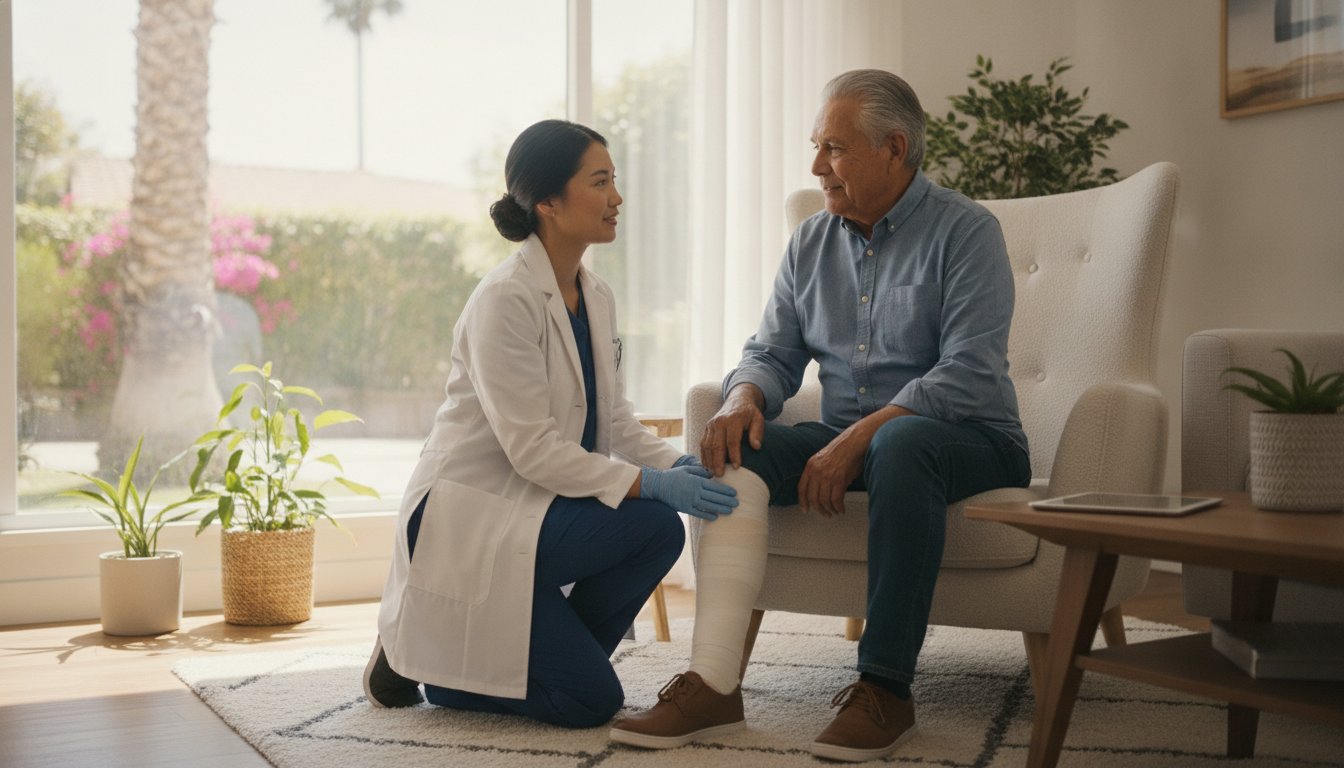
Healix360 brings the full technical capabilities of a world-class wound center into your living room to ensure your recovery is powered by the latest scientific breakthroughs. If mobility challenges have kept you from seeking the help you need, you can request a professional bedside evaluation to mitigate the risks of delaying wound treatment and reclaim your physical vitality.
Proactive Intervention: Preempting Risks with Regenerative Medicine
Regenerative medicine represents the frontier of modern wound management. While traditional methods focus on passive protection, advanced interventions like amniotic membrane grafts and stem cell therapy actively jumpstart biological processes that have fallen dormant. One of the most overlooked risks of delaying wound treatment is the potential loss of eligibility for these high-end treatments. If a wound is allowed to progress into deep-tissue necrosis or systemic infection, the biological environment may no longer support the integration of regenerative materials. By intervening the moment a wound stalls, we ensure you have access to the most effective technological breakthroughs available before the window for regeneration closes.
Utilizing a skin substitute early in the treatment cycle provides a vital biological shield before pathogens can establish a foothold. Medicare frequently covers these advanced procedures when a specialist documents medical necessity early in the recovery journey. Under the CY 2026 Physician Fee Schedule guidelines, clear and thorough documentation of a non-healing state is essential for compliance and reimbursement. Our specialists handle this data-driven process at your bedside, ensuring that your path to physical excellence is supported by both clinical expertise and administrative precision.
Regenerative Grafts: The Science of "New Growth"
Bio-engineered substitutes act as a sophisticated scaffold, providing a structural framework that invites your own cells to migrate and divide. Amniotic allografts are particularly effective because they possess natural anti-inflammatory and anti-microbial properties that calm the localized environment. These grafts aren't merely a late-stage option; they are the elite choice for high-achievers who prioritize a rapid return to their active lifestyle. We use these materials to rewrite the biological narrative of your wound, turning a static injury into a site of active, healthy regeneration.
Next Steps: Securing a Mobile Evaluation
Securing expert care in Southern California doesn't have to be a logistical burden. When you schedule a bedside assessment, our team arrives fully equipped to perform a comprehensive diagnostic evaluation and initiate a personalized treatment plan. To prepare for your first visit, please have your medical history, current medication list, and insurance information ready for review. This allows our visionary strategist to build an actionable roadmap tailored to your specific physiology and long-term health goals. Don't wait for a physical crisis to seek professional guidance. By choosing a proactive partner today, you can mitigate the risks of delaying wound treatment and secure your long-term vitality from the comfort of your home.
Securing Your Path to Physical Excellence
A non-healing wound is a dynamic biological challenge that requires an intentional, data-driven strategy. We've explored how the risks of delaying wound treatment manifest as cellular stagnation and systemic vulnerability, but these outcomes aren't inevitable. By prioritizing early intervention through mobile care, you protect your body from the cascade of complications that often follows a period of "watchful waiting."
Our board-certified specialists act as elite guides in your recovery process. As a Medicare Part B provider, we bring advanced amniotic grafts and regenerative medicine directly to your home, ensuring that your treatment is both sophisticated and accessible. This model of care places you at the center of the journey, allowing you to focus on your long-term vitality rather than the logistics of clinical transport. We combine scientific rigor with a human-centric approach to ensure no detail of your health is overlooked.
Your physical excellence is your most valuable asset. Take a proactive step today to secure your independence and restore your quality of life with a partner who understands the intersection of science and vitality.
Request a Bedside Evaluation from Southern California’s Advanced Wound Specialists
Frequently Asked Questions
What are the first signs that a wound is becoming chronic or non-healing?
A wound is typically classified as chronic if it fails to show significant progress, specifically a 50% reduction in size, within a 30-day window. You may notice stagnant edges, persistent inflammation, or an increase in clear or yellowish fluid known as exudate. These signs indicate that the body's natural regenerative cycle has stalled. Recognizing these early markers allows for a proactive shift toward specialized intervention before the tissue enters a state of senescence.
Can a wound infection spread to the rest of the body if left untreated?
Untreated localized infections can indeed progress into systemic crises like sepsis or osteomyelitis. When bacteria penetrate the deeper fascial layers or enter the bloodstream, they trigger a full-body inflammatory response that can be life-threatening. This systemic escalation is one of the primary risks of delaying wound treatment. Securing a professional bedside assessment early prevents pathogens from breaching your body’s internal defenses and preserves your long-term vitality.
How long can I wait before a non-healing wound becomes a medical emergency?
There is no fixed timeline, but any wound that remains open for more than four weeks is a candidate for specialist intervention. Waiting for a visible crisis to occur, such as the onset of fever or a foul odor, increases the likelihood of irreversible tissue damage. Proactive care aims to resolve the injury during the "stall" phase, well before it reaches the threshold of a surgical emergency or a deep-seated bone infection.
Does Medicare Part B cover mobile wound care specialists in California?
Medicare Part B generally covers mobile wound care services in California when provided by a qualified specialist. This coverage includes essential procedures like bedside evaluations, sharp debridement, and the application of regenerative grafts. By documenting medical necessity early, we ensure that you receive elite, high-tech care in your home environment while maintaining full compliance with federal reimbursement guidelines and the most current Physician Fee Schedule regulations.
What is the difference between a standard dressing and an advanced skin substitute?
Standard dressings serve as passive barriers to protect the wound from external contaminants and manage moisture. In contrast, advanced skin substitutes are bio-engineered scaffolds that interact with your body’s cellular signaling. These regenerative materials provide the necessary growth factors and structural support to jumpstart healing in chronic environments. They represent a sophisticated bridge between laboratory science and your personal journey toward physical excellence and recovery.
Is it possible to treat a stage 4 pressure ulcer at home?
Complex stage 4 pressure ulcers can be successfully managed at home through mobile advanced wound care services. Our specialists utilize bedside technology such as Negative Pressure Wound Therapy and sharp debridement to manage deep tissue injuries. This approach eliminates the physical trauma and logistical strain of transporting a patient with limited mobility, allowing for a steady, rhythmic healing process in a comfortable and familiar environment.
Why do diabetic foot ulcers require more urgent care than other injuries?
Diabetic foot ulcers are particularly high-risk because neuropathy often masks the pain of a worsening infection. Combined with compromised circulation, these injuries can rapidly progress to gangrene or bone infection without the patient feeling significant discomfort. Understanding the risks of delaying wound treatment is vital for diabetic patients, as 85% of lower-extremity amputations are preceded by an unhealed foot ulcer that lacked early, specialized intervention.
What should I do if my wound starts to smell or change color?
If you notice a foul odor, darkening of the tissue, or a change in skin color around the wound, you should seek a professional evaluation immediately. These symptoms often indicate the presence of a biofilm or necrotic tissue that requires specialized debridement to remove. Standard topical treatments aren't enough to penetrate these barriers. A visionary strategist can assess the damage and implement a personalized roadmap to prevent further systemic decline.


