
What if the most advanced regenerative technology for saving a limb didn't require a grueling trek through Los Angeles traffic to a specialized wound center? For many living with chronic diabetes, the persistent fear of infection or amputation is a daily reality, especially when amniotic membrane grafts for diabetic foot ulcers are often only available in distant clinical settings. It's understandable to feel frustrated by a wound that refuses to close despite weeks of standard care.
Clinical evidence shows that these regenerative tissues provide a powerful biological scaffold that can jumpstart healing in stalled wounds. Regenerative recovery shouldn't be out of reach. You'll discover how this technology accelerates wound closure and, more importantly, how you can access this hospital-grade treatment at home or in a facility. This guide explains the latest 2026 Medicare coverage standards, the science behind cellular therapy, and the mobile specialized services available to Southern California residents through Healix360.
Key Takeaways
- Learn how biological scaffolds derived from donated tissues provide the essential growth factors needed to restart the healing process in chronic, non-responsive wounds.
- Understand why amniotic membrane grafts for diabetic foot ulcers can significantly reduce recovery times, often achieving closure in as little as six weeks compared to traditional methods.
- Explore the clinical advantages of mobile wound care, which brings hospital-grade regenerative technology directly to patients in Los Angeles and Glendale to avoid the stress of travel.
- Discover the specific 2026 Medicare coverage criteria and documentation requirements necessary to qualify for advanced skin substitute treatments in a home or facility setting.
- Gain insights into how board-certified specialists develop personalized treatment plans that focus on infection control and the long-term prevention of limb amputation.
Understanding Amniotic Membrane Grafts for Diabetic Foot Ulcers
Amniotic membrane grafts for diabetic foot ulcers represent a sophisticated advancement in regenerative medicine. These biological tissues are meticulously processed from human placental tissue donated after elective cesarean sections. They don't just cover a wound; they provide a complex biological barrier that actively supports the body's natural restorative processes. While traditional dressings focus on moisture control, these regenerative allografts introduce essential components directly to the wound bed to restart the healing cycle. This is particularly vital for patients whose wounds have reached a stalled state.
What are Amniotic Allografts?
Amniotic allografts are composed of the innermost layers of the placenta, including the amnion and occasionally the chorion. If you're seeking a foundational definition, What is the Amniotic Membrane? It's the protective, nutrient-rich sac that surrounds a developing fetus. This tissue contains an abundance of collagen, extracellular matrix proteins, and specialized growth factors. Every graft used in clinical practice undergoes rigorous screening and sterilization to ensure patient safety and biocompatibility. Specialists apply these grafts topically during a bedside visit, where the tissue acts as a structural scaffold that encourages new skin cells to migrate and close the wound.
Why Diabetic Ulcers Require Advanced Intervention
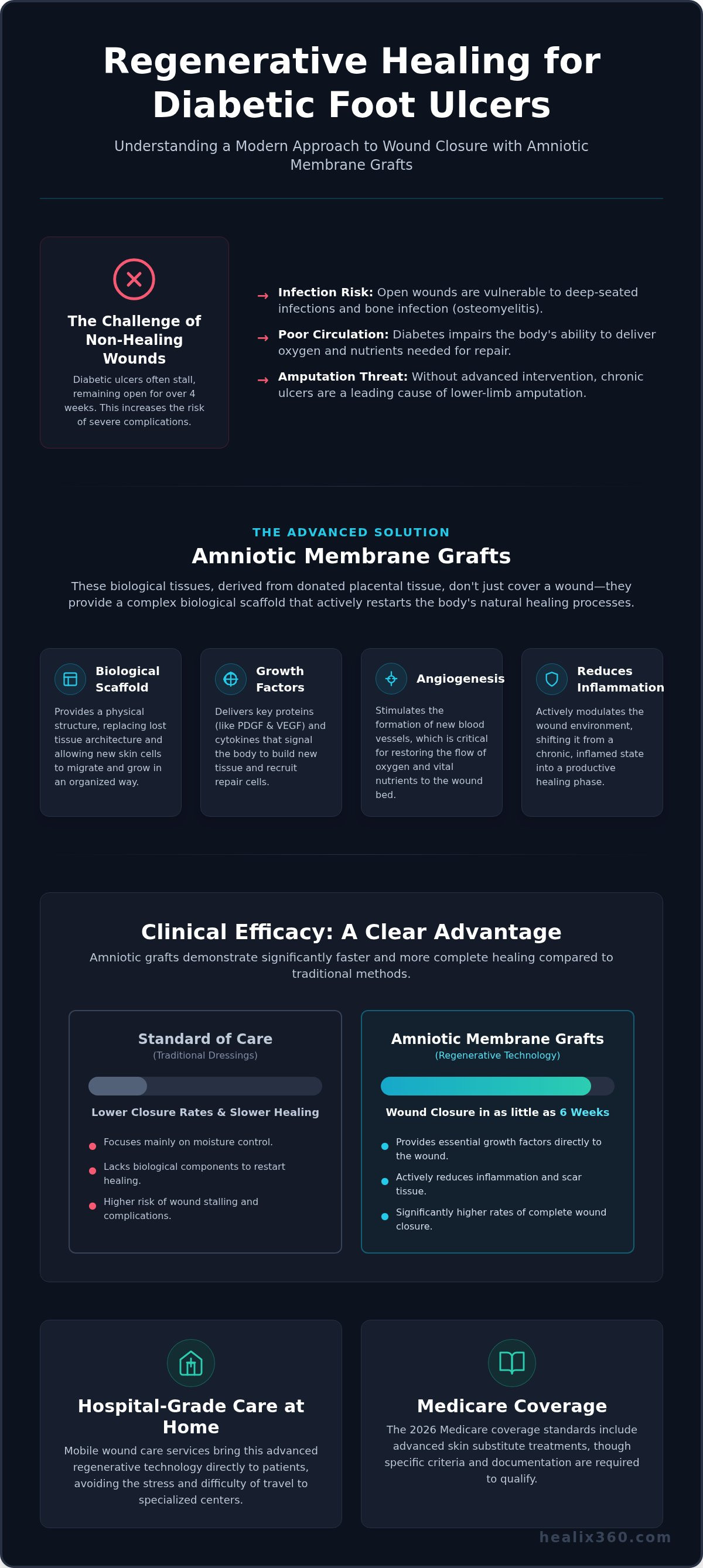
Chronic wounds are a frequent and dangerous complication of diabetes. Elevated blood glucose levels often result in peripheral neuropathy and compromised circulation, which prevents the body from delivering the oxygen and nutrients needed for repair. When a wound remains open for more than four weeks, it enters a chronic phase where simple bandages are insufficient. This is why specialized diabetic ulcer treatment is necessary to prevent severe outcomes. Without advanced care, these ulcers can lead to deep-seated infections, bone infection known as osteomyelitis, and eventually, the risk of lower-limb amputation.
Amniotic membrane grafts for diabetic foot ulcers address these risks by providing the biological signals that a diabetic body can no longer produce on its own. They reduce localized inflammation and minimize the formation of restrictive scar tissue. This approach offers a path to recovery for patients who haven't found success with standard care methods. By introducing a healthy biological environment, these grafts help bridge the gap between a non-healing wound and complete closure.
The Science of Regenerative Healing: How Grafts Work
Amniotic membrane grafts for diabetic foot ulcers function as a sophisticated biological scaffold. This extracellular matrix provides a physical structure that supports the migration and proliferation of new skin cells. In a chronic wound, the natural structure of the tissue is often degraded by excessive proteases and chronic inflammation. The graft replaces this lost architecture, allowing the body to build new tissue layers in a structured manner. It also actively modulates the inflammatory environment, shifting the wound from a chronic, stagnant state into a productive healing phase. By neutralizing harmful enzymes and reducing localized inflammation, the graft creates a receptive environment for the recruitment of the body's own stem cells to the ulcer site.
Growth Factors and Cytokines
The clinical effectiveness of these grafts is driven by a high concentration of regulatory proteins. Key proteins such as Platelet-Derived Growth Factor (PDGF) and Vascular Endothelial Growth Factor (VEGF) are embedded within the tissue matrix. These proteins are essential because they stimulate angiogenesis, which is the formation of new blood vessels that restore oxygen flow to the wound. Cytokines serve as chemical messengers for cellular repair, coordinating the complex interactions between different cell types. These messengers signal the body to recruit fibroblasts and keratinocytes to the wound bed, effectively jumpstarting the healing phase in wounds that have failed to progress. Research published regarding the Clinical Efficacy of Amniotic Grafts confirms that these biological signals result in significantly higher closure rates than traditional gauze-based treatments.
DHACA: Dehydrated Human Amnion/Chorion Allografts
Dehydrated Human Amnion/Chorion Allograft (DHACA) represents a specific type of tissue processing designed to preserve biological activity while ensuring clinical convenience. Through a controlled dehydration process, the tissue's structural integrity and growth factor content remain intact without requiring complex cryopreservation. This shelf-stability is a critical advantage for mobile medical settings, as the grafts don't require specialized deep-freeze storage. Once the specialist applies the DHACA to the ulcer, the matrix rehydrates and begins facilitating rapid epithelial cell migration across the wound surface. This technology allows our team to provide advanced mobile wound care in the comfort of a patient's home, offering the same regenerative potential found in hospital-based wound centers.
Clinical Efficacy: Amniotic Grafts vs. Standard of Care
Clinical outcomes for amniotic membrane grafts for diabetic foot ulcers consistently outperform traditional wound management strategies. While traditional methods focus on maintaining a clean environment, they often lack the biological components necessary to drive tissue regeneration. The clinical transition from conservative management to advanced allografts is often the deciding factor in whether a wound achieves closure or continues to deteriorate. By addressing the cellular deficits within the ulcer, these grafts provide a measurable advantage in both healing speed and long-term stability.
Standard of Care vs. Advanced Allografts
Standard of Care (SOC) is the baseline protocol for ulcer management, consisting primarily of sharp debridement, pressure offloading, and the application of moist dressings. While these steps are necessary, SOC alone often fails for high-grade diabetic ulcers because it doesn't provide the regenerative signaling required to overcome chronic inflammation. Amniotic grafts don't replace these foundational steps; instead, they complement them. For instance, performing sharp debridement creates a receptive wound bed, which then allows the graft to integrate more effectively. This synergistic approach ensures that the wound is both physically prepared and biologically stimulated to heal.
Healing Milestones: 6 and 12 Weeks
Data from systematic reviews demonstrate a significant reduction in healing times when using advanced tissues. While patients relying solely on SOC may see healing progress stretch beyond 12 weeks, those receiving amniotic grafts often reach complete closure by the 6-week mark. Clinical data indicates a significantly higher success rate for complete healing compared to traditional dressings. Early intervention with skin substitutes is critical. The longer a wound remains open, the higher the likelihood of developing deep-seated infections that lead to hospitalizations.
The impact on a patient's quality of life is profound. Faster wound closure restores mobility and reduces the psychological burden associated with chronic illness. Most importantly, accelerating the healing process drastically lowers the risk of lower-limb amputation. By closing the portal of entry for bacteria sooner, clinicians can prevent the progression of infection into the bone. Healix360 specialists focus on these clinical milestones to ensure patients return to their daily lives with their health and mobility intact.
Mobile Wound Care: Receiving Advanced Grafts at Home
The delivery of regenerative medicine has evolved beyond the confines of the traditional hospital setting. Patients in Southern California can now receive amniotic membrane grafts for diabetic foot ulcers directly at their bedside. This mobile model addresses the significant logistical barriers that often prevent consistent wound management. By bringing advanced technology to the home, Healix360 ensures that treatment schedules remain uninterrupted, which is a critical factor in preventing wound regression. Our board-certified specialists perform comprehensive evaluations and apply specialized grafts in a controlled, clinical manner within the patient's residence or care facility. This approach fosters a collaborative environment where mobile specialists work alongside primary care physicians and home health agencies to ensure a unified recovery plan.
The Convenience of At-Home Treatment in Los Angeles
Navigating the persistent traffic in Glendale and Los Angeles is a major deterrent for patients requiring frequent specialized care. For elderly individuals or those with limited mobility, the physical strain of traveling to a wound clinic can exacerbate existing health issues. Our mobile wound care services eliminate these challenges by implementing a 'clinic-at-your-door' strategy. Bedside application also minimizes exposure to hospital-acquired infections, which is a vital consideration for immunocompromised diabetic patients. Receiving care in a familiar environment reduces stress and allows family members to be more involved in the recovery process without the burden of transportation logistics.
Medicare and Insurance for Mobile Grafts
Understanding the financial aspect of advanced treatment is a priority for many families. Healix360 is a Medicare Part B provider, meaning our services are structured to comply with federal reimbursement guidelines. For many beneficiaries, amniotic membrane grafts for diabetic foot ulcers are a covered benefit when a wound has failed to respond to at least four weeks of standard wound care. Documentation of this failure is a requirement for prior authorization, and our team provides the administrative support needed to navigate these complexities. We work directly with case managers and hospital referral sources to streamline the approval process, ensuring that patients receive regenerative care without unnecessary delays. If you're managing a chronic wound that hasn't responded to traditional dressings, you can contact our team to verify your coverage and schedule a specialist visit.
The Healix360 Approach to Diabetic Foot Ulcer Management
Healix360 operates as a specialized extension of the patient's medical team, bringing hospital-grade clinical standards directly to the bedside. Our board-certified wound specialists don't just apply dressings; they develop a comprehensive, personalized treatment plan focused on limb salvage. The core of our strategy involves the precise application of amniotic membrane grafts for diabetic foot ulcers to close wounds that have stalled under traditional care. We prioritize a results-driven methodology that combines advanced technology with meticulous clinical oversight to ensure the best possible outcomes for our patients.
Professional Bedside Wound Evaluations
Every treatment journey begins with a meticulous initial assessment. Our specialists perform detailed vascular and neurological checks to evaluate the underlying causes of the ulcer. This process includes checking pedal pulses and assessing for peripheral neuropathy to understand the wound's healing potential. We also prioritize wound culture and sensitivity testing to identify and treat any underlying bioburden before proceeding with advanced therapies. Determining the appropriate timing for graft application is essential for success. We ensure the wound bed is healthy, granular, and free of infection before the graft is placed. This preparation often involves sharp debridement to remove necrotic or non-viable tissue, which creates the optimal surface for the biological scaffold to integrate and function effectively.
Collaborative Care in Southern California
Effective wound management requires a unified effort between multiple healthcare providers. We maintain active partnerships with home health agencies, case managers, and hospital discharge teams throughout Los Angeles and Glendale. This coordination ensures that daily care, such as offloading and secondary dressing changes, aligns perfectly with the specialist's regenerative plan. Our follow-up protocol is rigorous and methodical. We monitor the graft's integration and the wound's progression toward closure at every visit, making adjustments as needed based on the patient's response. By focusing on long-term outcomes rather than temporary fixes, we aim to prevent the recurrence of ulcers and significantly reduce the risk of amputation. If you or a loved one is struggling with a non-healing wound, our team is ready to act. You can schedule a mobile consultation with our specialists to begin your path toward regenerative recovery and regain your independence.
Advancing Your Path to Recovery at Home
Amniotic membrane grafts for diabetic foot ulcers represent a significant shift in how chronic wounds are managed in 2026. By utilizing biological scaffolds that mimic natural tissue structure, patients can achieve faster closure and significantly reduce the risk of severe complications like amputation. This advanced regenerative technology is no longer restricted to hospital outpatient departments. It's now accessible through a mobile medical model that prioritizes your convenience and safety.
Healix360 bridges the gap between chronic suffering and clinical recovery. As a Medicare Part B provider, we deliver hospital-grade care through our board-certified wound specialists who bring advanced regenerative mobile technology directly to your bedside. You don't have to navigate Los Angeles traffic or risk exposure in a clinic to receive the highest standard of care. Our team is committed to providing the specialized expertise needed to restart your body's natural healing process.
Take the first step toward limb salvage and restored mobility. Schedule a Mobile Wound Care Consultation with Healix360 today to see if these advanced grafts are right for you. Your health and independence are our primary focus.
Frequently Asked Questions
Are amniotic membrane grafts for diabetic foot ulcers covered by Medicare?
Medicare Part B typically covers these regenerative treatments when specific clinical criteria are met. The wound must generally fail to respond to at least four weeks of documented standard wound care before advanced therapies are authorized. As a Medicare Part B provider, Healix360 manages the complex administrative process to verify coverage for amniotic membrane grafts for diabetic foot ulcers based on the latest 2026 reimbursement guidelines and local coverage determinations.
Is the application of an amniotic graft painful for the patient?
The application process is generally painless because the graft is applied topically to the prepared wound bed. Since amniotic tissue is a biological material that lacks nerve endings, patients don't feel the graft itself once it's in place. Specialists may perform sharp debridement before the application to ensure the site is receptive. This preparation is handled with clinical precision to maintain patient comfort during the mobile bedside visit.
How many graft applications are typically needed for a diabetic ulcer?
The total number of applications depends on the size of the wound and the patient's individual healing response. While some patients show significant progress after one or two applications, others with deeper chronic wounds may require weekly applications over a period of six to twelve weeks. Our board-certified specialists monitor the integration of the tissue at every visit to determine the precise frequency needed to achieve complete wound closure.
Can amniotic grafts be applied to infected diabetic foot ulcers?
Clinical protocols require that any active infection be fully resolved before a graft is placed. Applying biological tissue over an infected ulcer can trap bacteria and compromise the healing process. Our specialists perform thorough assessments and may use wound culture testing to identify specific pathogens. Once the infection is cleared through antimicrobial therapy, amniotic membrane grafts for diabetic foot ulcers can be safely applied to restart regeneration.
What is the difference between an amniotic graft and a traditional skin graft?
Traditional skin grafts often require a surgical procedure to harvest healthy skin from another part of the patient's body, creating a second wound site. Amniotic grafts are allografts derived from donated placental tissue, which eliminates the need for a donor site on the patient. While traditional grafts provide permanent coverage, amniotic membranes act as a biological scaffold that is eventually incorporated or replaced by the patient's own regenerating cells.
How do I qualify for mobile wound care services in Southern California?
Qualification usually involves a referral from a primary care physician, a home health agency, or a hospital discharge planner. Patients must have a chronic or non-healing wound that requires specialized intervention beyond basic dressing changes. We provide services to residents across Los Angeles and Glendale who require the expertise of a wound specialist. Our team coordinates with your current providers to ensure mobile care is a seamless part of your treatment.
What happens if my diabetic foot ulcer does not heal with standard care?
When a wound fails to show significant progress after four weeks of standard care, the risk of infection and bone involvement increases. At this stage, the ulcer is considered chronic and requires advanced intervention. Transitioning to regenerative therapies like amniotic tissue provides the essential growth factors that a diabetic body cannot produce on its own. These treatments are specifically designed to jumpstart the healing process and prevent the progression toward amputation.
How long does a mobile wound care visit take?
A standard mobile visit typically lasts between 45 and 60 minutes. This timeframe allows our specialists to perform a comprehensive bedside assessment, conduct any necessary debridement, and apply the appropriate regenerative graft. We also use this time to coordinate with caregivers on offloading strategies and monitoring protocols. This thorough approach ensures that patients receive hospital-grade clinical attention without the logistical stress and physical strain of traveling to a traditional wound center.


