
Imagine an 85-year-old resident with a non-healing pressure injury. Instead of enduring a painful ambulance transfer to a distant wound center, they receive a board-certified specialist at their bedside who applies a regenerative amniotic membrane graft. Providing effective wound care for assisted living residents shouldn't require the trauma of transport or the high cost of emergency room visits.
You likely recognize that managing complex wounds within a facility is a significant challenge for staff and a constant source of anxiety for families. It's stressful to watch a wound stagnate while you struggle to coordinate complex logistics. This 2026 guide demonstrates how advanced mobile treatments bring hospital-grade medical technology directly to the patient's room, accelerating healing and significantly reducing the risk of hospital readmission.
We'll explore the latest advancements in bio-engineered skin substitutes, Medicare-compliant documentation standards, and the specialized coordination required to keep residents safe and comfortable. This overview explains how Southern California facilities can leverage mobile specialists to ensure faster wound closure and better clinical outcomes without the logistical burden of traditional outpatient visits.
Key Takeaways
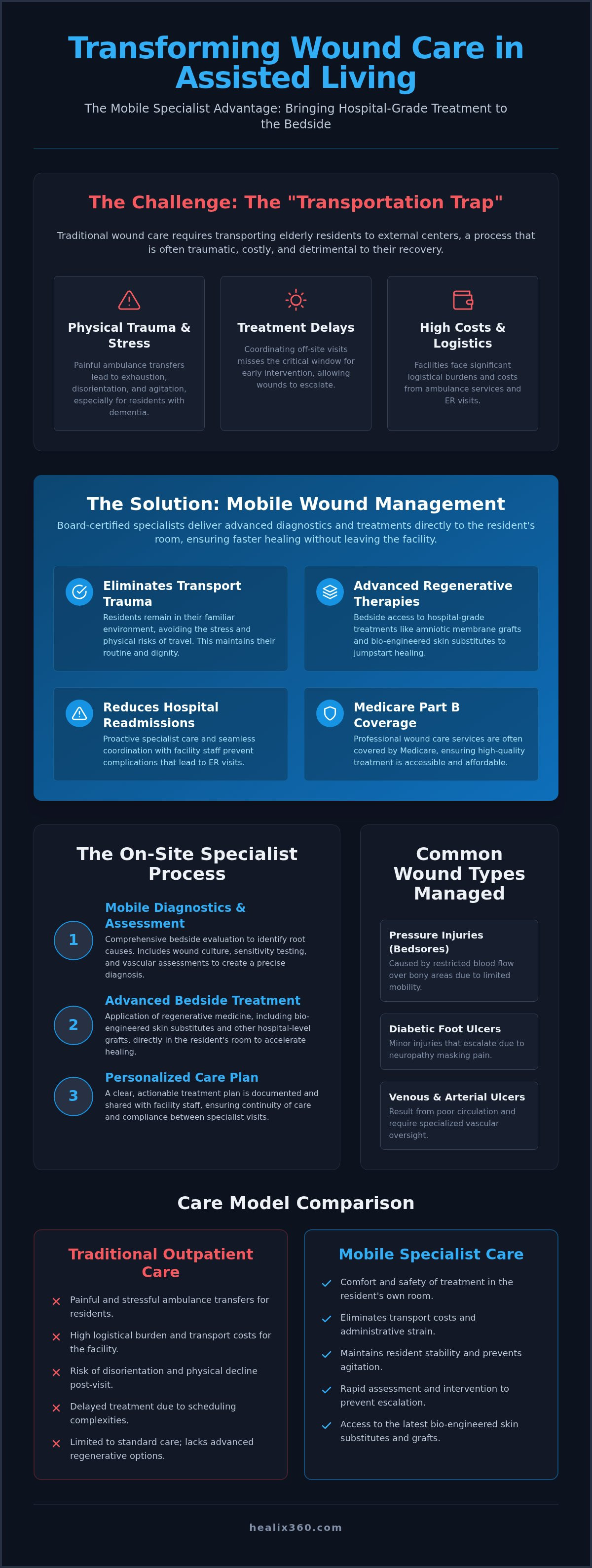
- Mobile bedside evaluations eliminate the physical trauma and logistical costs associated with transporting elderly residents to external wound centers.
- Advanced regenerative therapies, including amniotic membrane grafts and bio-engineered skin substitutes, jumpstart the healing process for non-healing chronic wounds.
- Professional wound care for assisted living residents is often covered by Medicare Part B, ensuring high-quality treatment remains accessible within the facility setting.
- Seamless coordination between mobile specialists and facility staff reduces the administrative burden on caregivers while significantly lowering the risk of hospital readmissions.
- Specialized mobile wound management services provide Southern California facilities with board-certified expertise delivered directly to the resident's bedside.
The Challenge of Wound Care for Assisted Living Residents
Aging skin undergoes physiological changes that make it increasingly susceptible to injury. In assisted living environments, residents often face a combination of limited mobility and systemic health issues that slow the natural repair process. When a minor scrape or pressure spot fails to heal within thirty days, it transitions into a chronic wound, requiring specialized clinical intervention to prevent serious complications. Providing effective wound care for assisted living residents is not just a matter of comfort; it's a medical necessity to prevent systemic infection and sepsis.
The physical and cognitive toll of hospital visits represents a significant barrier to recovery. Known as the "Transportation Trap," the process of arranging an ambulance, transferring a frail resident, and waiting in a clinical setting often leads to exhaustion and disorientation. For residents living with dementia, these trips can trigger severe agitation and physical decline. A mobile wound specialist eliminates this trauma by bringing hospital-grade diagnostics and treatments directly to the resident's bedside, maintaining their routine and dignity.
Early intervention is the most effective way to prevent emergency room admissions. There is a critical window of time after a wound is identified where advanced treatments can halt progression. If this window is missed, a simple stage II pressure injury can quickly escalate into a deep tissue infection. Mobile specialists provide the rapid assessment needed to stabilize these conditions within the facility walls.
Common Wound Types in Residential Care
- Pressure Injuries: These wounds, often called bedsores, develop quickly when blood flow is restricted to skin over bony prominences. They are a primary concern for residents with limited mobility.
- Diabetic Foot Ulcers: Peripheral neuropathy often masks the pain of small injuries, allowing them to escalate into deep infections before they're noticed.
- Venous and Arterial Ulcers: Common among those with poor circulation or chronic leg edema, these require specialized compression therapy and vascular oversight.
Why Standard Facility Care Often Needs Specialist Support
Facility nurses are highly skilled in daily management, but they aren't always equipped for advanced clinical procedures like sharp debridement or the application of bio-engineered skin substitutes. There's a clear distinction between routine dressing changes and the specialized protocols required to jumpstart a stalled healing process. Relying solely on general primary care can lead to treatment stagnation. Specialist oversight ensures the facility remains compliant with evolving health regulations while providing residents with the highest standard of bedside treatment. Standardizing wound care for assisted living residents through a specialized partnership ensures that healing stays on track without the need for outside referrals.
Mobile Diagnostics and Specialized Bedside Assessments
Effective wound care for assisted living residents begins with a precise diagnosis at the bedside. Many chronic wounds fail to progress because the underlying etiology remains unaddressed. Our specialists perform comprehensive evaluations to identify systemic factors like pressure, friction, or poor nutrition that impede recovery. By conducting wound culture and sensitivity testing, we identify specific bacterial pathogens. This allows for targeted antimicrobial therapy rather than relying on broad-spectrum antibiotics; this precision reduces the risk of multi-drug resistant infections.
Vascular health is another critical component often overlooked in residential settings. We prioritize bedside vascular assessments to ensure adequate blood flow is reaching the wound site. Without sufficient perfusion, even the most advanced dressings won't facilitate healing. Once the assessment is complete, we develop a personalized wound care treatment plan. This document provides facility staff with clear, actionable instructions for daily management, ensuring continuity of care between specialist visits.
Advanced Bedside Technology
We utilize non-invasive diagnostic tools to measure tissue oxygenation and microcirculation in real-time. These insights are vital for detecting biofilms, which are complex bacterial communities that shield pathogens from standard treatments. Identifying these barriers early allows us to adjust the clinical approach immediately. To keep the care circle informed, we use digital platforms for real-time data sharing. This ensures the resident's primary physician and family members are always updated on healing progress and treatment adjustments.
Debridement and Infection Control
Chronic wounds often contain necrotic tissue or slough that prevents new skin growth. Sharp debridement is a necessary clinical procedure to remove this devitalized material and stimulate the body's natural healing response. We also manage complex issues like wound dehiscence and surgical site complications on-site, preventing the need for hospital readmission. By addressing minor skin tears or stage I pressure spots during our initial assessment, we stop them from progressing into major medical events. Implementing expert wound care for assisted living residents at the first sign of breakdown is the most effective way to maintain long-term health. If you're looking to enhance your facility's clinical capabilities, you can learn more about our specialized mobile services.
Regenerative Medicine: Bringing Hospital-Level Grafts to the Facility
Chronic wounds in the elderly often stall in the inflammatory phase, where the body's natural repair mechanisms fail to progress. Traditional dressings primarily focus on moisture management, but bio-engineered skin substitutes actively jumpstart the cellular repair process. This technology is particularly vital for diabetic foot ulcers, where compromised circulation and neuropathy create a hostile environment for natural healing. By introducing these advanced tissue-based products at the bedside, we transform the resident's room into a high-acuity healing center.
Standard gauze or foam dressings are passive barriers. In contrast, regenerative products provide a biological scaffold that encourages the patient's own cells to migrate and close the wound. This approach represents the gold standard in wound care for assisted living residents who haven't responded to conservative treatments for four weeks or longer. These advanced modalities are designed to overcome the biological hurdles that keep a wound chronic, providing the necessary signals for tissue reconstruction.
Amniotic Membrane Grafts Explained
Amniotic membrane grafts are rich in natural growth factors and cytokines that promote rapid cellular regeneration while reducing localized inflammation. These biological tissues are processed to maintain their structural integrity and are highly effective in treating stagnant wounds. The application process is entirely pain-free and performed at the resident's bedside, eliminating the need for anesthesia or surgical suite visits. Clinical data indicates these grafts are essential for non-healing wounds, as they provide the biological "blueprint" required to move the wound into the proliferative phase of healing.
Negative Pressure Wound Therapy (NPWT)
For deeper or more complex wounds, we utilize portable Negative Pressure Wound Therapy (NPWT), commonly known as a Wound VAC. This system uses controlled sub-atmospheric pressure to remove excess fluid, decrease bacterial load, and increase blood flow to the wound bed. Our mobile specialists provide consistent monitoring of NPWT progress within the assisted living facility, ensuring the equipment functions correctly and the tissue responds as expected. When vascular insufficiency is a factor, we often integrate compression therapy alongside these advanced modalities to manage edema and support long-term skin health. This comprehensive bedside approach ensures that wound care for assisted living residents remains sophisticated, effective, and minimally disruptive to their daily lives.
Collaborative Care and Medicare Part B Coverage
Medicare Part B serves as the primary vehicle for delivering advanced wound care for assisted living residents. This coverage allows residents to access physician-led consultations, bedside debridement, and regenerative biological grafts within their residential setting. For most outpatient services, Medicare typically reimburses 80% of the approved amount once the annual deductible has been met. This financial framework enables facilities to offer high-acuity medical treatments without increasing their internal overhead or requiring families to pay for expensive private transport to wound centers.
Effective management requires seamless coordination between the mobile specialist and the facility's existing care team. Case managers play a vital role by identifying residents with non-healing wounds and initiating the referral process. This proactive intervention is essential for maintaining compliance with federal regulations regarding pressure injury management and quality of care. By integrating a specialized partner, the facility demonstrates a commitment to advanced clinical standards, which is a critical quality indicator for state and federal health inspections.
The Partnership Model
Our specialists do not operate in a vacuum. We work directly with facility staff to provide education on essential healing factors, such as pressure offloading techniques and nutritional optimization. This collaborative approach ensures that the resident's treatment plan is executed correctly between specialist visits. By managing complex clinical procedures like the application of bio-engineered skin substitutes, we significantly reduce the clinical burden on facility nurses. This allow the facility's team to focus on daily resident needs while we oversee the specialized protocols required for wound closure.
Navigating Insurance and Documentation
The administrative requirements for advanced wound care are extensive, particularly with the 2026 CMS documentation standards. Healix360 operates as a dedicated Medicare Part B provider, managing all billing for specialized medical procedures directly. We maintain meticulous records, including precise wound measurements and photographic evidence, which are integrated into the facility's medical records. This detailed documentation is crucial for demonstrating medical necessity and ensuring the facility remains compliant with evolving regulatory surveillance. Our team bridges the gap between hospital discharge and long-term residential recovery, providing the continuity of care necessary for successful outcomes. If you are ready to enhance your facility's clinical capabilities, you can request a bedside evaluation today.
Healix360: Southern California's Expert in Mobile Wound Management
Healix360 stands as the premier Southern California provider for specialized mobile wound management. Our team consists of board-certified specialists who focus exclusively on the complexities of chronic wound care for assisted living residents. Unlike general providers, our clinicians possess deep expertise in regenerative technologies and advanced debridement techniques. Our mission is clear; we aim to prevent unnecessary amputations and reduce the incidence of emergency room visits through high-acuity bedside intervention. By prioritizing patient convenience and clinical excellence, we improve the overall quality of life for residents while supporting the operational goals of the facilities that house them.
Our Southern California Service Area
We maintain a strong presence throughout Southern California, operating dedicated mobile units in Glendale, Beverly Hills, and the greater Los Angeles area. Our clinical teams are strategically positioned to respond quickly to new referrals from local hospital discharge planners and primary care physicians. This localized focus ensures that residents receive timely care without the delays often associated with larger, national providers. We collaborate directly with local medical centers to ensure a smooth transition of care for patients returning to their assisted living communities after a surgical procedure or hospital stay.
Starting the Journey to Healing
Initiating expert care is a straightforward process designed to minimize stress for families and facility staff. Families or facility case managers can request services by contacting us directly to begin the intake process. During the initial bedside wound assessment, our specialist performs a thorough physical examination, reviews the patient's medical history, and utilizes diagnostic tools to evaluate the wound bed. This first visit establishes the baseline for a personalized treatment plan and determines if advanced modalities, such as amniotic membrane grafts, are clinically indicated.
We understand the urgency of treating non-healing wounds before they lead to systemic complications. Our specialists are ready to provide the professional oversight necessary to restore health and mobility. It's easy to take the first step; you can schedule a specialist consultation today to ensure your loved one or resident receives the highest standard of mobile medical care. By choosing a partner dedicated to the specific needs of Southern California's elderly population, you ensure that healing remains the top priority and that wound care for assisted living residents is handled with the clinical rigor it deserves.
Empowering Residents Through Bedside Regenerative Care
Advancing the standard of medical treatment within residential facilities requires a shift from passive management to active clinical intervention. By utilizing bedside diagnostics and advanced regenerative grafts, facilities can effectively address the unique biological hurdles of elderly skin. Mobile specialists eliminate the physical and cognitive stress of transportation while ensuring full compliance with 2026 CMS documentation standards. This model transforms the resident's room into a sophisticated healing environment, prioritizing both clinical outcomes and patient dignity.
Delivering expert wound care for assisted living residents is now more accessible through the Medicare Part B model. Healix360 is a Medicare Part B certified provider specializing in chronic and non-healing wounds, bringing advanced regenerative grafts directly to the bedside. This specialized approach not only accelerates wound closure but also significantly reduces the risk of emergency room visits and hospital readmissions. Ensuring your residents have access to board-certified expertise is the most effective way to maintain their long-term health and mobility.
If you're ready to improve clinical outcomes and resident comfort, Request a Mobile Wound Specialist Consultation for Your Loved One today. Professional healing and advanced medical support are just a bedside visit away.
Frequently Asked Questions
Does Medicare cover mobile wound care for assisted living residents?
Medicare Part B covers medically necessary mobile wound care services, including bedside evaluations, debridement, and advanced dressings like bio-engineered skin substitutes. Patients are typically responsible for a 20% coinsurance after meeting their annual deductible. Since we are a certified Medicare Part B provider, we handle the billing directly. This ensures that expert wound care for assisted living residents remains affordable and accessible without the need for hospital based outpatient visits.
How often will the wound specialist visit the facility?
The frequency of visits depends on the wound's severity and the specific treatment plan, but most patients are seen once per week. During these visits, our specialists perform necessary procedures like sharp debridement or graft application while monitoring healing progress. If a wound is highly complex or utilizing Negative Pressure Wound Therapy, we may adjust the schedule to ensure clinical stability. Regular weekly assessments allow us to catch potential complications early.
Can mobile wound care prevent a resident from being moved to a nursing home?
Mobile wound care is a critical tool for allowing residents to remain in their assisted living environment rather than transferring to a higher level of care. By bringing hospital grade regenerative treatments to the bedside, we manage chronic wounds that facility staff might otherwise find too complex to handle. This specialized support reduces the risk of infections and hospitalizations, which are the primary reasons residents are forced to move.
What types of wounds can be treated at the bedside in an assisted living facility?
We treat a wide range of chronic and non-healing wounds directly at the bedside. This includes pressure injuries, diabetic foot ulcers, venous leg ulcers, and arterial ulcers. We also manage surgical site infections, traumatic wounds, and wound dehiscence. Our specialists use advanced diagnostics to identify the root cause of each wound, ensuring that the treatment plan addresses underlying issues like poor circulation or bacterial biofilms that prevent standard healing.
Is a doctor's referral required for mobile wound care services?
A physician's order is generally required to initiate specialized mobile wound care services. We often work directly with the resident's primary care physician or a hospital discharge planner to secure this referral. Once we have the necessary authorization, our board certified specialists conduct an initial assessment to develop a personalized treatment plan. This process ensures that all medical care is coordinated and that the resident's existing healthcare team is fully informed.
How do amniotic grafts differ from traditional wound dressings?
Traditional dressings are passive barriers designed to manage moisture and protect the wound from external contaminants. In contrast, amniotic membrane grafts are active regenerative therapies that contain natural growth factors and cytokines. These biological tissues provide a scaffold that jumpstarts cellular repair and reduces localized inflammation. While standard dressings merely cover a wound, amniotic grafts help rebuild damaged tissue, making them a superior option for effective wound care for assisted living residents.
What happens if a resident's wound shows signs of infection between visits?
If a resident shows signs of infection, such as increased redness, swelling, or foul odor, the facility staff should contact us immediately. We provide specific protocols for facility nurses to follow between our weekly visits. Our specialists can perform wound culture and sensitivity testing to identify the exact pathogen and recommend targeted antimicrobial therapy. Rapid communication between the facility and our mobile unit is essential for preventing a localized infection from becoming systemic.
How does Healix360 coordinate care with the facility's nursing staff?
We operate as a clinical partner to the facility's nursing team, providing detailed documentation and clear instructions for daily care. After each visit, our specialists update the resident's treatment plan, which includes specific guidance on dressing changes and pressure offloading. We also provide education to facility staff on nutritional optimization and early detection of skin breakdown. This collaborative model ensures that the resident receives consistent, high quality care throughout the entire week.


