
Did you know that surgical site infections account for approximately 20% of all healthcare-associated infections in the United States? While returning home is a major milestone in your recovery, it often introduces a significant layer of anxiety regarding wound management. You might feel overwhelmed by complex discharge papers or worry that you won't recognize the difference between normal inflammation and a serious complication. Successfully preventing surgical site infections at home is the most critical step in avoiding a costly hospital readmission or a prolonged healing journey.
We understand that the transition to home care can feel like losing a safety net. This 2026 guide provides the professional protocols and clinical red flags you need to manage your recovery with absolute confidence. You'll learn how to implement a sterile environment, identify subtle signs of infection before they escalate, and understand exactly when to contact a specialist for a bedside evaluation. We'll provide the clinical clarity necessary to replace your anxiety with a structured, professional approach to healing.
Key Takeaways
- Identify the early clinical warning signs of an infection within the critical 30-day post-operative window to ensure timely intervention.
- Understand how underlying conditions like diabetes and peripheral vascular disease can significantly inhibit natural tissue regeneration.
- Implement professional protocols for preventing surgical site infections at home by establishing a dedicated sterile recovery environment for all dressing changes.
- Learn why specialized treatments like sharp debridement are essential for managing high-risk wounds that standard home care may not address.
- Discover the advantages of mobile bedside evaluations in reducing your exposure to clinic-acquired pathogens during the healing process.
Understanding Surgical Site Infections (SSIs) in the Home Setting
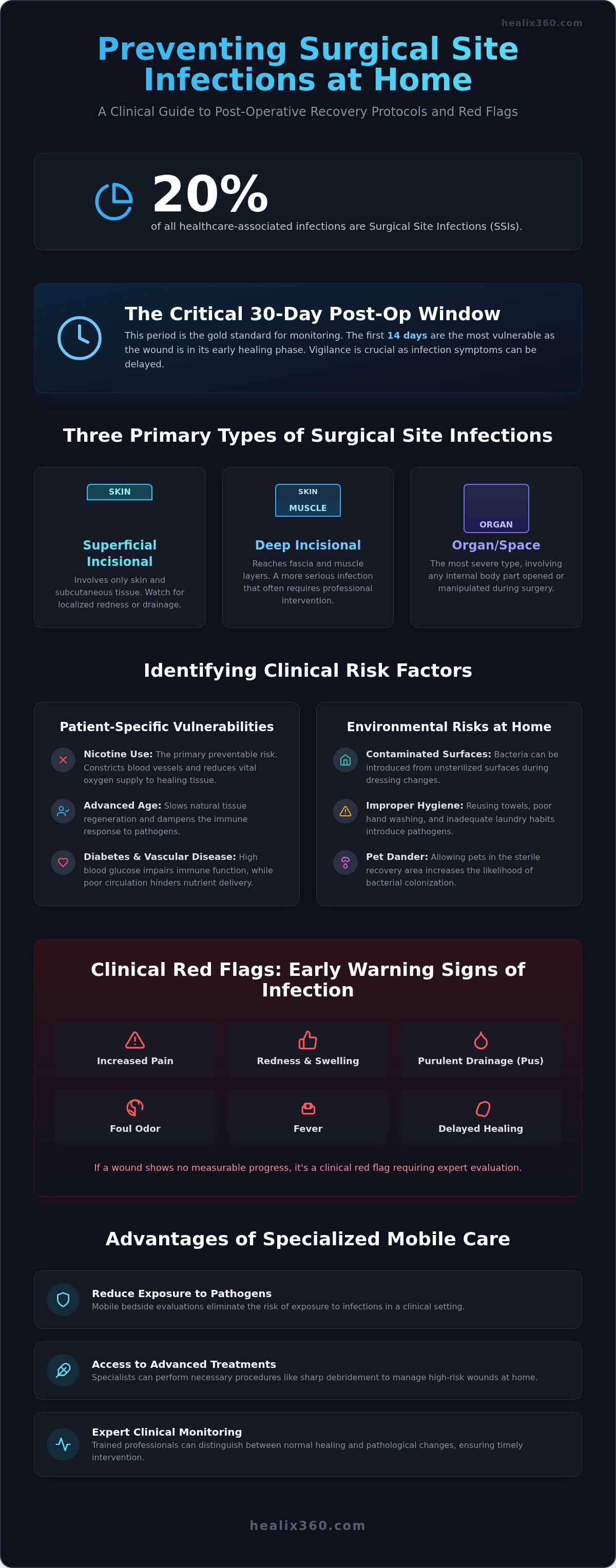
A Surgical site infection (SSI) is a clinical infection occurring within 30 days of a surgical procedure at the site of the incision. While hospital protocols are rigorous, the responsibility for preventing surgical site infections at home shifts to the patient and their caregivers. This transition often occurs when the wound is most vulnerable. Clinical data from 2023 shows that SSIs account for approximately 20% of all healthcare-associated infections, emphasizing the need for professional-grade vigilance during home recovery.
The transition from a sterile hospital environment to the variable conditions of a private residence introduces new risks. In a controlled clinical setting, sterility is maintained through specialized ventilation and strict hygiene. At home, factors such as pet dander, improper hand hygiene, or contaminated surfaces increase the risk of bacterial colonization. Many patients miss the early signs of infection because they lack the clinical training to distinguish between expected post-operative inflammation and pathological change. The first 14 days after discharge are the most critical. During this period, the incision is in the early proliferative phase of healing. The tissue hasn't yet regained its structural integrity, making it a prime target for opportunistic pathogens.
The Three Primary Types of Surgical Site Infections
SSIs are categorized based on the depth of the bacterial invasion. Superficial Incisional SSIs involve only the skin and subcutaneous tissue; they're often characterized by localized redness or drainage. In contrast, Deep Incisional SSIs reach the fascia and muscle layers beneath the incision. These are more serious and often require professional intervention like sharp debridement to remove compromised tissue. The most severe category is the Organ/Space SSI. This involves any part of the body, excluding the skin and muscle layers, that was opened or manipulated during the surgical procedure.
The 30-Day Window: Why Vigilance Matters
Bacterial colonization doesn't always lead to immediate symptoms. A wound might appear healthy on day five but show signs of purulent discharge by day twenty. Delayed healing is frequently the first subtle indicator that an infection is developing beneath the surface. If a wound isn't showing measurable progress in closure or tissue health, it's a clinical red flag that requires an expert evaluation. The 30-day surveillance period is the gold standard for post-operative safety and monitoring.
Identifying Clinical Risk Factors for Post-Operative Complications
Diverse biological and environmental factors influence the success of wound closure. While the surgeon manages the technical aspects of the procedure, your body's internal environment dictates the pace of recovery. Nicotine use remains the primary preventable risk for dehiscence, which is the surgical separation of wound edges. Tobacco products constrict blood vessels and significantly reduce the oxygen supply required for tissue repair. Additionally, advanced age naturally slows tissue regeneration and dampens the immune response to pathogens, making elderly patients more susceptible to complications during the recovery phase.
Environmental risks in a private residence often go overlooked. Pet dander, improper laundry habits, and bathroom hygiene can introduce opportunistic bacteria to a vulnerable incision. For instance, reusing a bath towel on a fresh surgical site or allowing a pet in the "sterile zone" of a bedroom increases the likelihood of colonization. Successfully preventing surgical site infections at home requires a strict audit of these daily habits to ensure the recovery environment remains as clean as possible.
Patient-Specific Vulnerabilities: Diabetes and Vascular Health
Chronic conditions like diabetes and peripheral vascular disease create a challenging environment for wound healing. Elevated blood glucose levels directly impair white blood cell function, which prevents the body from effectively fighting off localized bacteria. Furthermore, managing edema in legs is critical for patients recovering from lower-extremity surgeries. Excessive swelling places undue tension on sutures and hinders the delivery of nutrient-rich blood to the incision. Patients with compromised circulation often require advanced mobile monitoring to ensure the wound is receiving adequate perfusion for closure. If you are managing multiple comorbidities, our mobile wound care specialists can provide the professional oversight needed to mitigate these specific risks.
Recognizing Early Red Flags: Redness, Heat, and Exudate
Caregivers must be able to differentiate between normal post-operative inflammation and the onset of an active infection. According to Johns Hopkins on surgical infections, clinical vigilance is the first line of defense. While some "healing warmth" is expected due to increased blood flow, a wound that feels hot to the touch or shows spreading redness often indicates pathology. The "Odor Test" is another vital diagnostic tool; any unusual or foul smell coming from the dressing should never be ignored. Finally, interpreting discharge is essential. Serous drainage is typically clear or yellowish and thin, whereas purulent drainage, or pus, is thick, opaque, and often green or white. Identifying these changes early is the most effective way of preventing surgical site infections at home before they require emergency intervention.
Advanced Protocols for Preventing Infection: Standard vs. Specialized Care
Standard home health nursing often focuses on basic observation and routine dressing changes. While these services are valuable for standard recoveries, they may not be sufficient for high-risk patients with complex comorbidities. Successfully preventing surgical site infections at home requires a more aggressive clinical approach when healing stalls or the wound bed appears compromised. Specialists in surgical wound care utilize advanced diagnostic tools and bedside procedures that go beyond standard nursing protocols.
One such intervention is sharp debridement. This procedure involves the precise removal of necrotic or non-viable tissue from the wound bed using specialized instruments. Dead tissue acts as a reservoir for bacteria and inhibits the growth of healthy cells, often leading to biofilm formation. By performing debridement at the bedside, specialists can reset the wound's healing clock and significantly lower the bacterial load. Additionally, bio-engineered skin substitutes provide a proactive solution for incisions that fail to close within the expected timeframe. These advanced materials provide the necessary growth factors to stimulate cellular migration and ensure total closure before pathogens can take hold.
Regenerative Medicine: Amniotic Grafts in Prevention
Regenerative technologies have transformed the landscape of post-operative care in Southern California. Amniotic membrane grafts provide a potent biological barrier against external pathogens while delivering essential proteins to the wound site. These grafts possess natural anti-inflammatory properties that reduce localized swelling and accelerate the transition from the inflammatory phase to the proliferative phase of healing. Amniotic allografts serve as a scaffold for healthy tissue growth. By integrating these grafts into the treatment plan, specialists can fortify the incision site against opportunistic infections and promote faster tissue regeneration.
Bedside Wound Culture and Sensitivity Testing
Speed is the most critical factor when a caregiver suspects an infection. Waiting several days for a clinic appointment or a laboratory referral can allow localized bacteria to enter the bloodstream, potentially leading to sepsis. Mobile wound care providers eliminate this dangerous delay by performing wound culture and sensitivity testing directly at the patient's bedside. This diagnostic approach identifies the specific bacterial strain within 24 to 48 hours. Instead of using a shotgun approach with broad-spectrum antibiotics, clinicians can prescribe targeted medications that effectively neutralize the specific pathogen. This precision is a cornerstone of preventing surgical site infections at home for patients with complex medical histories who cannot afford a setback.
A Caregiver Checklist for Maintaining a Sterile Recovery Environment
Establishing a "sterile zone" is the foundation of preventing surgical site infections at home. This dedicated area should be a clean, hard surface located away from high-traffic household zones or air vents. Caregivers must adhere to the 20-second hand-washing rule using warm water and antimicrobial soap. While hand sanitizers are convenient for general use, they don't replace the mechanical action of scrubbing. Proper hand washing is necessary to remove organic material and transient pathogens before touching any medical supplies or the incision itself.
Proper disposal of biohazardous materials is equally vital for maintaining a safe environment. Soiled bandages, used gauze, and disposable gloves should be placed in a dedicated, sealed plastic bag before being discarded in the main trash. This prevents cross-contamination within the home. Beyond external hygiene, internal health plays a significant role in recovery. High-protein intake and Vitamin C supplementation fuel collagen synthesis and tissue repair. These nutrients provide the biological building blocks required to bridge the incision and restore the skin's natural barrier function.
Mastering the Dressing Change
Removing an old bandage requires precision to avoid traumatizing torn skin or disrupting new granulation tissue. Caregivers should follow the "Look but Don’t Touch" rule during every change. This involves a thorough visual assessment of the wound bed for the red flags mentioned in previous sections without physically probing the site. For complex or deep incisions, clinicians may recommend Negative Pressure Wound Therapy (NPWT), also known as a Wound VAC. This device maintains a sealed, sterile environment while actively removing excess fluid and promoting localized blood flow to the surgical site.
Managing the Home Environment
Post-operative patients require fresh bed linens every 48 hours to minimize the accumulation of skin cells and bacteria in the sleeping area. Pet safety is another critical consideration. While pets provide emotional support, they must be kept away from the recovery area to prevent zoonotic infections or accidental trauma to the wound site. Finally, medication adherence is non-negotiable. Patients must finish the entire course of prescribed prophylactic antibiotics, even if the wound appears to be healing perfectly. If you require professional assistance with these protocols, our specialized mobile wound care team can provide in-home training and bedside support to ensure a safe recovery.
Healix360: Specialized Mobile Wound Care in Southern California
Healix360 bridges the critical gap between hospital discharge and total recovery by bringing board-certified wound specialists directly to your bedside. For many patients, the physical strain of traveling to a traditional outpatient clinic can jeopardize the integrity of a fresh incision. Beyond the physical stress, visiting a high-traffic medical facility increases the risk of exposure to clinic-acquired pathogens, such as MRSA or VRE. By receiving specialized care in your own residence, you maintain a controlled environment while ensuring professional-grade monitoring. Our mobile model is specifically designed for preventing surgical site infections at home by providing the clinical rigor of a hospital setting without the associated environmental risks.
We coordinate closely with major Southern California hospitals and surgical centers to facilitate a seamless transition of care. This collaborative approach ensures that your recovery plan is a direct continuation of your surgeon's protocols. As a Medicare Part B provider, Healix360 offers advanced bedside evaluations and procedures that are typically only available in specialized wound centers. Our service area extends across Los Angeles, Orange County, Riverside, San Bernardino, Ventura, and San Diego, ensuring that high-tier medical expertise is accessible throughout the region.
Personalized Treatment Plans for Glendale and L.A. Patients
Our clinicians develop personalized treatment plans for Glendale and L.A. patients by partnering with home health agencies to provide an extra layer of clinical oversight. When standard nursing care isn't enough to manage a non-healing incision, we introduce regenerative skin substitutes and amniotic grafts to accelerate the body's natural repair mechanisms. This specialized intervention is vital for complex surgical sites where the risk of dehiscence is high. Our primary mission is preventing amputations and long-term disability through early, aggressive intervention. We don't just monitor wounds; we actively manage the biological environment to ensure successful closure.
How to Request a Mobile Wound Evaluation
The referral process is designed to be efficient and stress-free for both the patient and the surgical team. Healix360 works directly with your primary surgeon or hospital case manager to obtain the necessary medical records and authorizations. During your first in-home clinical assessment, a board-certified specialist will perform a comprehensive evaluation of the wound bed, localized circulation, and any underlying comorbidities that might hinder healing. You'll receive a clear, actionable plan tailored to your specific recovery needs. Schedule your professional mobile wound evaluation today to take the most proactive step in preventing surgical site infections at home.
Securing Your Path to a Full Recovery
Managing a surgical incision requires more than just following basic discharge instructions. It demands a professional level of clinical vigilance and a commitment to maintaining a sterile recovery environment. By recognizing early red flags such as spreading redness or purulent exudate, you can intervene before a localized issue escalates into a systemic complication. Successfully preventing surgical site infections at home is a collaborative effort between the patient, the caregiver, and specialized medical professionals.
Healix360 is dedicated to providing the advanced clinical oversight necessary for a safe recovery. Our board-certified specialists bring regenerative technologies, including amniotic membrane grafts, directly to your bedside throughout Southern California. As a Medicare Part B provider, we ensure that high-risk patients receive the same standard of care at home that they would in an elite wound center. You don't have to navigate the complexities of post-operative healing alone. Request a Mobile Wound Specialist Visit today to secure your recovery. With the right protocols in place, you can move forward with the confidence that your health is in expert hands.
Frequently Asked Questions
What are the first signs of a surgical site infection at home?
Initial symptoms often include increased pain at the incision site, localized swelling, and skin that feels warm to the touch. You might also notice spreading redness that extends beyond the immediate border of the sutures. If you see thick, cloudy, or foul-smelling drainage, these are advanced clinical indicators. Fever or a general sense of malaise often follows localized symptoms, signaling that the body is actively fighting a bacterial presence.
Can I shower with a surgical incision if I am worried about infection?
You must follow your surgeon's specific post-operative timeline, which usually allows for showering 24 to 48 hours after the procedure. Always keep the incision covered with a waterproof barrier if instructed, and avoid submerging the wound in bathtubs or pools. When showering, let soapy water run gently over the site rather than scrubbing it directly. Pat the area dry with a clean, lint-free towel to maintain a sterile environment.
How do I tell the difference between normal redness and an infection?
Normal redness is typically confined to the immediate edges of the incision and fades as the initial inflammatory phase subsides. In contrast, the redness associated with an infection is often expansive, vibrant, and accompanied by increasing heat or throbbing pain. If the red area is "streaking" away from the wound or if the skin feels hardened, it indicates pathology. Monitoring these changes is vital for preventing surgical site infections at home during the first 30 days.
Does Medicare cover mobile wound care visits in Southern California?
Yes, Healix360 is a Medicare Part B provider, and Medicare generally covers mobile wound care services when they're deemed medically necessary. This includes bedside evaluations, sharp debridement, and the application of advanced regenerative grafts. Patients are typically responsible for their annual deductible and a 20% coinsurance payment, though many Medicare Advantage and supplemental plans cover these remaining costs. We provide these specialized services throughout Los Angeles, Orange County, and San Diego.
What should I do if my surgical wound starts to open (dehiscence)?
If you notice the edges of your incision separating, you should immediately cover the area with a sterile, saline-moistened gauze and contact your surgical team or a wound specialist. Don't attempt to close the wound with adhesive strips or bandages yourself, as this can trap bacteria inside. Dehiscence often requires a professional assessment to determine if underlying factors, such as poor circulation or localized infection, are preventing the tissue from staying closed.
Can pets cause surgical site infections during home recovery?
Pets can introduce zoonotic pathogens and environmental bacteria into a vulnerable surgical site through dander, saliva, or accidental contact. It's essential to keep animals out of the "sterile zone" where you change your dressings and sleep. Even a well-behaved pet can inadvertently transfer bacteria from their paws or fur to your linens. Maintaining a strict boundary between your recovery area and your pets is a critical step in preventing surgical site infections at home.
Is it normal for a surgical wound to have a slight smell?
A healthy, healing surgical wound shouldn't have a noticeable or unpleasant odor. While some dressings may develop a faint scent due to accumulated moisture, a distinct foul or "sweet" smell is a clinical red flag for bacterial colonization. Odor often indicates the presence of necrotic tissue or a specific pathogen like Pseudomonas. If a caregiver notices a change in scent during a dressing change, it warrants an immediate evaluation by a board-certified specialist.
How often should I change my surgical dressing at home?
Dressing change frequency is dictated by the amount of drainage and the specific type of bandage used. Standard gauze dressings often require daily changes, while advanced foam or antimicrobial dressings may stay in place for several days. If a dressing becomes saturated, loose, or soiled, it must be replaced immediately to prevent bacterial ingress. Always verify the specific frequency with your clinical team to ensure the wound remains protected and the environment stays sterile.


