
Venous leg ulcers account for nearly 90% of all lower extremity sores, yet many patients remain trapped in a cycle of ineffective treatments and painful, weeping wounds. It's frustrating to rely on simple bandages when a chronic ulcer refuses to close, particularly when accessing bioengineered skin substitutes for venous ulcers often requires battling hours of Southern California traffic to reach a specialized clinic. You shouldn't have to choose between advanced medical technology and the comfort of your own home.
This 2026 healing guide demonstrates how modern regenerative grafts are transforming outcomes for patients from Glendale to San Diego. As a Medicare Part B provider, Healix360 brings these sophisticated clinical solutions directly to your bedside to accelerate recovery and prevent infection. We'll preview the latest 2026 CMS reimbursement standards, the specific types of grafts now available for home use, and the structured path toward achieving complete wound closure through professional mobile specialist care.
Key Takeaways
- Understand why chronic venous leg ulcers often reach a healing plateau and when traditional compression therapy requires the addition of regenerative technology.
- Explore the clinical differences between cellular and acellular bioengineered skin substitutes for venous ulcers, including the specific role of amniotic membrane grafts.
- Learn how advanced skin substitutes accelerate wound closure and provide immediate pain relief by protecting exposed nerve endings in the wound bed.
- Discover the logistical advantages of receiving hospital-grade sharp debridement and graft applications in your Southern California home rather than traveling to a clinic.
- Identify how Medicare Part B coverage applies to mobile wound care services in 2026, ensuring access to specialist-led treatment with minimal out-of-pocket costs.
Why Venous Ulcers Stagnate: The Need for Bioengineered Solutions
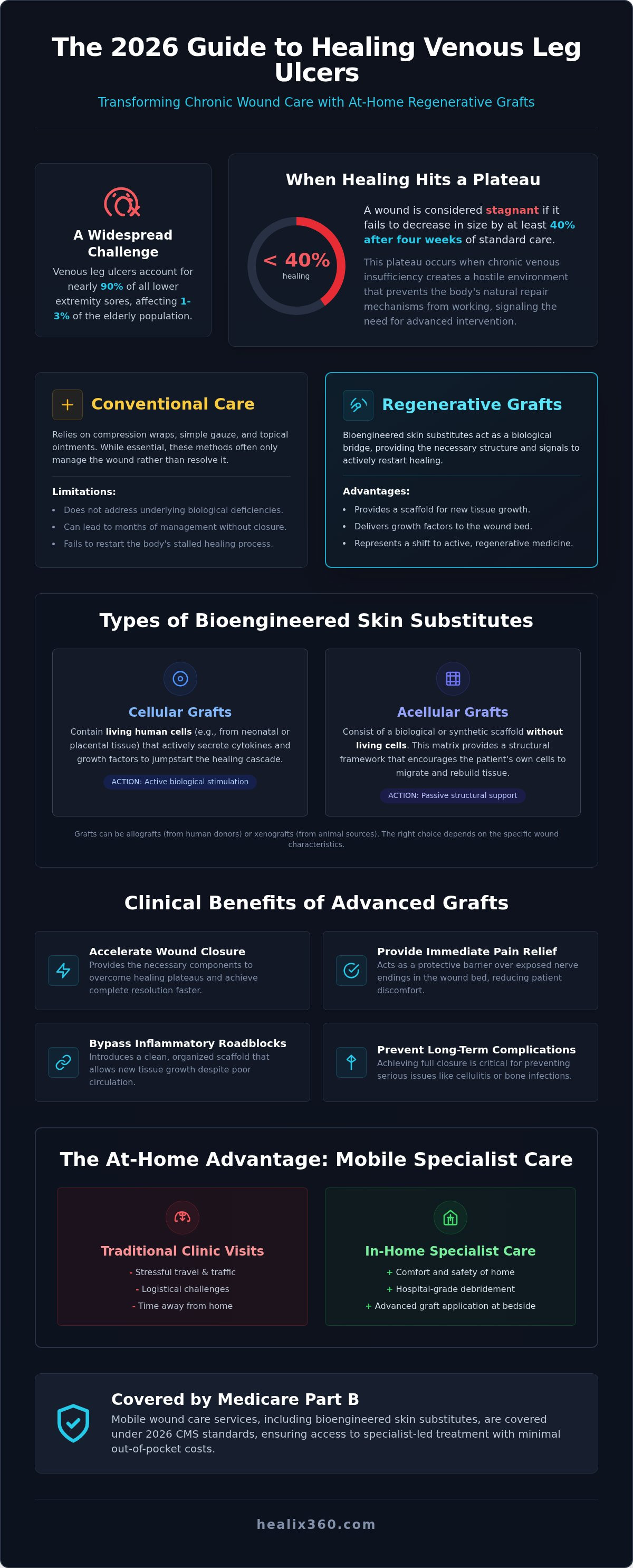
Venous leg ulcers (VLUs) are complex, chronic wounds that affect approximately 1% to 3% of the elderly population. These sores typically manifest on the lower leg, just above the ankle, and are the direct result of chronic venous insufficiency. In this condition, damaged valves within the veins fail to return blood efficiently to the heart, causing high pressure and fluid accumulation in the lower extremities. For many Southern California patients, this cycle of poor circulation creates a persistent, weeping wound that resists standard healing protocols. While initial treatments often focus on compression and basic dressings, a significant portion of these ulcers reach a clinical plateau where progress simply stops.
Identifying a stagnant wound is critical for preventing long-term complications like cellulitis or bone infections. Clinically, if a VLU doesn't decrease in size by roughly 40% after four weeks of standard care, it's considered stagnant. At this juncture, continuing with basic topical treatments is often insufficient. This is where bioengineered skin substitutes for venous ulcers serve as a vital intervention. These advanced grafts act as a biological bridge, providing the necessary signals and structure to restart the body's natural repair mechanisms when they've stalled due to chronic disease.
The Challenges of Chronic Venous Insufficiency
Chronic venous insufficiency creates a hostile environment for cellular repair. The persistent high pressure in the veins leads to significant edema in legs, which traps inflammatory proteins and metabolic waste near the skin's surface. This toxic environment prevents healthy skin cells from migrating across the wound bed. A bioengineered skin substitute is a specialized medical graft designed to replace or stimulate human skin. By applying these grafts, board-certified specialists can introduce a clean, organized scaffold that bypasses the inflammatory roadblocks caused by poor circulation, allowing new tissue to take hold and grow.
Limitations of Conventional Wound Care
Standard wound care protocols frequently rely on simple gauze, antimicrobial ointments, and compression wraps. While these are essential for managing moisture, they don't address the underlying biological deficiencies of a non-healing sore. For many seniors in Los Angeles and Glendale, the physical toll of a non-healing ulcer is compounded by the psychological burden of limited mobility and the constant need for dressing changes. Relying solely on passive dressings often leads to months of "wound management" without ever achieving "wound resolution." The integration of Artificial skin technology and bioengineered skin substitutes for venous ulcers represents a shift toward active regenerative medicine. Under Medicare Part B, these sophisticated procedures can now be performed at the patient's bedside, offering a path to complete closure without the stress of frequent trips to a wound center.
Types of Bioengineered Skin Substitutes for Venous Leg Ulcers
Modern medicine offers a diverse array of Types of Bioengineered Skin to address chronic stagnation. These products are generally categorized by their composition and the source of their biological material. Choosing the correct bioengineered skin substitutes for venous ulcers depends on the wound's depth, the presence of infection, and the patient's overall vascular health. Our specialists evaluate each ulcer to determine whether a structural scaffold or a living cell intervention is required.
Acellular grafts consist of biological or synthetic scaffolds that lack living cells. These act as a temporary matrix, providing a structural framework that encourages the patient's own cells to migrate and rebuild tissue. In contrast, cellular grafts contain living human cells, typically harvested from neonatal skin or placental tissue. These living components actively secrete cytokines and growth factors to jumpstart the healing process. Both types are essential tools in modern regenerative medicine.
Providers also distinguish between allografts, which are sourced from human donors, and xenografts, derived from animal sources like porcine or bovine tissue. While synthetic scaffolds offer consistency and a lower risk of immune rejection, biological scaffolds are often preferred for their ability to integrate seamlessly with the body's natural extracellular matrix (ECM). This integration is vital for achieving durable wound closure in patients with compromised circulation.
Amniotic Grafts: The Regenerative Gold Standard
Amniotic tissue has become a preferred choice for treating complex venous wounds due to its rich concentration of regenerative properties. These tissues naturally contain anti-inflammatory and anti-fibrotic elements that minimize scarring while promoting rapid epithelialization. Specialists often utilize amniotic allografts in residential settings because they are shelf-stable and highly effective at restarting the healing cycle in stalled ulcers. The science behind these grafts involves placental-derived growth factors that signal the body to recruit stem cells to the site of the injury.
Cellular and Tissue-Engineered Grafts
Living cellular grafts offer a more complex biological intervention by mimicking the layered structure of healthy skin. These bioengineered skin substitutes for venous ulcers provide a dual-layered approach that addresses both the dermal and epidermal needs of the wound. Cellular grafts often contain keratinocytes and fibroblasts to signal natural healing. These cells interact with the patient's wound bed to rebuild the extracellular matrix, which is essential for supporting new skin layers. If you're managing a non-healing sore, a bedside wound evaluation can determine which graft type is most appropriate for your specific condition.
Clinical Benefits: How Skin Substitutes Restart the Healing Process
Clinical data suggests that bioengineered skin substitutes for venous ulcers can significantly reduce healing times, often achieving closure in half the time required by standard dressings alone. This acceleration isn't just about speed; it's about fundamentally altering the wound's biological trajectory. By introducing a bioactive layer, we provide a protective shield that immediately soothes exposed nerve endings. This reduction in chronic pain often allows patients to return to their daily routines faster, which in turn supports the vascular health necessary for long-term recovery. Additionally, the graft acts as a biological barrier, protecting the vulnerable site from Southern California pathogens and reducing the overall risk of infection.
Mechanical and Biological Mechanisms of Action
These grafts function as more than a simple cover. They provide a physical template for host cells to populate, creating an organized structure where there was once only stagnation. This structural support is enhanced by the delivery of essential cytokines and proteins that stimulate vascularization. A critical component of success is the synergy between skin substitute application and continued compression therapy. While the graft manages the micro-cellular environment, compression manages the underlying venous hypertension. Together, they address both the biological cause and the physical symptom of the ulcer.
Long-Term Outcomes and Prevention
Beyond immediate closure, these advanced treatments focus on durable outcomes. The tissue formed through regenerative grafts is often more robust than the thin, fragile scar tissue produced during passive healing. This increased strength reduces the likelihood of wound recurrence, which is a common frustration for seniors managing chronic venous insufficiency. Our board-certified specialists monitor graft integration at the bedside to ensure the wound remains on a positive path toward resolution. This proactive approach is essential for preventing severe complications like cellulitis or bone infections. Because these services are covered under Medicare Part B, patients can access this high level of specialized care without the financial or physical burden of hospital visits.
Home-Based Regenerative Medicine: Accessing Grafts in Southern California
Accessing bioengineered skin substitutes for venous ulcers no longer requires a trip to a hospital outpatient department or a specialized wound center. The shift toward mobile bedside care represents a significant advancement in patient accessibility across Southern California. Board-certified specialists now perform complex procedures, including sharp debridement and graft application, in the patient's home or skilled nursing facility. This model ensures that clinical standards aren't sacrificed for convenience. By bringing regenerative technology directly to the bedside, we bridge the gap between hospital discharge and long-term recovery.
Why Mobile Care is Ideal for Southern California Patients
Los Angeles and Glendale traffic often turns a 20-minute medical appointment into a three-hour ordeal. For seniors with mobility issues, this physical stress can actually hinder the healing process by increasing systemic inflammation and edema. Receiving care from an advanced wound care specialist at home eliminates these barriers. It allows for personalized, one-on-one attention in a low-stress environment while ensuring seamless coordination with existing home health agencies and hospital referral sources. This collaborative approach ensures that every aspect of the patient's vascular health is monitored without the exhaustion of travel.
Navigating Medicare and Insurance Requirements
Understanding the administrative side of regenerative medicine is vital for ensuring uninterrupted care. Medicare Part B covers bioengineered skin substitutes for venous ulcers when specific clinical criteria are met. Generally, the wound must be documented as chronic and non-healing, meaning it hasn't responded to standard treatments like compression therapy for at least four weeks. As a Medicare-compliant provider, Healix360 manages the necessary documentation and clinical justifications, which simplifies the administrative process for families. This expertise ensures that patients receive the advanced treatments they need without unnecessary delays or paperwork hurdles.
A successful graft requires a healthy, receptive wound bed. Specialists perform sharp debridement at the bedside to remove necrotic, devitalized, or infected tissue immediately before applying the substitute. This preparation is essential for optimal graft integration and the prevention of biofilm formation. Without this professional intervention, even the most advanced grafts may fail to adhere properly. If you're ready to transition from stagnant management to active healing, you can schedule a bedside wound evaluation today.
The Healix360 Advantage: Mobile Specialist Care for Venous Ulcers
Healix360 bridges the gap between chronic stagnation and active healing by delivering hospital-grade regenerative technology directly to your living room. Our clinical model focuses on providing bioengineered skin substitutes for venous ulcers without the logistical burdens typically associated with traditional wound centers. We understand that for Southern California families and professional caregivers, the priority is achieving complete wound closure while maintaining the patient's comfort and dignity. Our specialists develop personalized treatment plans that address the specific vascular needs of each individual, ensuring that the underlying cause of the ulcer is managed alongside the wound itself.
Regenerative Expertise at the Bedside
The Healix360 protocol for amniotic membrane graft application is a precise, multi-step process designed to maximize the chances of successful tissue integration. Our specialists begin with a thorough assessment of the wound bed, followed by sharp debridement to prepare the site for the graft. Once the graft is applied, our team provides consistent follow-up care to monitor for signs of graft "take," such as healthy granulation and a reduction in wound size. Healix360 maintains a strict commitment to board-certified oversight for all mobile procedures to ensure the highest standards of clinical safety and efficacy. This rigorous approach is what allows us to achieve superior outcomes in residential settings throughout Los Angeles and Ventura counties.
Partnering for Success in Los Angeles and Glendale
Effective wound resolution requires more than just advanced technology; it requires a collaborative healthcare ecosystem. We work closely with home health agencies, case managers, and primary physicians to ensure that our mobile services complement the patient's existing care plan. This proactive monitoring helps patients avoid unnecessary emergency room visits and hospitalizations, which are often the result of untreated wound infections. Our team also possesses extensive expertise in diabetic ulcer treatment and complex venous management, providing a comprehensive solution for patients with multiple comorbidities.
As a Medicare Part B provider, we prioritize administrative transparency and clinical excellence. We handle the documentation required to demonstrate medical necessity for bioengineered skin substitutes for venous ulcers, allowing families to focus on recovery rather than insurance hurdles. If you or a loved one is struggling with a non-healing leg sore, the next step is a professional evaluation. Scheduling a mobile wound assessment in your city is the most effective way to determine if regenerative grafts are the right solution for your path to healing.
Achieving Durable Wound Closure at Home
Chronic leg sores don't have to dictate your quality of life or force you into a cycle of stressful clinic visits. By utilizing bioengineered skin substitutes for venous ulcers, patients can transition from passive wound management to active regenerative healing. These advanced grafts provide the biological signals necessary to restart the body's repair mechanisms, effectively closing wounds that have remained stagnant for months or even years. The shift toward mobile specialist care ensures that this hospital-grade technology is accessible right at your bedside, eliminating the physical toll of traveling through Los Angeles or Glendale traffic.
As regenerative medicine experts and a Medicare Part B provider, Healix360 is dedicated to delivering professional, specialist-led care in residential settings throughout Southern California. Our board-certified team manages every aspect of the process, from sharp debridement to graft monitoring, ensuring the best possible outcome for your recovery. You can take the first step toward resolution today. Schedule your mobile regenerative wound assessment with Healix360 to discover how bedside advanced care can restore your mobility and health. Healing is possible, and it starts with the right clinical intervention delivered where you are most comfortable.
Frequently Asked Questions
Are bioengineered skin substitutes the same as a traditional skin graft?
Bioengineered skin substitutes for venous ulcers differ from traditional skin grafts because they don't require harvesting healthy skin from your own body. While a traditional graft involves a surgical procedure to move skin from a donor site to the wound, bioengineered products are clinical grafts developed from human donor tissue or synthetic materials. These substitutes provide a scaffold that stimulates your body's natural healing cells without the pain and trauma of a secondary surgical wound.
Does Medicare Part B cover skin substitutes for venous ulcers at home?
Medicare Part B covers the application of bioengineered skin substitutes for venous ulcers when the wound is documented as chronic and non-healing. To qualify for coverage, the ulcer must typically show no significant improvement after four weeks of standard care, such as professional compression therapy. Healix360 is a Medicare-compliant provider, meaning we manage the clinical documentation and verification required to ensure these advanced mobile treatments are accessible to patients in their Southern California homes.
How many applications of a skin substitute are typically required?
The number of applications required depends on the specific type of graft used and the individual patient's healing response. Some advanced amniotic membrane grafts may achieve significant progress with just one or two applications, while other cellular products might be applied weekly for up to ten weeks. Our board-certified specialists conduct regular bedside evaluations to monitor tissue integration and determine the exact frequency needed to achieve complete, durable wound closure for your specific vascular condition.
Is the application of a bioengineered graft painful for the patient?
The application of a bioengineered skin substitute is generally a painless procedure that often provides immediate relief. Unlike traditional surgery, this bedside process doesn't involve incisions or harvesting skin. The graft actually serves as a protective biological barrier that soothes exposed nerve endings in the wound bed. While the preparatory sharp debridement may cause mild, temporary discomfort, the graft itself usually reduces the overall pain levels associated with chronic venous ulcers during the recovery phase.
Can skin substitutes be used if the wound is currently infected?
Bioengineered grafts cannot be applied to a wound that is currently infected. Clinical protocols require that any active infection be resolved through appropriate antibiotics or sharp debridement before a substitute is placed. Applying a graft over an infection can trap pathogens and lead to graft failure or more serious complications. Our mobile specialists perform wound culture and sensitivity testing during the initial assessment to ensure the wound bed is biologically stable and ready for regenerative therapy.
How do I know if I am a candidate for a bioengineered skin substitute?
You are likely a candidate for a bioengineered skin substitute if you have a venous ulcer that hasn't decreased in size by 40% after four weeks of standard compression therapy. Candidates often struggle with wounds that are stagnant, painful, or at high risk for infection. A bedside evaluation by a specialist is necessary to assess your vascular health and wound history. We review your medical records and current treatment plan to determine if regenerative grafts are appropriate.
What is the difference between a cellular and an acellular graft?
The primary difference lies in the presence of living human cells. Cellular grafts contain active fibroblasts and keratinocytes that secrete growth factors to jumpstart the healing process. Acellular grafts are structural scaffolds made from biological or synthetic materials that provide a matrix for your own cells to inhabit. Both types of bioengineered skin substitutes for venous ulcers are effective, and our specialists select the specific version that best matches the biological needs and depth of your wound.
Do I still need to wear compression stockings after the graft is applied?
Continued compression therapy is essential even after a bioengineered graft is applied. While the skin substitute addresses the biological closure of the wound, compression manages the underlying venous insufficiency that caused the ulcer. Without consistent compression, the high vascular pressure will continue to damage the skin and may cause the new tissue to break down. We integrate medical-grade compression into your personalized treatment plan to ensure the long-term durability of the healed site and prevent recurrence.


