
With the U.S. C-section rate reaching a decade high of 32.5% in 2025, more women than ever are navigating the complexities of post-surgical recovery. It's an exhausting period of life, and the anxiety only intensifies when you realize you're dealing with a c-section incision not healing according to the standard timeline. You're likely struggling to balance the needs of a newborn with the physical discomfort of a wound that remains red, swollen, or painful. It is common to feel restricted by limited mobility and the daunting prospect of traveling to a clinic for frequent evaluations.
You deserve a recovery process that prioritizes both your health and your convenience. This article explains the physiological reasons why surgical incisions stall and how advanced mobile wound care can accelerate your healing at home. We'll preview the warning signs of infection, the benefits of specialized treatments like amniotic membrane grafts, and how Southern California residents can access board-certified clinical expertise without leaving their bedside. By understanding these complications and the innovative therapies available, you can move past the pain and focus on your new family with confidence and peace of mind.
Key Takeaways
- Identify the specific clinical warning signs of a c-section incision not healing, including a lack of visible progress after two weeks or the presence of abnormal localized warmth.
- Understand the physiological impact of dehiscence, seromas, and hematomas, which can physically obstruct the natural closure of surgical edges.
- Learn how advanced medical interventions like bio-engineered skin substitutes and negative pressure wound therapy (NPWT) can restart the healing process in stalled incisions.
- Differentiate between standard post-operative care and specialized wound management protocols, including the essential principle of moist wound healing.
- Discover the advantages of mobile clinical evaluations that bring board-certified wound specialists directly to your home in Southern California for personalized recovery.
Recognizing the Signs: Is Your C-Section Incision Healing Normally?
Recovery after a Caesarean section procedure and recovery involves a complex biological sequence of tissue repair. A c-section incision not healing is clinically defined as a surgical wound that shows no measurable progress toward closure after fourteen days. While minor scabbing, light bruising, and localized itching are normal indicators of nerve regeneration and skin knitting, they shouldn't be confused with more serious symptoms. Healthy healing typically results in a dry, pinkish line that gradually flattens. Conversely, a stalled wound often appears "stuck" in the early stages of repair, failing to produce the new tissue required for total closure.
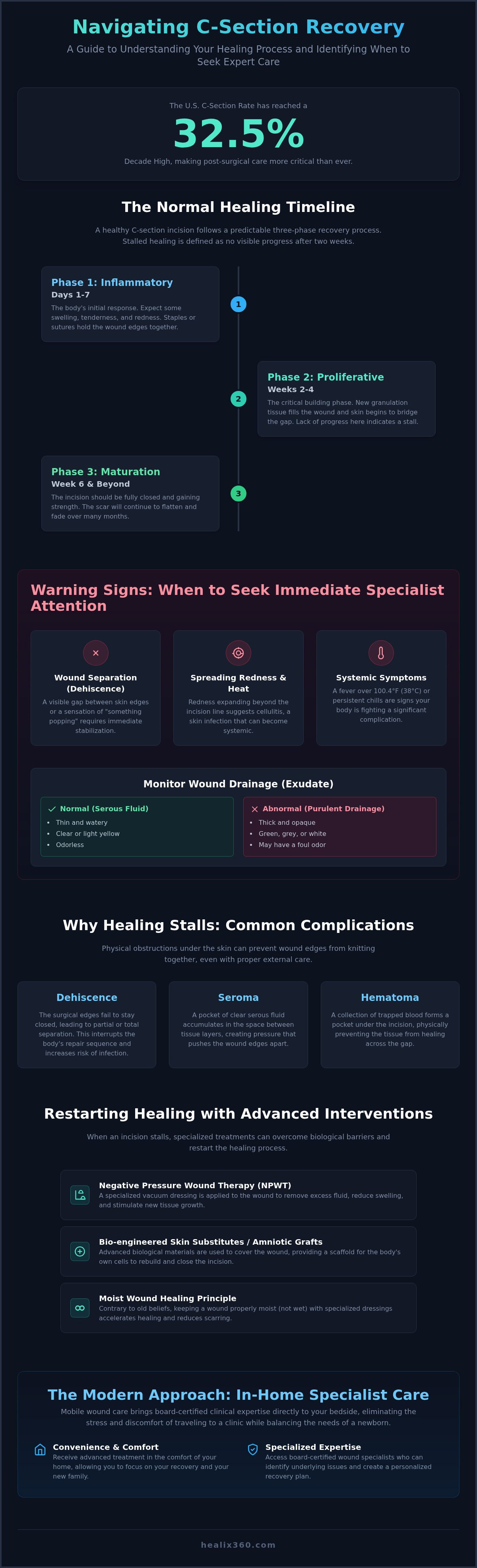
Visual monitoring is often complicated by the "shelf" effect, where abdominal tissue hangs over the incision line. This anatomical overhang creates a warm, moist environment that can trap bacteria and obscure the lower edge of the wound. It's vital to check this area daily for changes in exudate, or wound drainage. Normal serous fluid is thin, clear, or light yellow. However, purulent drainage is a clinical concern. This fluid is thick, opaque, and may appear green, grey, or white. Such discharge, especially when paired with a foul odor, indicates that the c-section incision not healing has likely developed a localized infection or a biofilm that prevents standard recovery.
Normal Post-Op Healing Timeline
- Day 1-7 (Inflammatory Phase): During this first week, the body sends white blood cells to the site. You'll likely have staples or sutures in place. Expect some swelling and tenderness, but the edges should remain closely apposed.
- Week 2-4 (Proliferative Phase): This is the critical window where new granulation tissue should become visible. The wound bed fills, and the skin begins to bridge the gap. If no progress is seen by the end of week two, the healing process has likely stalled.
- Week 6 and Beyond: By this stage, the incision should be functionally closed. If the wound remains open or continues to leak fluid after six weeks, it is medically classified as a chronic or non-healing surgical wound requiring advanced intervention.
Red Flags That Require Immediate Specialist Attention
- Wound Separation: If you experience a sensation of "something popping" or notice a visible gap between the skin edges, this indicates dehiscence. It requires immediate stabilization to prevent further tissue loss.
- Spreading Redness: Localized heat and redness that expands beyond the immediate incision line suggest cellulitis. This is a skin infection that can quickly become systemic if not managed by a specialist.
- Systemic Symptoms: A fever over 100.4°F or persistent chills accompanying wound pain are signs that the body is struggling to manage a post-surgical complication.
Why a C-Section Incision Fails to Heal: Dehiscence and Complications
Wound dehiscence occurs when the surgical edges of an incision fail to stay closed, resulting in partial or total separation. It's a significant clinical event that often explains why a c-section incision not healing persists despite standard care. This separation can be superficial, affecting only the skin, or deep, involving the underlying fascia. When the structural integrity of the closure is compromised, the body's natural repair mechanisms are interrupted, leaving the tissue vulnerable to further injury and contamination.
Internal fluid collections like seromas and hematomas frequently obstruct the healing process. Seromas are pockets of clear serous fluid that accumulate in the dead space between tissue layers, while hematomas consist of trapped blood. Both conditions create physical pressure that pushes the wound edges apart, preventing the necessary "knitting" of tissue. If you suspect your recovery has stalled due to these internal pressures, specialized advanced surgical wound care can identify these underlying biological barriers at your bedside.
Localized necrosis and bacterial biofilms represent more complex obstacles. Necrosis, or tissue death, occurs when blood supply is severely restricted, leaving behind dark or yellow debris that acts as a physical barrier to new cell growth. Bacterial biofilms are even more resilient; they are microscopic colonies of bacteria that shield themselves with a protective matrix. This shield makes them highly resistant to standard antibiotics and the body's immune system. Recognizing the Signs of a surgical site infection early is crucial, as biofilms often require professional intervention to remove the bacterial load and restart the healing cycle.
The Role of Underlying Health Conditions
Diabetes, whether gestational or pre-existing type 2, significantly impairs microcirculation. Chronic high blood sugar levels damage small blood vessels and reduce the delivery of oxygen and white blood cells to the surgical site. Additionally, a higher Body Mass Index (BMI) increases mechanical tension on the incision line. Adipose tissue is naturally less vascular than muscle, meaning it receives less nutrient-rich blood, which inherently slows the repair process. Nutritional status is equally vital; deficiencies in iron or protein, which are common in the postpartum period, can starve the body of the essential building blocks needed for collagen synthesis.
External Factors and Mechanical Stress
Mechanical stress is a frequent contributor to a c-section incision not healing correctly in active new mothers. Lifting a car seat or a toddler before the abdominal fascia has regained its strength can physically pull the surgical edges apart. Inadequate blood flow to the lower abdominal area, sometimes caused by poor incision placement or excessive tension during the initial surgical closure, can also lead to tissue ischemia. Without a steady supply of oxygenated blood, the skin cells at the incision margin cannot migrate or replicate, causing the wound to remain in a persistent, non-healing state.
Advanced Wound Care Interventions for Post-Surgical Healing
When standard postpartum monitoring fails to result in closure, specialized medical intervention becomes necessary. Standard dressings often only manage exudate without addressing the underlying biological reasons for a c-section incision not healing. Clinical intervention through advanced surgical wound care focuses on actively restarting the healing cycle. This process begins with sharp debridement, a procedure where a board-certified specialist removes necrotic tissue, slough, and bacterial biofilms that act as physical barriers to skin migration. Removing this non-viable material allows the body to focus its resources on healthy tissue regeneration.
A critical component of this specialized approach is wound culture and sensitivity testing. Rather than relying on broad-spectrum antibiotics, clinicians take a precise sample from the wound bed to identify the exact pathogens present. This is especially important when you observe signs of a wound infection, such as localized heat or purulent discharge. Targeted treatment ensures that the bacterial load is reduced efficiently, preventing the wound from transitioning into a chronic state.
Regenerative Medicine: Amniotic Grafts and Skin Substitutes
For stubborn surgical wounds, regenerative skin substitutes offer a sophisticated solution. These bio-engineered materials provide a biological scaffold that mimics the natural extracellular matrix, encouraging your own cells to migrate and close the gap. Amniotic membrane grafts are particularly effective because they contain natural growth factors and cytokines that actively reduce inflammation and minimize excessive scarring. These advanced therapies are often the "missing link" for a c-section incision not healing, providing the necessary biological signals to restart a stalled proliferative phase.
Negative Pressure Wound Therapy (NPWT)
Negative Pressure Wound Therapy, often referred to as a Wound VAC, uses a vacuum-assisted closure system to stabilize the wound environment. The unit applies controlled sub-atmospheric pressure through a specialized foam dressing. This mechanical force increases localized blood flow to the incision area while simultaneously removing excess interstitial fluid that causes swelling. By pulling the wound edges together, NPWT accelerates the formation of granulation tissue. Modern mobile NPWT units are designed for portability, allowing new mothers to receive this hospital-grade therapy while maintaining their daily routine and caring for their newborn at home.
Managing Non-Healing Wounds: Practical Steps for New Mothers
Managing the metabolic and physical requirements of motherhood while dealing with a c-section incision not healing requires a disciplined, clinical approach to home care. One of the most persistent myths in postpartum recovery is the suggestion to "let the wound air out" by leaving it uncovered. In clinical practice, we prioritize the principle of moist wound healing. Dehydrated cells cannot migrate across the wound bed effectively. They become non-viable and form a hard crust that obstructs closure. Maintaining a controlled, moist environment under a professional-grade dressing supports the natural enzymatic processes required for tissue repair. Dry cells die. Keeping the site protected is essential for progress.
Safe Incision Care at Home
Proper hygiene is the foundation of recovery, but many common household antiseptics are actually counterproductive. You should avoid using hydrogen peroxide or full-strength iodine on a compromised incision. These substances are cytotoxic, meaning they kill the very fibroblasts and healthy cells needed for skin regeneration. Instead, use sterile saline or a mild, fragrance-free cleanser as directed by your clinician. To ensure the best outcomes, follow these daily steps:
- Secure the Dressing: Use medical-grade silicone tapes or abdominal binders to prevent clothing from rubbing against the wound. Friction can cause micro-tears in fragile new tissue.
- Photo Documentation: Take a clear photo of the incision every 24 hours under consistent lighting. This creates an objective record for your medical team to identify subtle trends in healing or stagnation.
- Hand Hygiene: Always wash your hands for at least twenty seconds before and after touching the dressing area to prevent the introduction of new bacteria.
Nutrition and Lifestyle for Faster Recovery
Your body requires significant caloric and nutrient resources to synthesize new collagen. High-protein intake is mandatory during this phase. Protein provides the amino acids that serve as the building blocks for tissue repair. Additionally, Vitamin C and Zinc act as essential cofactors in the cross-linking of collagen fibers. If these are lacking, the new tissue will be structurally weak and prone to reopening. Hydration is equally critical for maintaining adequate blood volume and nutrient delivery to the lower abdomen.
Stress management also plays a biological role in recovery. High levels of cortisol, the body's primary stress hormone, can actively suppress the immune system and delay the inflammatory phase of healing. You must delegate household tasks and heavy lifting to others. The 2025 ERAC Society recommendations emphasize early mobilization, but this should be limited to gentle walking. Avoid any movement that creates a "pulling" sensation at the incision site. If you are struggling with a persistent wound, our advanced surgical wound care specialists can provide a personalized clinical assessment and treatment plan in the comfort of your home.
Specialized Mobile Wound Care for Post-Op Recovery in Southern California
Traveling to a clinical facility with a newborn while managing a surgical complication presents a significant physical and emotional burden. Healix360 addresses this challenge through a specialized mobile wound care model. We bring hospital-grade clinical interventions directly to patients across Southern California, including Glendale, Los Angeles, and Orange County. This service is specifically designed for mothers dealing with a c-section incision not healing, ensuring that high-level recovery doesn't require the physical strain of frequent clinic visits.
Our clinical team operates in close coordination with your existing OB-GYN, primary care physician, and home health agencies. This collaborative approach ensures a seamless transition of care and a unified strategy for surgical tissue closure. As a Medicare Part B provider, Healix360 facilitates access to advanced surgical wound treatments that are often unavailable in traditional home health or primary care settings. We manage the clinical logistics and documentation requirements, allowing you to prioritize your health and your infant's well-being.
The Healix360 Approach to Surgical Wounds
Every patient receives a personalized treatment plan developed by our board-certified specialists. We perform high-level procedures like sharp debridement and the application of bio-engineered grafts directly at your bedside. By utilizing Negative Pressure Wound Therapy (NPWT) and amniotic membrane grafts in the home environment, we actively reduce the risk of hospital readmission and long-term complications. Our objective is to move the wound out of a stalled inflammatory phase and toward functional closure with clinical rigor and precision.
How to Get Started with At-Home Care
The transition to specialized at-home care is a straightforward process. Southern California residents, case managers, or healthcare providers can initiate the referral process through our streamlined intake system. During your first mobile clinical consultation, a wound specialist will perform a comprehensive evaluation of the incision site and the surrounding abdominal tissue. We'll assess localized microcirculation, check for signs of bacterial biofilm, and establish a clear trajectory for your recovery. Contact Healix360 today for a professional in-home wound assessment.
Take Control of Your Postpartum Recovery
A c-section incision not healing within the expected fourteen-day window is a clinical indicator that your body requires specialized support. As we've explored, biological barriers such as bacterial biofilms or compromised microcirculation often require interventions that go beyond standard post-operative dressings. By utilizing advanced therapies like regenerative amniotic grafts and mobile Negative Pressure Wound Therapy, you can actively restart the proliferative phase of healing. These clinical treatments provide the necessary biological scaffold for new tissue growth while significantly minimizing the risk of infection or long-term scarring.
Healix360 specializes in delivering these hospital-grade services directly to your bedside. As a Medicare Part B provider, our board-certified mobile wound specialists serve the Southern California region, offering the expertise of a specialized clinical center with the convenience of at-home visits. You don't have to navigate the complexities of surgical complications alone while caring for your newborn. Request an In-Home Specialist Consultation for Your C-Section Recovery and begin an accelerated path to wellness. You deserve a recovery process that allows you to focus fully on your new family with confidence.
Frequently Asked Questions
What does a C-section incision look like when it is not healing?
A non-healing incision remains red, swollen, and shows no measurable progress toward closure after fourteen days. Unlike a healthy scar that appears as a dry, pinkish line, a stalled wound may have separated skin edges or exhibit thick yellow or green drainage. You might also notice localized heat or spreading redness around the site. Daily photo documentation is the most effective clinical tool for tracking these subtle visual changes during your recovery.
Can a C-section incision open up after 2 or 3 weeks?
Yes, surgical wounds can experience dehiscence several weeks after the procedure. While the surface skin might appear closed, the underlying fascia or subcutaneous tissue may not have regained sufficient structural strength. Mechanical stresses, such as lifting a heavy car seat or excessive movement, can cause the incision to pull apart during the third week. This is a primary reason for a c-section incision not healing correctly and requires an immediate clinical evaluation.
What is the most common cause of C-section wound dehiscence?
Wound infection is the most frequent driver of surgical edge separation. When bacteria colonize the incision site, they consume the metabolic resources needed for collagen synthesis and create a toxic environment that breaks down new tissue. Other common contributors include internal pressure from seromas or hematomas, which physically push the wound edges apart. Managing these biological barriers often requires advanced interventions like sharp debridement or Negative Pressure Wound Therapy to restore structural integrity.
Does Medicare cover mobile wound care for surgical complications?
Medicare Part B typically covers advanced mobile wound care services when they are medically necessary for non-healing surgical wounds. Healix360 is a Medicare Part B provider that delivers specialized bedside treatments, including regenerative grafts and vacuum-assisted closure. This coverage allows eligible patients in Southern California to receive board-certified specialist care at home. It eliminates the need for traveling to a clinic, which is especially beneficial for mothers recovering from a c-section incision not healing.
How do I know if my C-section incision is healing internally?
Internal healing is characterized by a gradual reduction in deep abdominal pain and the absence of localized fluid collections. If you feel a firm, tender lump under the skin or experience a persistent pulling sensation, it may indicate a seroma or hematoma. A wound specialist can use bedside evaluations to assess deep tissue health. Normal internal progress allows for increased mobility and the steady maturation of the scar tissue without fever or systemic symptoms.
What is the "shelf" over a C-section incision and does it affect healing?
The "shelf" refers to the abdominal tissue that overhangs the incision line after surgery. This anatomical feature can complicate recovery by trapping moisture and bacteria in the skin fold. This creates a warm, dark environment that encourages the growth of bacterial biofilms and makes visual monitoring difficult. If you have a significant overhang, it's vital to keep the area clean and dry using professional-grade dressings to prevent localized skin breakdown and infection.
When should I see a wound specialist instead of my regular OB-GYN?
You should consult a specialist if your incision shows no progress after two weeks or if initial treatments have failed to close the wound. While OB-GYNs manage standard post-op care, wound specialists provide advanced interventions like bio-engineered skin substitutes and sharp debridement. If you are dealing with a complex recovery due to diabetes or obesity, a specialist offers the focused expertise required to manage these comorbidities and prevent the need for hospital readmission.
Can advanced skin substitutes help with C-section scar complications?
Yes, bio-engineered skin substitutes and amniotic grafts are highly effective for restarting the healing process in chronic surgical wounds. These materials provide a biological scaffold that mimics the natural extracellular matrix, encouraging healthy cell migration. They also contain growth factors that reduce inflammation and minimize excessive scarring. These regenerative therapies are often the essential missing link for wounds that have remained open or stalled during the traditional six-week postpartum recovery period.


