
Did you know that for fiscal year 2026, approximately 8.1% of hospitals are expected to face readmission penalties because patients return for care within 30 days of discharge? Successfully coordinating mobile wound care for hospital discharge is the most effective way to avoid becoming part of that statistic. For families managing a complex surgical site or a chronic ulcer, the risk of infection once the hospital safety net is gone is a heavy burden that requires a proactive clinical plan.
You likely feel that the transition from a clinical facility to a home is a logistical cliff, especially when transporting a non-ambulatory patient to a wound clinic seems impossible. This guide teaches you how to master the clinical and logistical steps to transition patients from hospital to home with expert mobile wound care, ensuring continuity of treatment and preventing costly readmissions. We provide the professional oversight necessary to bridge the gap between hospital discharge and long term recovery with confidence.
We'll examine the specific requirements for Medicare-compliant bedside visits, the critical differences between general home health and mobile specialist oversight, and how to access advanced regenerative treatments like amniotic membrane grafts at home. This 2026 roadmap provides the clinical clarity you need to secure high-tier wound management without the stress of travel.
Key Takeaways
- Identify how to bridge the "discharge gap" to significantly reduce the risk of 30-day hospital readmissions for patients with chronic or surgical wounds.
- Master the clinical timeline for coordinating mobile wound care for hospital discharge, including the critical 48-72 hour referral window before a patient leaves the facility.
- Understand the reimbursement distinctions between Medicare Part A and Part B to ensure seamless access to specialized bedside consultations and advanced regenerative medicine.
- Compare the clinical capabilities of mobile wound specialists versus general home health agencies, focusing on advanced procedures like sharp debridement and bio-engineered skin substitutes.
- Eliminate the logistical challenges and physical trauma of transporting post-operative patients to outpatient clinics by utilizing professional in-home specialist care.
The Hospital Discharge Gap: Why Mobile Wound Care Coordination is Essential
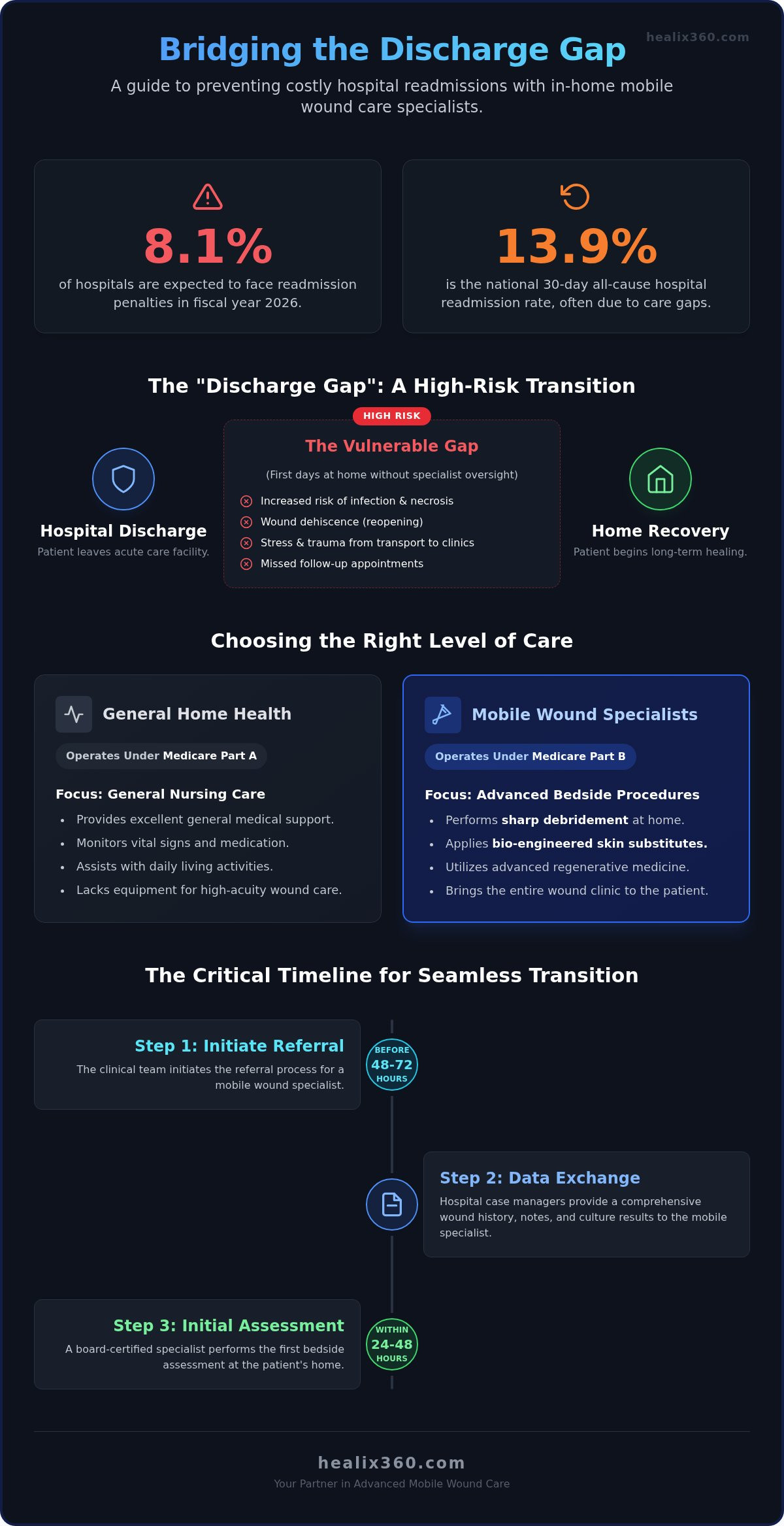
The "discharge gap" represents the vulnerable window between a patient's exit from acute hospital care and their first follow-up appointment with a specialist. During this time, clinical oversight often fluctuates, creating a high-risk environment for complications. Proactively coordinating mobile wound care for hospital discharge ensures that this gap is bridged by professional bedside monitoring rather than left to chance. Without a dedicated clinical bridge, patients with mobility challenges often struggle to maintain the rigorous treatment schedules required for complex recovery.
Statistics highlight the severity of this transition. For fiscal year 2026, approximately 8.1% of hospitals are expected to face readmission penalties under the Hospital Readmissions Reduction Program. Many of these readmissions stem from poorly managed surgical sites or chronic ulcers that deteriorate shortly after the patient returns home. In Southern California, these risks are amplified by regional logistics. Heavy traffic and the physical strain of transporting elderly or post-operative patients to outpatient clinics often lead to missed appointments, which directly contributes to the 13.9% national 30-day all-cause readmission rate.
The Risks of Uncoordinated Post-Hospital Care
When professional oversight is absent during the first few days at home, the risk of infection, dehiscence, and necrosis increases significantly. Daily monitoring is essential because the wound healing process is a delicate biological sequence that can be easily stalled by improper moisture balance or bacterial colonization. Without a specialist at the bedside, minor complications often go unnoticed until they require an emergency room visit. This cycle of "crisis management" places an immense emotional and physical toll on recovering patients. The stress of painful transport to a clinic can actually hinder recovery by elevating cortisol levels and causing physical trauma to the wound site during movement.
Defining the Mobile Specialist Model for 2026
It's vital to distinguish between general home health services and advanced mobile wound medicine. While home health nurses provide excellent general care, they often lack the specialized equipment and certifications required for high-acuity wound management. The 2026 model of mobile care involves board-certified specialists who bring the wound clinic to the patient's living room. These providers perform advanced bedside procedures, such as sharp debridement and the application of bio-engineered skin substitutes, that were previously only available in institutional settings. This shift toward regenerative medicine in the home allows for a higher tier of clinical oversight, ensuring that coordinating mobile wound care for hospital discharge results in superior patient outcomes and a seamless transition to long-term healing.
Step-by-Step Guide: Mobile Wound Care at Discharge
Successfully coordinating mobile wound care for hospital discharge requires a proactive timeline that begins well before the patient's actual exit. Waiting until the patient is home often leads to delays in treatment, which can jeopardize the surgical site or chronic ulcer. Clinical teams should initiate the referral process 48-72 hours before the anticipated discharge date. This lead time allows the mobile specialist to verify Medicare Part B eligibility and review the patient's clinical history. While Medicare-covered home health services under Part A handle general nursing, mobile wound specialists operate under Part B to provide higher-acuity procedures. Scheduling the initial assessment within 24-48 hours of the patient's arrival home is the standard for preventing readmission.
Collaborating with Hospital Case Managers
A successful transition depends on a thorough exchange of medical data between facilities. Case managers must ensure the hospital provides a comprehensive wound history and current treatment plan. This documentation should include operative notes, recent culture and sensitivity results, and an updated medication list. It's also helpful to include the most recent wound measurements and any photography taken before the dressings were applied for transport. When writing the discharge orders, specifically requesting a "mobile wound care specialist" referral ensures the patient receives physician-level oversight. This level of detail is paramount when coordinating mobile wound care for hospital discharge to ensure the mobile team is prepared for the specific acuity of the wound. If you're managing a complex case, exploring mobile advanced wound care services early in the discharge planning phase can streamline this coordination.
Preparing the Home Environment for Specialist Visits
The home environment must be prepared to function as a temporary clinical space. Families should designate a clean, well-lit area where the specialist can perform bedside evaluations and procedures. Clear access to the patient is essential for performing sharp debridement or applying bio-engineered skin substitutes. We recommend clearing a stable surface, such as a table, for the specialist to set up their sterile field and removing any pets from the immediate area. Caregivers should be present during the initial assessment to receive education on dressing changes and signs of infection. During this first visit, the specialist will bring all necessary medical supplies, including advanced dressings and diagnostic tools, to establish a personalized treatment plan. This bedside approach eliminates the physical trauma of clinic travel while maintaining institutional standards of care.
Navigating Medicare and Insurance for Mobile Wound Care in Southern California
Medicare Part B serves as the primary funding mechanism for specialized bedside procedures in the home setting. Unlike institutional care, this model allows for high-tier medical intervention without the overhead of a facility fee. When coordinating mobile wound care for hospital discharge, understanding the distinction between Part A and Part B is essential for proper billing. Medicare Part A typically funds home health agencies for general nursing and physical therapy. In contrast, Part B covers the professional services of wound specialists. This allows for advanced procedures, such as sharp debridement or wound culture testing, to be performed directly in the patient's residence. In Southern California, major private insurance providers also frequently mirror these Medicare guidelines to support mobile medicine initiatives.
Meticulous, Medicare-compliant documentation is mandatory for reimbursement, particularly when managing surgical wound care. Specialists must record precise wound dimensions, tissue characteristics, and clear evidence of medical necessity. These records must align with the stricter Local Coverage Determinations (LCDs) implemented in 2026. Without this level of clinical detail, claims for advanced treatments may be denied, potentially interrupting the patient's continuity of care.
Understanding the Medicare Part B Advantage
A common misconception is that patients must be strictly "homebound" to receive mobile specialist care. While homebound status is a requirement for Part A home health nursing, Part B specialist consultations are accessible to patients who find clinic travel medically taxing or physically hazardous. Mobile providers bill directly for advanced procedures, including bio-engineered skin substitutes and amniotic membrane grafts. These specialized services often run concurrently with other home health interventions. This dual-track approach provides a multi-layered clinical bridge that stabilizes the patient during the high-risk 30-day post-discharge window.
Southern California Logistics: Service Areas and Access
Southern California presents unique challenges for post-operative recovery, primarily due to the "L.A. traffic factor." For a patient in Glendale, Los Angeles, or the surrounding suburbs, a simple follow-up at a wound clinic can involve hours of painful transit. Mobile experts eliminate this barrier by bringing the clinic to the bedside. Local specialists coordinate directly with regional hospital systems to ensure the transition occurs immediately upon exit. This regional expertise is a vital component of coordinating mobile wound care for hospital discharge, as it allows for faster discharge times and ensures that the patient's insurance benefits are utilized efficiently within their local network.
Mobile Specialists vs. Home Health: Choosing the Right Level of Care
Selecting the appropriate clinical support after a hospital stay is a decision that significantly impacts long-term recovery. While traditional Home Health Agencies (HHA) provide invaluable general nursing care, they often operate within a generalist framework. These nurses manage medications, vitals, and basic dressing changes for a wide variety of conditions. However, coordinating mobile wound care for hospital discharge introduces a board-certified specialist who focuses exclusively on the complex pathology of the wound. This specialist model is defined by the ability to perform high-acuity interventions that generalist agencies typically cannot facilitate. One primary differentiator is the application of advanced skin substitutes, which require specialized training and Medicare Part B oversight to execute in a home setting.
Advanced Clinical Procedures at the Bedside
Bedside procedures are the hallmark of specialized mobile medicine and represent a higher tier of care than standard home nursing. A specialist visit often includes sharp debridement to remove necrotic tissue, a procedure that is essential for moving a wound from a chronic state to an active healing state. We also perform wound culture testing to identify specific pathogens, ensuring that antibiotic treatments are targeted and effective. These providers utilize regenerative technologies, such as amniotic membrane grafts, which are applied directly in the patient's residence. These advanced treatments are particularly effective for accelerating the healing of complex diabetic ulcers and venous stasis wounds. By treating the wound at the bedside with physician-level precision, we eliminate the need for the patient to travel to an outpatient center for every procedure.
The Collaborative Care Model
The most effective recovery plans utilize a collaborative care model where mobile specialists and home health agencies work in tandem. Healix360 functions as a clinical partner to the HHA, providing the specialized oversight that a generalist nurse might not have the certification to perform. When coordinating mobile wound care for hospital discharge, this partnership ensures the patient has a comprehensive safety net. The mobile specialist reviews the wound's progress during each visit and adjusts the treatment plan based on real-time healing data. This dual-layered approach is the gold standard for complex post-operative recovery because it addresses both the patient's general health and the specific needs of the wound site. This synergy allows for a more responsive clinical environment, preventing minor issues from escalating into hospital readmissions. If you're ready to secure this level of oversight for a loved one, you can contact our Southern California wound specialists to begin the referral process.
Securing a Seamless Recovery with Healix360 Mobile Wound Care
Healix360 serves as a premier clinical partner for Southern California hospitals, case managers, and families. We understand that the recovery process is most fragile immediately after a patient leaves the clinical setting. By coordinating mobile wound care for hospital discharge, we provide a specialized bridge that maintains institutional standards of care in a residential environment. Our board-certified specialists are equipped to manage high-acuity wounds that require more than general nursing. We utilize regenerative medicine, including amniotic membrane grafts and bio-engineered skin substitutes, to address non-healing wounds that might otherwise lead to a 30-day readmission. Our commitment to clinical rigor ensures that every patient receives the professional oversight necessary for a successful transition home.
The referral process at Healix360 is designed for maximum efficiency to support busy discharge planners. We collaborate directly with hospital teams to ensure all clinical data, including operative notes and culture results, is transferred securely. This professional handoff minimizes the risk of treatment gaps that often occur during the first 48 hours at home. Our focus remains on meticulously monitoring the wound site at the bedside, allowing us to identify and address potential complications before they require emergency intervention. This proactive approach is a cornerstone of coordinating mobile wound care for hospital discharge in 2026.
Why Southern California Families Trust Healix360
Trust is built through clinical expertise and consistent patient outcomes. The Healix360 medical team brings a level of professional authority to the home that's typically reserved for specialized outpatient clinics. We provide the convenience of in-home visits for patients in private residences and assisted living facilities across Southern California, from Glendale to the South Bay. This accessibility is vital for those who can't endure the physical strain of frequent clinic visits. Our specialists utilize advanced therapies to treat complex bed sores and ulcers, preventing the progression of tissue damage through expert bedside intervention. Families appreciate the quiet confidence our team brings to every visit, ensuring that the patient's recovery is handled with the highest standard of care.
Getting Started: Your Discharge Coordination Checklist
To ensure a seamless transition, we recommend following this clinical checklist on the day of discharge:
- Confirm that "Mobile Wound Specialist" is specifically listed in the physician's discharge orders to ensure Medicare Part B compliance.
- Verify that a copy of the operative notes and the most recent wound culture results are included in the patient's discharge packet.
- Ensure the home environment is prepared with adequate lighting and a clear space for the specialist's bedside evaluation.
- Coordinate with your assigned home health agency to align their general nursing visits with our specialized wound oversight.
Our team is ready to assist with the logistics of your transition and can provide immediate bedside evaluations. You can contact Healix360 for a consultation to secure your patient's recovery timeline and prevent unnecessary hospital returns. Coordinate your mobile wound care with Healix360 today to bridge the gap between the hospital and a full recovery.
Securing Your Clinical Bridge to Recovery
The transition from a hospital facility to a private residence represents a critical window for patient safety. By coordinating mobile wound care for hospital discharge, families and case managers can effectively eliminate the clinical gap that often leads to avoidable readmissions. This guide has detailed how bridging this period with specialist-level oversight ensures that advanced regenerative medicine is accessible without the physical trauma of clinic transport. Healix360 operates as a dedicated Medicare Part B provider, bringing board-certified specialists directly to the bedside to perform high-acuity procedures.
This collaborative care model allows for a seamless handoff, providing the clinical rigor needed to manage complex surgical sites and chronic ulcers. Utilizing advanced regenerative medicine at the bedside ensures that healing stays on track from the first day home. You don't have to manage this complex transition alone. Request a mobile wound care consultation for hospital discharge in Southern California to establish a professional treatment plan. We're here to provide the clinical expertise and reliability your recovery deserves.
Frequently Asked Questions
What is the difference between home health and mobile wound care?
Traditional home health agencies focus on general recovery tasks like vitals monitoring and medication management under Medicare Part A. In contrast, mobile wound care involves board-certified specialists who perform advanced procedures under Medicare Part B. These specialists bring clinical expertise and equipment directly to the bedside. While home health provides general nursing, mobile specialists focus specifically on high-acuity wound pathology, including sharp debridement and regenerative grafts.
Does Medicare cover mobile wound care after a hospital discharge?
Yes, Medicare Part B covers professional wound care consultations and bedside procedures in residential settings. Unlike home health services that require a "homebound" status under Part A, specialist visits under Part B are accessible to patients who find travel to a clinic medically taxing. Coordinating mobile wound care for hospital discharge ensures that Medicare-compliant documentation is maintained, allowing for the reimbursement of advanced treatments like bio-engineered skin substitutes and amniotic membrane grafts.
How soon after leaving the hospital should a wound specialist visit?
Clinical standards suggest the initial mobile assessment should occur within 24 to 48 hours of the patient returning home. This timeline is critical because the first few days after discharge are the highest risk for infection or dehiscence. By initiating the referral process 48 to 72 hours before the patient leaves the hospital, you ensure the specialist is ready to perform a bedside evaluation immediately, providing a necessary clinical bridge for recovery.
Can a mobile specialist perform debridement at my home?
Yes, board-certified specialists can perform sharp debridement at the patient's bedside. This procedure involves removing necrotic or infected tissue to promote the biological sequence of healing. Mobile specialists bring sterile equipment and diagnostic tools to the home, allowing them to execute this high-acuity intervention safely. Performing debridement in a residential setting eliminates the physical trauma and logistical stress of transporting a post-operative patient to an outpatient wound clinic.
Do I need a referral from my surgeon to use mobile wound care?
A formal referral is typically required to ensure the care is Medicare-compliant and coordinated with the patient's surgical team. When coordinating mobile wound care for hospital discharge, the hospital case manager should include a specific request for mobile wound specialist follow-up in the discharge orders. This allows for a warm handoff of medical data, including operative notes and culture results, which helps the mobile specialist align the treatment plan with the surgeon's goals.
Will mobile wound care help prevent me from going back to the hospital?
Mobile wound care is specifically designed to reduce the risk of 30-day hospital readmissions. By providing physician-level oversight at the bedside, specialists can identify signs of infection or stalled healing much earlier than a generalist might. This proactive monitoring allows for immediate adjustments to the treatment plan, such as bedside debridement or wound culture testing. These interventions resolve complications in the home, preventing the need for emergency room visits or re-hospitalization.
What advanced treatments are available through mobile wound services?
Mobile specialists offer several advanced treatments that were previously only available in institutional settings. These include:
- Amniotic membrane grafts and bio-engineered skin substitutes.
- Negative Pressure Wound Therapy (NPWT) management.
- Sharp debridement and compression therapy.
- Wound culture and sensitivity testing.
These regenerative technologies accelerate healing for chronic diabetic ulcers and complex surgical wounds by providing the necessary biological scaffolding directly at the bedside.
Is mobile wound care available in Glendale and Los Angeles?
Yes, Healix360 provides specialized mobile wound care services throughout Southern California, including Glendale, Los Angeles, and the surrounding suburbs. Our team is specifically organized to navigate the logistical challenges of the region, such as heavy traffic and transport logistics for elderly patients. We coordinate directly with local hospital systems to ensure patients in these areas receive immediate, high-tier clinical oversight without the stress of traveling to a local wound clinic.


