
For a patient recovering at home, the difference between a wound that is successfully closing and one that is quietly harboring a dangerous infection can be nearly invisible to the untrained eye. You shouldn't have to guess whether a change in color is a normal part of the body's inflammatory response or a signal of a deepening complication. Understanding the specific signs of wound infection healing vs not is essential to prevent serious health risks and avoid an unnecessary hospital readmission. It's natural to feel uncertain during every dressing change, particularly when mobility challenges make a trip to a clinic feel like a significant hurdle.
This guide provides the clinical clarity required to accurately identify these markers, empowering you to make informed decisions. We'll move beyond basic observations to help you understand the biological sequence of repair. By distinguishing between healthy granulation and the subtle indicators of a stalled or infected wound, you can ensure timely medical intervention when it matters most.
We've structured this resource as a professional checklist for patients and caregivers. You'll learn which symptoms demand a call to a board-certified specialist and how mobile wound care brings expert bedside evaluations and regenerative treatments directly to your home. Our goal is to replace anxiety with a methodical, evidence-based approach to your recovery.
Key Takeaways
- Learn the four biological stages of wound healing to understand why initial inflammation is often a productive part of the recovery process.
- Identify critical clinical red flags, such as spreading erythema and cloudy exudate, which are essential signs of wound infection healing vs not.
- Use our side-by-side comparison of tissue color and odor to distinguish between healthy granulation and necrotic or infected markers.
- Recognize the emergency symptoms of sepsis and gangrene that demand immediate intervention to prevent life-threatening complications.
- Discover how mobile advanced wound care brings specialized treatments like sharp debridement and regenerative grafts directly to your home.
The 4 Stages of Normal Wound Healing
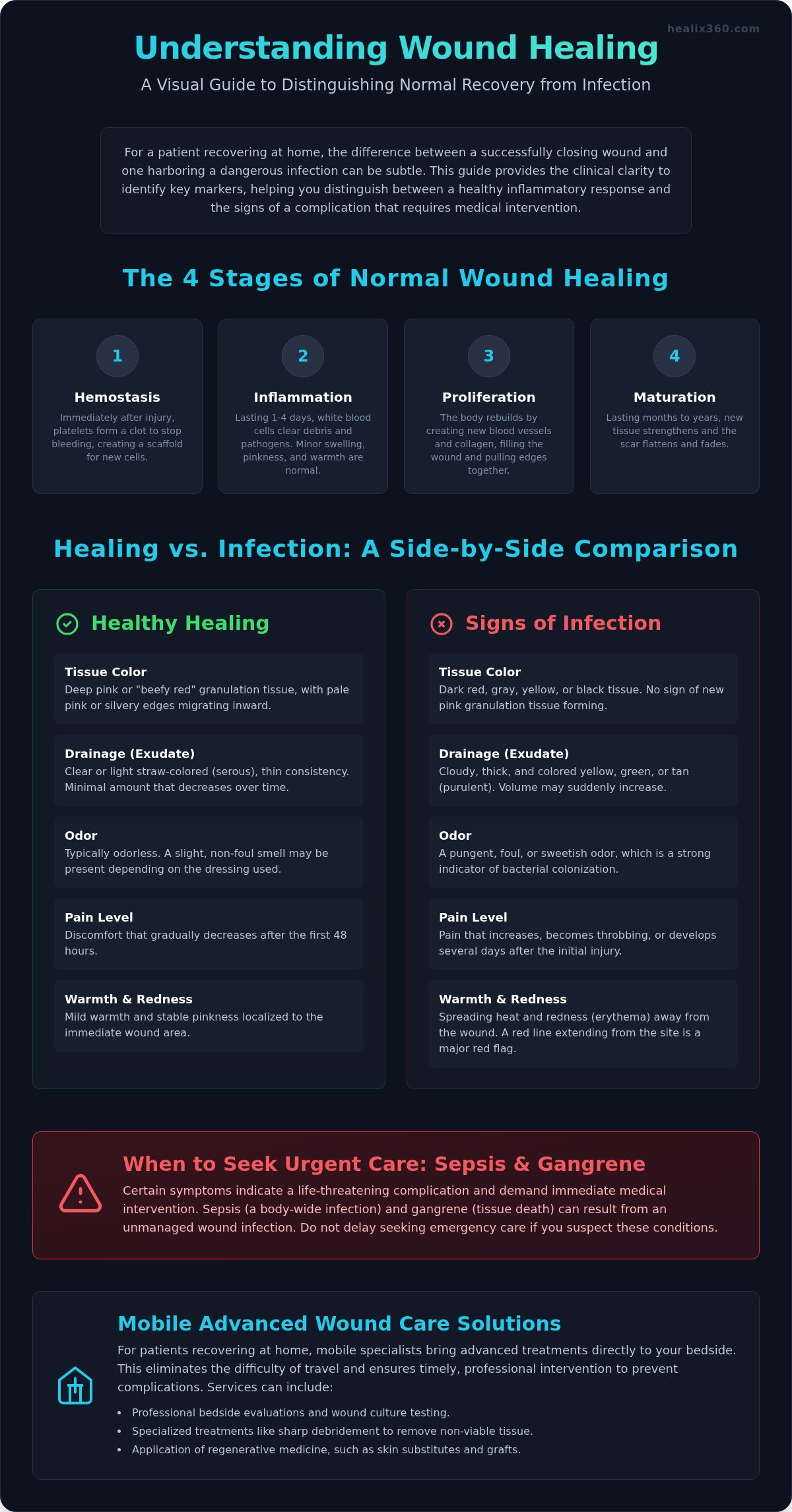
Wound recovery is a complex physiological sequence rather than a single event. To accurately identify the signs of wound infection healing vs not, you must first understand the standard biological progress. The 4 Stages of Normal Wound Healing provide a clinical roadmap for monitoring at-home recovery. These stages overlap and occur in a predictable order in healthy tissue.
- Hemostasis: This immediate response begins within seconds of injury. Platelets aggregate to form a fibrin clot, which acts as a temporary seal to stop bleeding and create a scaffold for new cells.
- Inflammatory Phase: Lasting roughly one to four days, this phase often causes the most concern for caregivers. Minor swelling, localized heat, and pinkness are productive signs. They indicate that white blood cells are migrating to the site to clear debris and neutralize pathogens.
- Proliferative Phase: During this rebuilding stage, the body produces collagen and new blood vessels. This phase focuses on filling the wound bed and pulling the edges together.
- Maturation and Remodeling: This final stage can last for months or even years. The initial collagen is replaced with stronger tissue, and the scar gradually flattens and fades.
What 'Good' Healing Looks Like
Healthy progress is most evident during the proliferative phase. Granulation tissue is the hallmark of a healing wound bed. It appears as deep pink or "beefy red" tissue with a moist, slightly granular texture. This appearance confirms that the wound has a robust blood supply and is receiving necessary oxygen. You should also observe the wound edges migrating inward. In a healthy scenario, the skin at the perimeter appears silvery or pale pink as new epithelial cells begin to close the gap. These are the primary signs of wound infection healing vs not that suggest the body's repair mechanisms are functioning correctly.
When the Timeline Shifts
While the biological stages remain consistent, the speed of the sequence can vary based on individual health factors. Advanced age or chronic conditions like diabetes often extend the inflammatory phase. It's critical to distinguish between "slow healing," which shows incremental weekly progress, and "stalled healing," where no visible change occurs for 14 days or more. Diligent monitoring of surgical wound care progress daily is essential for detecting these shifts early. If a wound remains in the inflammatory stage indefinitely, the risk of biofilm development increases, necessitating a professional bedside evaluation to prevent the onset of a clinical infection.
Red Flags: Identifying Signs of Wound Infection
Early recognition of clinical complications is the most effective way to prevent hospital readmission. While mild pinkness is a normal part of the inflammatory phase, spreading redness, or erythema, is a primary indicator of bacterial progression. You should monitor the wound daily for a "red line" extending from the site or a patch of redness that grows larger over time. Increased pain after the initial 48 hours is another significant concern. While trauma causes immediate discomfort, pain that intensifies or becomes throbbing several days later suggests deep tissue involvement. If you notice these Signs of Wound Infection, a professional assessment is necessary to determine the next steps in your care.
Decoding Wound Drainage
Fluid production, or exudate, is expected in many wounds, but the consistency and color provide vital data on signs of wound infection healing vs not. Serous drainage is clear or straw-colored and is typical during normal repair. Sanguineous drainage is thin and bloody. However, purulent discharge, which is cloudy, thick, and often yellow, green, or tan, is a hallmark of infection. A sudden surge in volume or the development of a pungent, foul odor can indicate the presence of a biofilm or bacterial colonization. In such cases, clinicians utilize wound culture and sensitivity testing to identify the specific pathogen and prescribe the correct antibiotic.
The 'Warmth' Test
Localized heat is a reliable clinical marker. You can check this by gently placing the back of your hand on the skin surrounding the wound and comparing it to a different limb. If the area feels significantly hotter, it suggests an active immune battle against bacteria. Persistent swelling, or edema, that lasts beyond the first week also warrants attention. For patients already managing edema in legs, this extra fluid can compress small blood vessels, slowing the delivery of white blood cells and increasing infection risk. If the skin feels tight, shiny, or stays indented when pressed, the wound's environment is compromised.
When an infection spreads beyond the local tissue, it may trigger systemic symptoms like fever, chills, or swollen lymph nodes near the wound site. These signs indicate the body is struggling to contain the bacteria. Systemic symptoms are often the final warning that the balance between the signs of wound infection healing vs not has tipped toward a dangerous state. If you observe spreading redness, foul-smelling drainage, or feel generally unwell, our specialists can provide mobile wound evaluations at your bedside to prevent further complications.
Healing vs. Not Healing: A Side-by-Side Comparison
Distinguishing between the signs of wound infection healing vs not requires a systematic evaluation of tissue characteristics. While the body's natural stages of wound healing follow a predictable timeline, deviations often manifest through changes in color, odor, and pain levels. Monitoring these markers daily allows you to identify when a wound has transitioned from a healthy state to a pathological one.
- Color: Healthy healing tissue is typically pink or beefy red, indicating robust granulation. In contrast, an infected or necrotic wound may show yellow slough, green discharge, or black eschar, which is dead tissue that must be removed.
- Odor: A clean, healing wound should have no discernible smell. A foul, pungent, or sweet-sickly odor is a definitive marker of bacterial colonization and active infection.
- Pain: Discomfort should steadily decrease as the inflammatory phase subsides. Pain that intensifies, becomes throbbing, or radiates away from the site suggests deep tissue involvement or abscess formation.
- Size: Successful healing involves visible contraction and a shrinking wound perimeter. A wound that remains stagnant in size or begins to expand is failing to progress through the proliferative phase.
The Danger of the Stalled Wound
A "chronic wound" is clinically defined as any injury that has failed to show significant improvement within 30 days. These often occur when underlying conditions, such as diabetes or venous insufficiency, prevent the body from moving beyond the inflammatory phase. For example, bed sores and ulcers are particularly prone to stalling because compromised circulation starves the tissue of the oxygen required for repair. A stalled wound is highly vulnerable and frequently becomes an infected emergency if the biological sequence isn't restarted through professional intervention.
Biofilms: The Invisible Barrier
One of the primary reasons a wound fails to close is the formation of a biofilm. Biofilms are complex communities of bacteria that secrete a protective, microscopic matrix, making them nearly immune to standard topical ointments and systemic antibiotics. Research indicates that 80% of chronic wounds contain a biofilm that prevents closure. Breaking through these bacterial shields requires specialized sharp debridement to remove non-viable tissue and disrupt the matrix at the bedside. This process is essential for shifting the environment back toward the healthy signs of wound infection healing vs not spectrum, allowing regenerative treatments to finally take hold.
When to Seek Urgent Care: Sepsis and Gangrene
Recognizing the early signs of wound infection healing vs not is the first line of defense, but certain markers indicate that the situation has escalated beyond local care. When an infection bypasses the body's initial containment efforts, it can trigger life-threatening systemic responses or localized tissue death. If you observe confusion, an extremely high fever, or a sudden drop in blood pressure, these are emergency indicators of sepsis. For those with compromised circulation, particularly individuals requiring diabetic ulcer treatment, the window for effective intervention is narrow. Vigilance in these cases isn't just about healing; it's about limb salvage and preventing amputation.
From Local Infection to Systemic Sepsis
Sepsis occurs when bacteria from an untreated or poorly managed wound enter the bloodstream, triggering a widespread inflammatory response. Caregivers should monitor for rapid breathing and an elevated heart rate, which often precede more obvious signs of distress. Spreading cellulitis, characterized by a rapidly expanding red area that feels tight and painful, can turn systemic within hours. Waiting until the following morning to address these symptoms can be fatal. If sepsis is suspected, immediate emergency medical attention is mandatory. Call 911 if the patient displays signs of confusion or a high fever alongside a non-healing wound.
Necrosis and Gangrene Recognition
Localized tissue death, or necrosis, presents a different but equally urgent set of challenges. You may notice eschar, which is a hard, leathery black or dark brown tissue covering the wound. This dead tissue acts as a shield, hiding deep-seated infections from view and preventing topical treatments from reaching the wound bed. Gangrene generally falls into two categories: dry and wet. Dry gangrene often involves shriveled, blackened skin and a loss of feeling; wet gangrene is characterized by swelling, blistering, and a moist appearance. Both conditions signify that blood flow has been severely restricted.
The "Golden Window" for treatment refers to the critical period where specialized intervention can still save a limb. Once tissue becomes cold to the touch or loses all sensation, the risk of permanent damage increases significantly. If you identify non-viable tissue or suspect the infection is spreading, you should contact an advanced wound specialist for an immediate bedside evaluation. Our team provides mobile assessments and sharp debridement to remove necrotic tissue and restart the healing process. To prevent these complications and receive specialized care in the comfort of your home, schedule a bedside evaluation with Healix360.
Mobile Advanced Wound Care: Bedside Solutions for Southern California
For many patients in Southern California, the physical challenge of traveling to a wound center creates a significant barrier to recovery. Patients with limited mobility often face the risk of further injury or increased pain during transport. Mobile advanced wound care eliminates these obstacles by bringing board-certified specialists directly to the bedside. This model allows for a precise clinical assessment of the signs of wound infection healing vs not in the patient's own environment. Beyond simple evaluation, specialists perform high-level interventions such as sharp debridement to remove non-viable tissue and manage complex cases with Negative Pressure Wound Therapy (NPWT), also known as a Wound VAC.
Accessing these services is streamlined for residents through Medicare Part B coverage. As a Medicare-compliant provider, Healix360 ensures that advanced medical treatments are accessible to those who need them most. This bedside approach doesn't just provide convenience; it ensures that chronic wounds receive the same standard of care found in a hospital setting while avoiding the risks associated with ER visits. By treating the wound at home, we minimize the patient's exposure to hospital-acquired infections and the physical stress of travel.
Regenerative Grafts for Non-Healing Wounds
When standard protocols fail to close a wound, regenerative medicine offers a path forward. Amniotic membrane grafts provide a biological scaffolding that supports the growth of new, healthy tissue. These grafts, along with stem cell therapy, work to reduce chronic inflammation and accelerate the closure of stalled wounds. Bio-engineered skin substitutes act as a 'living bandage' for chronic ulcers. By introducing essential growth factors directly into the wound bed, these advanced materials help the body overcome the biological hurdles that previously prevented repair.
Accessing Care in Glendale and Los Angeles
Our team coordinates closely with families, home health agencies, and case managers across Los Angeles, Glendale, and Beverly Hills. This collaborative approach ensures that the patient's personalized treatment plan is followed consistently between visits. Mobile medical consultations provide the specialized expertise required to monitor the signs of wound infection healing vs not without the stress of clinic commutes. If you're managing a chronic wound at home, professional intervention can prevent the progression toward the emergencies discussed in previous sections. Contact Healix360 for a professional bedside wound assessment today.
Taking Control of Your Recovery at Home
Monitoring your recovery requires more than just checking for surface-level changes; it involves a clinical understanding of the biological sequence of repair. By accurately identifying the signs of wound infection healing vs not, you can intervene before a simple ulcer escalates into a systemic emergency like sepsis. Healing is often a non-linear process, but persistent stalling or the development of necrotic tissue are definitive indicators that your current treatment plan needs adjustment. Professional oversight ensures that these subtle shifts are caught early and addressed with precision.
Healix360 provides specialized bedside solutions for residents throughout Southern California. As a Medicare Part B provider, our board-certified wound specialists deliver advanced regenerative treatments and mobile sharp debridement directly to your home. This mobile model ensures that patients with limited mobility receive the highest standard of medical care without the physical strain or exposure risks of clinic visits. Don't let uncertainty delay your progress toward total closure. You deserve a recovery path defined by clinical rigor and personalized care.
Schedule an In-Home Wound Assessment with Healix360 Specialists to ensure your wound stays on the path to successful healing.
Frequently Asked Questions
Is redness around a wound always a sign of infection?
No, minor redness is a normal part of the inflammatory phase during the first few days of healing. This localized pinkness indicates that the body is sending white blood cells to the area to prevent infection. However, if the redness begins to spread, feels hot to the touch, or develops red streaks, it is a clinical marker of bacterial progression. Distinguishing between these signs of wound infection healing vs not is vital for timely intervention.
What does an infected wound smell like?
A healthy, healing wound should have no discernible odor. An infected wound often produces a distinct, unpleasant smell caused by bacterial colonization and tissue breakdown. This odor can be foul, pungent, or even sweet and sickly depending on the specific bacteria present, such as Pseudomonas. If you notice a new or worsening smell during a dressing change, it indicates that the wound's bacterial load has reached a dangerous level.
Can a wound be infected without pus?
Yes, an infection can be present even without the appearance of cloudy pus or purulent drainage. Other significant indicators include intensifying pain, localized warmth, and persistent swelling that lasts beyond the first week. While pus is a common sign of a white blood cell response to bacteria, its absence doesn't confirm the wound is clean. Clinicians evaluate a combination of systemic and localized symptoms to diagnose a clinical infection.
How can I tell if my diabetic foot ulcer is healing or getting worse?
A healing diabetic ulcer will show moist, pink granulation tissue and a visible reduction in size over time. Conversely, an ulcer that is getting worse may expand, deepen, or develop yellow slough and black necrotic tissue. Because many diabetic patients suffer from neuropathy, they may not feel increased pain even as an infection spreads. This makes regular visual inspection of the signs of wound infection healing vs not a critical part of daily foot care.
Does Medicare cover at-home wound care visits in Los Angeles?
Yes, Medicare Part B provides coverage for mobile advanced wound care services for eligible residents in Los Angeles, Glendale, and Beverly Hills. Healix360 is a Medicare-compliant provider that brings board-certified specialists directly to the patient's bedside. This coverage includes professional medical consultations and specialized procedures like sharp debridement or the application of regenerative grafts. This model allows patients with limited mobility to receive expert care without the stress of clinic travel.
What is the difference between a stalled wound and an infected wound?
A stalled wound is a chronic injury that has failed to show progress for 30 days but may not yet show active markers of infection like heat or pus. These wounds are often stuck in the inflammatory phase due to underlying circulation issues. An infected wound involves an active bacterial invasion that is damaging tissue and potentially causing systemic illness. Stalled wounds frequently harbor invisible biofilms that, if left untreated, eventually lead to a clinical infection.
When should I call a wound specialist instead of a primary care doctor?
You should contact a specialist if a wound shows no visible improvement after two weeks of standard care or if you have high-risk conditions like diabetes. While primary care doctors manage general health, chronic wounds require the specialized expertise of board-certified practitioners who can perform sharp debridement and apply regenerative medicine. Specialized intervention is necessary when the biological healing sequence has been interrupted by biofilms or poor vascular supply.
Can gangrene be treated at home if caught early?
Gangrene is a serious medical condition that requires immediate professional evaluation to prevent amputation. While mobile specialists can provide advanced bedside treatments like sharp debridement and amniotic membrane grafts for necrotic tissue, you should never attempt to treat gangrene with home remedies. If you notice blackening skin, a loss of sensation, or a cold limb, contact a wound specialist immediately for an urgent assessment. Symptoms of sepsis, such as confusion or high fever, require a 911 call.


