
Could the most effective way to lower your facility's 30-day readmission rate be as simple as bringing the wound clinic directly to the resident's bedside? For many administrators, the logistical burden of transporting fragile patients to outpatient centers is a constant source of risk and expense. Implementing mobile wound care for skilled nursing facilities addresses these challenges while reducing the staff burnout associated with complex wound management. You've likely seen how documentation gaps regarding pressure injuries can impact your facility's reputation and bottom line. We understand that managing non-healing ulcers requires a level of specialization that often exceeds standard operational capacity.
This 2026 guide demonstrates how specialized bedside interventions improve patient outcomes without increasing your operational costs. It's a balance of clinical rigor and administrative efficiency. By integrating advanced regenerative technology like amniotic membrane grafts and sharp debridement at the bedside, you can provide hospital-grade care while maintaining strict compliance. We'll explore how seamless Medicare Part B billing coordination and professional documentation reduce liability and help your staff focus on what they do best. Discover how Southern California facilities are utilizing these bedside interventions to achieve faster healing and better state survey results.
Key Takeaways
- Specialized bedside interventions, including sharp debridement and amniotic membrane grafts, accelerate the healing of chronic ulcers without the risks associated with resident transportation.
- Partnering with a provider of mobile wound care for skilled nursing facilities helps mitigate liability through precise documentation and adherence to 2026 Medicare compliance standards.
- Utilizing Medicare Part B billing coordination allows facilities to access high-acuity regenerative treatments without increasing internal operational or supply costs.
- Advanced mobile care models serve as a clinical extension of your team, reducing staff burnout by managing complex wound cases directly at the bedside.
- Focused expertise in the Southern California and Glendale markets ensures your facility remains compliant with local coverage determinations and state survey requirements.
The Evolution of Wound Care in Skilled Nursing Facilities
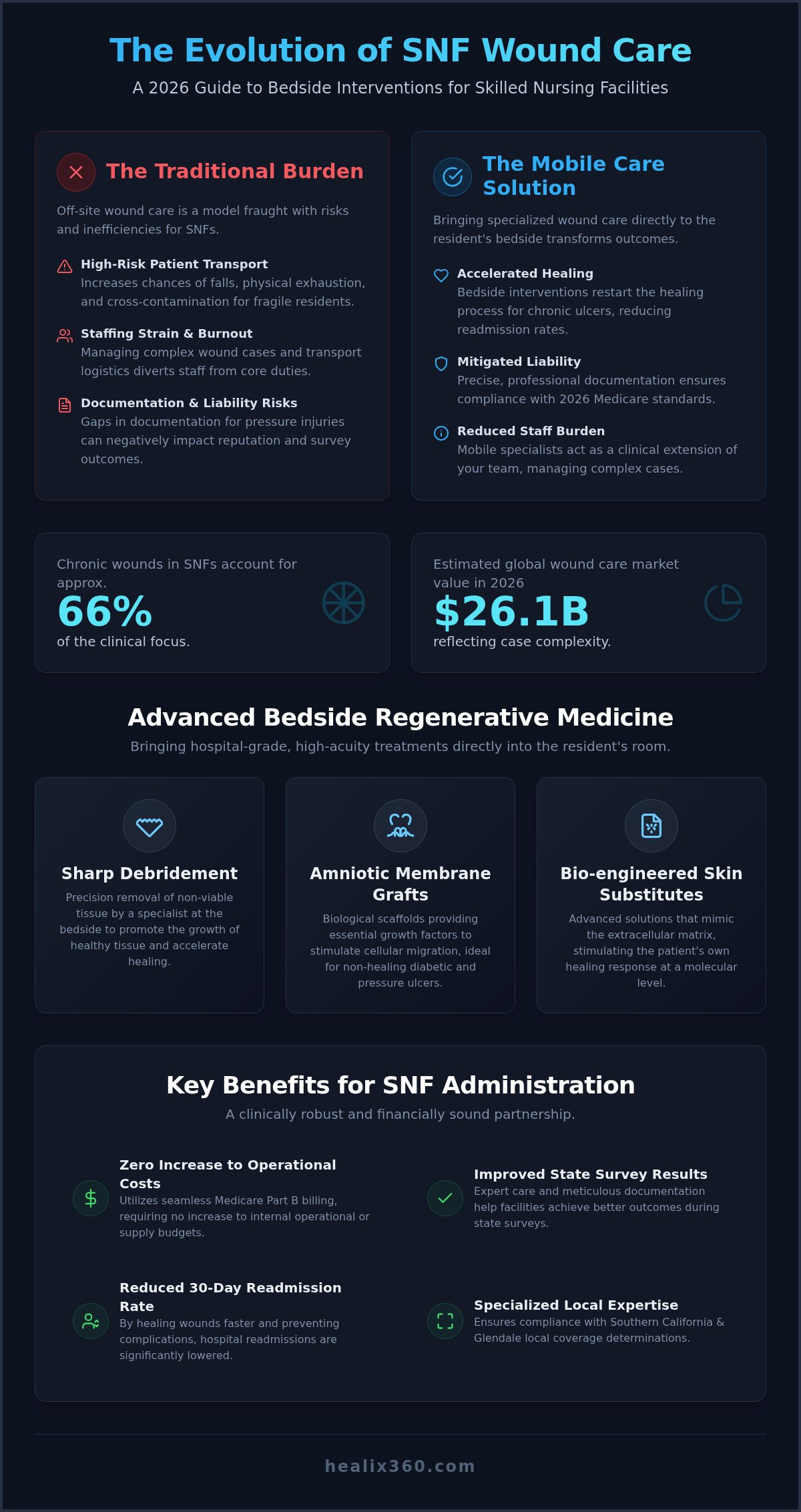
The 2026 healthcare environment demands a shift in how chronic wounds are managed. As resident acuity levels rise, skilled nursing facilities (SNFs) increasingly function as sub-acute care units. This transition makes mobile wound care for skilled nursing facilities a clinical necessity rather than a luxury. Traditional models that rely on transporting residents to external clinics are becoming a liability. These trips introduce risks of falls, physical exhaustion, and cross-contamination, all while straining limited facility staffing resources.
Understanding the science of wound healing is critical in this high-acuity setting. Chronic wounds don't follow the standard biological timeline. They require specialized intervention to restart the inflammatory or proliferative phases. Bringing advanced mobile wound care directly to the bedside ensures that residents receive hospital-grade treatments without the trauma of leaving their environment.
In 2026, the global wound care market is estimated to be valued at $26.1 billion, reflecting the growing complexity of these cases. For SNF administrators, this means managing a population where chronic wounds account for approximately 66% of the clinical focus. The mobile wound care for skilled nursing facilities model integrates into existing workflows, providing the specialized equipment and expertise needed to manage these high-risk residents.
Addressing the Burden of Chronic Wounds
Chronic wounds, particularly diabetic foot ulcers and stage 3 or 4 pressure injuries, represent a significant clinical hurdle. These conditions directly impact a facility's quality ratings and state survey outcomes. When wounds fail to heal, they become a primary driver of infections and sepsis. Mobile specialists bridge the gap between general primary care and specialized surgical intervention. By providing board-certified oversight on-site, facilities can ensure that documentation is accurate and that treatment plans are followed with precision.
The Shift Toward On-Site Specialized Consultations
The physical and emotional toll of medical transport on elderly residents shouldn't be underestimated. Bedside evaluations and assessments provide a stable environment for the patient. This continuity of care is vital for reducing hospital readmission rates. When a wound care specialist can perform sharp debridement or apply bio-engineered skin substitutes in the resident's room, the risk of complications decreases. This model transforms the facility into a center of excellence for wound management, aligning with the 2026 trend toward facility-based specialized care.
Advanced Modalities: Bedside Regenerative Medicine
Modern wound management has transitioned from passive protection to active tissue regeneration. For providers of mobile wound care for skilled nursing facilities, this evolution allows for the deployment of advanced biologicals directly in the resident's room. Regenerative medicine focuses on restoring the structural and functional integrity of damaged tissues. This approach is essential for chronic wounds that have stalled in the inflammatory phase. By utilizing specialized therapies at the bedside, facilities can treat high-acuity cases that previously required outpatient clinic visits.
Regenerative Grafts and Bio-engineered Solutions
Amniotic membrane grafts represent a significant advancement in treating recalcitrant wounds. These allografts serve as a biological scaffold, providing essential growth factors that stimulate cellular migration. They're particularly effective for non-healing diabetic foot ulcers and stage 3 or 4 pressure sores. By using skin substitute treatments, clinicians introduce bio-engineered solutions that mimic the extracellular matrix. This stimulates the patient's own healing response at a molecular level.
Adhering to CMS wound care regulations ensures these high-acuity interventions meet the necessary clinical standards for long-term care. In 2026, the reclassification of skin substitutes as incident-to supplies under the Physician Fee Schedule emphasizes the need for precise documentation. Specialists must account for the flat reimbursement rate of approximately $127.28 per square centimeter. This regulatory shift makes professional oversight even more critical for facility compliance and financial sustainability.
Procedural Excellence: Debridement and NPWT
Regenerative therapies are most effective when applied to a clean, viable wound bed. Sharp debridement is the gold standard for removing necrotic tissue and biofilm at the bedside. Removing this devitalized tissue is a prerequisite for successful graft integration. Additionally, Negative Pressure Wound Therapy (NPWT) can be managed on-site to promote granulation and manage exudate. This combination of debridement and advanced therapy allows facilities to treat complex surgical wounds and dehiscence without hospital transfer. Facilities looking to improve their clinical outcomes can partner with specialized mobile teams to implement these protocols effectively.
Operational and Financial Benefits for SNF Administration
Administrators face a complex challenge in 2026: improving clinical outcomes while controlling operational overhead. Integrating mobile wound care for skilled nursing facilities into your clinical workflow provides a strategic advantage. It shifts the financial burden of high-acuity wound management from the facility budget to Medicare Part B. This transition is essential for maintaining financial stability as residents require increasingly sophisticated medical interventions.
Liability and litigation risks often stem from inadequate documentation of pressure injuries. When a specialized wound team manages these cases, the facility benefits from precise, survey-ready records. This professional oversight directly influences Star Ratings by demonstrating measurable improvement in healing rates. Effective bed sores and ulcer treatment isn't just a clinical priority; it's a foundational component of facility health and risk management.
Medicare Part B Coordination and Billing
One of the most significant advantages of this partnership is the billing structure. Healix360 operates as a Medicare Part B provider. This means the medical consultations and advanced procedures we perform are billed directly to Medicare. There's no cost to the skilled nursing facility. This model bypasses the constraints of consolidated billing for specialized services like sharp debridement and regenerative graft applications. Your facility gains access to board-certified specialists without the administrative burden of managing complex insurance reimbursements or increasing your supply budget.
Reducing Transportation Risks and Costs
Transporting fragile residents to outpatient clinics is both expensive and hazardous. Non-emergency medical transportation (NEMT) costs accumulate quickly, but the hidden clinical costs are often higher. Every external visit risks resident fatigue, falls, or hospital readmission. Keeping residents on-site for mobile wound care for skilled nursing facilities preserves the stability of their environment. It also optimizes your facility staffing. Nurses don't have to spend hours coordinating transport or preparing residents for travel. Instead, they can focus on bedside care while our specialists bring the clinic to them. This approach ensures continuity of care and protects residents from the physical trauma of unnecessary travel.
Implementing a Mobile Wound Care Partnership
Establishing a clinical partnership for mobile wound care for skilled nursing facilities follows a structured, four-step integration process. It starts with an initial facility assessment. During this phase, we align our protocols with your facility's specific needs and establish a formal partnership agreement. This ensures that both medical teams understand the scope of care and administrative boundaries. It's about building a foundation of trust and clinical excellence from the first day.
Once the partnership is established, we move to bedside evaluations. Our board-certified specialists develop personalized treatment plans for each resident. This isn't a generic approach to mobile wound care for skilled nursing facilities. Each plan accounts for the resident's comorbidities, nutritional status, and mobility. We then coordinate directly with your nursing staff. This ensures that daily care, such as dressing changes and offloading, aligns with the specialist's recommendations. Continuous monitoring and reporting provide the final layer of oversight, ensuring that every wound is tracked until closure.
Collaboration with Home Health and Facility Staff
We position ourselves as a clinical extension of your existing team. Our specialists provide hands-on training for facility nurses. This includes education on advanced dressing applications and identifying early signs of wound deterioration. Clear communication with primary care physicians is a priority. We ensure that every intervention is documented and shared with the resident's broader medical team. This collaboration is particularly vital for managing complex surgical wound care after a resident returns from the hospital. Seamless coordination prevents complications that often lead to avoidable readmissions.
Documentation and Compliance Standards
In the 2026 regulatory environment, documentation is your facility's primary defense. Our specialists provide detailed bedside evaluations that integrate directly into your medical records. We use standardized staging and tracking methods that support state survey readiness. This precision is critical for F-Tag compliance. To ensure targeted treatment, we utilize wound culture and sensitivity testing. This allows for precise infection control and prevents the overuse of broad-spectrum antibiotics. If you're ready to enhance your facility's clinical capabilities, you can contact our specialists to begin a partnership assessment today.
Why Healix360 is the Choice for Southern California SNFs
Selecting a partner for mobile wound care for skilled nursing facilities requires a balance of clinical expertise and regional operational knowledge. Healix360 distinguishes itself by focusing exclusively on the Southern California healthcare ecosystem. Our board-certified specialists don't just provide consultations; they deliver high-acuity regenerative outcomes at the bedside. This specialized focus is driven by a mission to prevent amputations and improve the quality of life for residents facing the most challenging chronic conditions.
Our status as a Medicare Part B provider ensures that facilities can offer advanced medical care without financial strain. We maintain a commitment to high-quality, Medicare-compliant services that align with the rigorous standards of 2026 healthcare regulations. By choosing a local specialist, administrators ensure that their residents receive consistent, authoritative care from practitioners who understand the specific needs of the regional patient population.
A Local Partner in Southern California
Healix360 is deeply rooted in the Southern California medical community, with a specific focus on the Los Angeles and Glendale markets. This local presence allows for rapid response times when urgent wound assessments are required. We understand the logistical challenges of the region and work closely with local hospital referral sources to ensure a smooth transition for residents returning to your facility. Our team isn't a distant national entity; we're a clinical extension of your staff, available to provide the on-site expertise that high-acuity residents demand.
Advanced Care for Complex Conditions
Chronic wound management often involves addressing underlying vascular and systemic issues. Our specialists are experts in managing edema in legs and complex venous ulcers that have failed to respond to traditional compression therapy. We provide targeted treatment for neuropathic diabetic foot ulcers, utilizing regenerative grafts to close wounds that might otherwise lead to surgical intervention. This focus on non-healing and chronic wound management ensures that your residents have access to the latest medical advancements. Whether managing a post-surgical dehiscence or a recalcitrant pressure injury, our goal is to achieve stable closure while maintaining the resident's comfort and dignity. Facilities that prioritize these clinical outcomes find that mobile wound care for skilled nursing facilities through Healix360 becomes an indispensable asset to their medical team.
Transforming Bedside Care for a New Era
The integration of mobile wound care for skilled nursing facilities represents a fundamental shift toward high-acuity, bedside clinical excellence. By utilizing advanced regenerative medicine and amniotic membrane grafts, facilities can achieve faster healing for chronic ulcers while eliminating the physical risks and hidden costs associated with resident transportation. This model doesn't just improve patient outcomes; it secures the facility's financial and regulatory health through professional Medicare Part B coordination and precise, survey-ready documentation.
As a dedicated Southern California specialist, Healix360 provides the board-certified expertise needed to manage complex wounds as a clinical extension of your existing team. Our focus on regenerative technology and strict compliance ensures that your residents receive hospital-grade treatment without ever leaving their environment. We invite you to Partner with Healix360 for Expert Mobile Wound Care to enhance your facility's clinical capabilities and Star Ratings. Together, we can prevent avoidable complications, reduce hospital readmission rates, and significantly improve the daily quality of life for your residents.
Frequently Asked Questions
How does mobile wound care differ from the care our facility nurses provide?
Mobile wound care provides specialized, high-acuity interventions that supplement the daily care provided by facility staff. While facility nurses manage routine dressing changes and monitoring, our board-certified specialists perform advanced procedures like sharp debridement and the application of amniotic membrane grafts. We act as a clinical extension of your team, providing the specialized equipment and regenerative expertise needed for recalcitrant wounds that don't respond to standard protocols.
Does Medicare Part B cover mobile wound care services in a Skilled Nursing Facility?
Yes, Medicare Part B covers mobile wound care services provided by a qualified specialist in a skilled nursing facility setting. Healix360 is a credentialed Medicare Part B provider. This status allows us to bill Medicare directly for medical consultations and advanced procedures performed at the bedside. This coverage applies to residents who meet the medical necessity criteria for specialized wound management, ensuring they receive high-level care without exhausting facility resources.
Will our facility be billed for specialized procedures like debridement or skin substitutes?
No, your facility isn't billed for the specialized procedures our medical team performs. Because Healix360 operates as a Medicare Part B provider, we manage the billing and reimbursement process directly through Medicare. This includes advanced treatments such as bio-engineered skin substitutes and sharp debridement. This model eliminates the financial burden often associated with consolidated billing, allowing you to offer mobile wound care for skilled nursing facilities without increasing your internal operational costs.
What types of chronic wounds can Healix360 treat at the bedside?
Our specialists are equipped to treat a wide range of complex and non-healing wounds. This includes stage 3 and 4 pressure injuries, diabetic foot ulcers, and venous or arterial ulcers. We also manage surgical wound dehiscence and traumatic wounds that require specialized intervention. By utilizing advanced modalities like Negative Pressure Wound Therapy (NPWT) and regenerative grafts, we address the specific biological needs of each wound type to promote faster, more stable closure.
How does adding a mobile specialist affect our facility’s state survey results?
Integrating a mobile specialist often leads to improved state survey results through better clinical outcomes and meticulous documentation. We provide detailed wound staging, precise measurements, and evidence-based treatment plans that support F-Tag compliance. This professional oversight demonstrates to surveyors that the facility is proactively managing high-risk residents. Accurate documentation of progress or clinical challenges helps mitigate liability and reflects a high standard of care during the survey process.
Can Healix360 provide wound care for residents with diabetic neuropathic ulcers?
Yes, we provide specialized treatment for neuropathic diabetic foot ulcers, which are among the most difficult wounds to manage. Our approach includes bedside evaluation, sharp debridement to remove biofilm, and the application of amniotic membrane grafts to stimulate healing. We coordinate with your staff to ensure proper offloading and infection control. This comprehensive management plan is designed to prevent complications such as osteomyelitis and reduce the long-term risk of amputation.
What documentation does the facility receive after a specialist visit?
After each bedside visit, our specialists provide comprehensive medical notes that integrate directly into the resident's facility record. This documentation includes detailed wound assessments, staging, measurements, and a description of any procedures performed. We also provide clear instructions for the nursing staff regarding daily care and monitoring requirements. These survey-ready records are essential for tracking healing progress and ensuring that all members of the care team are aligned with the treatment plan.
Is there a minimum number of patients required for a specialist to visit our facility?
We don't require a specific minimum number of patients to provide mobile wound care for skilled nursing facilities in Southern California. Our mission is to ensure that any resident requiring specialized intervention has access to high-quality care. We work with administrators to establish a consistent schedule that meets the facility's needs. Whether you have one resident with a complex surgical wound or multiple residents with chronic ulcers, our team is ready to provide expert bedside consultations.


