
Imagine waking up to find a faint pink hue around your loved one's surgical site has transformed into a deep, angry crimson that feels hot to the touch. You're caught between the fear of a brewing sepsis infection and the overwhelming logistical challenge of transporting an immobile patient to a crowded Southern California emergency room. It's common to feel uncertain when trying to distinguish between normal inflammatory healing and the dangerous signs of wound infection. You want to protect your family member from severe complications, yet the thought of an invasive hospital stay is often equally daunting.
This article provides the clinical clarity you need to identify the early warning signs of cellulitis and other serious complications. We'll explain how specialized mobile care in Southern California delivers hospital-grade treatment, including advanced debridement and regenerative grafts, directly to the patient's bedside. We will examine the specific indicators of worsening infection and the professional protocols used to manage these risks safely and effectively without leaving your home.
Key Takeaways
- Understand the clinical nature of cellulitis as a bacterial infection of deep tissue and why its rapid spread requires immediate professional intervention.
- Learn how to distinguish between standard inflammatory healing and the dangerous signs of wound infection, such as expanding redness and systemic flu-like symptoms.
- Identify the critical link between untreated chronic wounds, such as bed sores or diabetic ulcers, and the development of secondary bacterial complications.
- Discover the medical protocols used to manage bacterial load at home, including targeted antibiotic therapy and supportive measures like edema management.
- Explore the benefits of mobile wound care services in Southern California that provide advanced bedside evaluations to prevent unnecessary hospitalizations.
Understanding Cellulitis: Symptoms and Signs of Wound Infection
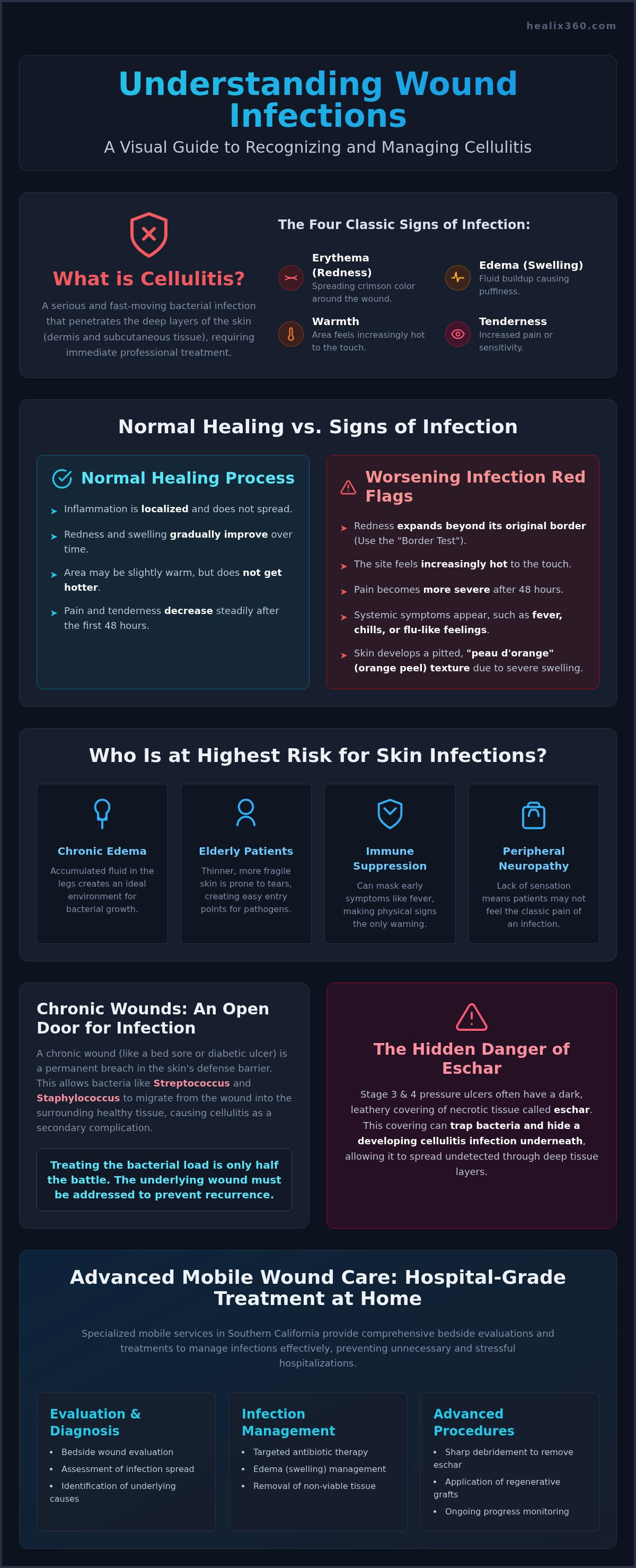
Cellulitis represents a serious bacterial infection that penetrates the deep layers of the dermis and the underlying subcutaneous tissue. Unlike superficial skin irritations, this condition involves the soft tissues and requires precise clinical management to prevent systemic spread. Cellulitis is a fast-moving bacterial invasion of the skin's deeper structures that can progress into life-threatening complications if professional treatment isn't initiated immediately. Recognizing the primary signs of wound infection is the first step in avoiding a hospital admission.
Clinicians identify cellulitis by looking for four classic symptoms: localized erythema (redness), edema (swelling), warmth, and tenderness. While these symptoms can appear in various skin conditions, their combination often points to an active bacterial process. One critical clinical red flag is the development of "peau d’orange." This term describes a skin texture that resembles an orange peel, caused by significant fluid buildup that makes hair follicles appear as tiny pits in the swollen tissue. This texture indicates that the infection is affecting the lymphatic drainage in the area.
How to Recognize "Spreading" Redness
It's often difficult for families to tell if a wound is getting worse or simply healing. A practical way to track this at home is the "border test." Use a skin-safe marker to trace the outer edge of the redness. If the crimson area expands beyond that line within a few hours, it's a clear sign the infection is active. While some inflammation is normal after a surgical procedure or injury, it should remain localized and gradually improve. If the area feels increasingly hot to the touch or becomes more painful over 48 hours, you're likely looking at an infection rather than standard post-traumatic inflammation.
Who is at Highest Risk for Skin Infections?
Certain physical conditions make it much easier for bacteria to take hold. For example, chronic edema in legs creates a stagnant environment where fluid accumulates, providing an ideal medium for bacterial growth. This is particularly common in patients with venous insufficiency or heart failure. Elderly patients are also at significant risk because their skin becomes thinner and more fragile with age. These "skin tears" serve as easy entry points for pathogens. In some cases, a patient's immune system might be suppressed, which can unfortunately mask early symptoms like a high fever, making the physical signs of wound infection even more important to monitor closely.
The Link Between Chronic Wounds and Cellulitis Development
The skin serves as the body's primary defense mechanism. A chronic wound, such as a bed sores ulcer, creates a permanent breach in this barrier. This opening serves as a direct portal for pathogens like Streptococcus and Staphylococcus. While many patients focus on the wound itself, cellulitis often develops as a dangerous secondary complication when bacteria migrate into the surrounding soft tissue. Recognizing the early signs of a skin infection is vital. Treating the bacterial load is only half the battle; without addressing the underlying wound pathology, the infection will likely recur.
Patients with peripheral neuropathy face a unique challenge. Because they lack normal sensation, they may not feel the classic tenderness associated with signs of wound infection. These silent infections can progress rapidly before the patient or caregiver notices physical changes. Monitoring for visual cues and temperature shifts is essential for those with diminished feeling.
Pressure Injuries and Infection Pathways
Stage 3 and 4 pressure ulcers are particularly susceptible to deep tissue infection. These wounds often contain necrotic tissue, or eschar, which appears as a dark, leathery covering. Eschar can effectively hide underlying cellulitis, trapping bacteria and allowing it to spread undetected through subcutaneous layers. Specialized mobile wound care specialists use sharp debridement to remove this non-viable tissue. This process clears the infection pathway and allows clinicians to assess the true extent of the damage. If you notice swelling near a pressure injury, a bedside wound evaluation can determine if the infection has reached deeper structures.
Diabetic Foot Ulcers and Secondary Infection
Effective diabetic ulcer treatment must prioritize rigorous infection screening at every visit. In the diabetic population, a minor skin tear can escalate into cellulitis within hours. If redness is ignored, the bacteria may penetrate the bone, leading to osteomyelitis. This condition significantly increases the risk of amputation. In Los Angeles, mobile specialists provide advanced protocols for neuropathic patients, utilizing wound culture and sensitivity testing to identify specific bacterial strains. This precision ensures that the chosen antibiotic therapy is effective from the start, protecting the limb and the patient's overall health.
Clinical Protocols for Managing Infected Wounds
Once a clinician identifies the signs of wound infection, the focus shifts to a structured medical protocol designed to stabilize the patient and eradicate the pathogen. Oral antibiotics serve as the standard first-line defense for localized cellulitis. However, if the infection shows signs of systemic involvement or fails to respond to oral medication, intravenous (IV) therapy may be required to achieve higher therapeutic concentrations in the bloodstream. A critical component of this protocol is patient adherence. You must complete the entire antibiotic course even if the redness fades. Stopping medication early allows the most resilient bacteria to survive, which often leads to a more aggressive recurrence that is harder to treat.
Clinical management also requires aggressive supportive measures. Elevation is a primary requirement rather than a suggestion. By keeping the infected limb above the level of the heart, we utilize gravity to reduce edema. This reduction in swelling lowers interstitial pressure, allowing for better arterial blood flow and more efficient delivery of antibiotics to the site. For sensitive infected areas, specialists employ a combination of non-pharmacological positioning and targeted analgesics to manage pain without compromising the patient's neurological status. For more detailed information on managing these conditions, you can review cellulitis symptoms and treatment guidelines from leading medical institutions.
The Role of Wound Culture and Sensitivity
Empiric antibiotic therapy is often started immediately, but definitive care relies on wound culture and sensitivity testing. This diagnostic process involves taking a sample from the wound bed to identify the specific bacterial strain. In Southern California facilities, we frequently encounter resistant strains like Methicillin-resistant Staphylococcus aureus (MRSA). Without a culture, clinicians are essentially guessing which medication will work. Once laboratory findings confirm the bacteria's sensitivity, we can adjust the prescription to a more targeted antibiotic, which improves clinical outcomes and reduces the risk of antibiotic resistance.
Vascular Health and Healing Timelines
Vascular health plays a decisive role in how quickly an infection clears. Poor circulation, often seen in patients with peripheral artery disease, significantly delays the delivery of immune cells and antibiotics to the wound. In these cases, the 72-hour window after starting treatment is a critical observation period. You should expect a stabilization of symptoms within this timeframe. Once the acute bacterial infection is under control and the heat and pain subside, we often transition to compression therapy. This helps manage the chronic edema that likely contributed to the infection in the first place, ensuring the skin remains resilient against future bacterial invasions.
Recognizing Red Flags: When Cellulitis Requires Urgent Intervention
Localized signs of wound infection can quickly transition into a systemic crisis if the bacterial load is not managed effectively. If you observe rapidly expanding redness that fails to respond to oral antibiotics within 24 to 48 hours, the infection has likely bypassed local defenses. Other critical red flags include the formation of bullae (large blisters) or skin sloughing around the wound margins. These signs indicate deep tissue damage and potential necrotizing processes that require immediate clinical intervention. You should also monitor for a sudden increase in purulent drainage, a distinct foul odor, or the appearance of new black or gray necrotic tissue. These changes suggest the bacteria are actively destroying healthy tissue and overwhelming the body's natural healing capacity.
Preventing Sepsis and Hospitalization
Sepsis is a life-threatening medical emergency where the body's response to infection triggers widespread organ dysfunction. In elderly or immobile patients, the typical "flu-like" symptoms of fever and chills might be subtle or entirely absent. Instead, sepsis can manifest as sudden confusion, extreme shivering, or mottled skin. Early intervention by a mobile wound specialist allows for advanced bedside assessments that can prevent unnecessary and stressful emergency room visits. Caregivers should monitor vitals at home, paying close attention to a significant drop in blood pressure or a resting heart rate exceeding 100 beats per minute. Detecting these shifts early is the most effective way to avoid high-cost hospitalizations and protect the patient's long-term health.
Advanced Care for Non-Healing Infections
When chronic wounds remain stuck in a persistent inflammatory phase, they become breeding grounds for repeated infections. Mobile specialists utilize advanced debridement techniques to remove infected chronic tissue that standard surface cleaning cannot reach. To close these vulnerable areas and prevent future bacterial entry, we often employ a bio-engineered skin substitute. These regenerative therapies provide a biological scaffold that promotes new tissue growth and strengthens the skin barrier over time. This level of care goes beyond simply managing the infection; it focuses on structural repair. By closing the wound permanently, we eliminate the portal of entry for bacteria and stop the cycle of recurring cellulitis. If you are concerned about a non-healing wound, you can schedule a mobile wound evaluation to determine the best clinical path forward.
Mobile Wound Care Solutions for Cellulitis in Southern California
For residents in Los Angeles and Glendale, identifying the signs of wound infection shouldn't lead to the stress of an emergency room visit. Healix360 offers a specialized alternative through mobile medical consultations that prioritize both clinical excellence and patient comfort. Our board-certified specialists operate as a mobile extension of the healthcare system, coordinating care with home health agencies and primary doctors to maintain continuity. Because we are a Medicare Part B provider, patients can receive professional wound assessments and advanced treatments in their own residences without the high costs associated with inpatient stays. This model ensures that high-risk patients receive the attention they need before a localized infection escalates into a systemic emergency.
Personalized Treatment Plans in Your Own Home
The physical toll of transporting an immobile patient to a traditional wound center can actually impede the healing process. Mobile visits eliminate this risk entirely. During a bedside evaluation, our specialists don't just look at the wound; they assess the patient’s specific home environment. This allows us to customize treatment plans that address the root causes of chronic wounds, such as improper pressure redistribution or inadequate edema control. By treating the patient where they live, we can implement practical changes that significantly reduce the likelihood of future infection. This holistic approach ensures that the treatment is as sustainable as it is effective.
Advanced Technologies Brought to the Patient
We believe that home-bound patients deserve the same level of innovation found in specialized surgical centers. Our mobile units are equipped to deliver advanced regenerative therapies, such as amniotic membrane grafts, which provide the biological signals necessary to close stubborn wounds. We also provide comprehensive management for Negative Pressure Wound Therapy (NPWT), ensuring that systems are functioning optimally to remove infectious fluids and promote granulation tissue. This direct access to advanced wound care specialists in Southern California ensures that cellulitis and other complications are managed with the highest clinical rigor. Our mission is to move patients from the crisis of an acute infection toward a sustainable path of long-term skin health and prevention.
Securing Advanced Bedside Care for Wound Complications
Effective management of chronic wounds requires a vigilant eye and immediate access to professional intervention. Recognizing the early signs of wound infection, such as expanding erythema or the "orange peel" texture of peau d’orange, is the most reliable way to prevent cellulitis from progressing into a systemic crisis. By addressing the bacterial load and the underlying wound pathology simultaneously, you can avoid the risks associated with sepsis and prolonged hospital stays. It's vital to remember that treating the infection is only the first step; closing the wound permanently is the ultimate goal for long-term health.
Healix360 serves as a dependable partner for families across Southern California, including Los Angeles and Glendale. Our board-certified wound specialists function as a Medicare Part B provider, delivering advanced treatments like amniotic membrane grafts and sharp debridement directly to the patient's bedside. This mobile model eliminates the physical strain of medical transport while ensuring that high-risk patients receive specialized clinical oversight in a familiar environment. Request a mobile wound care consultation in Southern California today to secure a personalized treatment plan for your loved one. Proactive bedside care is the best defense against wound complications and ensures a safer path toward recovery.
Frequently Asked Questions
Can cellulitis be treated at home without a hospital stay?
Many cases of cellulitis can be managed safely at home through specialized mobile wound care services. Bedside evaluations allow specialists to administer oral or IV antibiotics and monitor the site for signs of wound infection without the need for hospital transport. This is particularly beneficial for immobile patients in Los Angeles or Glendale who are at higher risk for hospital-acquired infections. Clinical oversight ensures that treatment is adjusted based on the patient's individual response.
How can I tell the difference between cellulitis and a normal healing wound?
Normal healing involves localized redness that remains near the wound edge and gradually fades over several days. Cellulitis typically presents as a rapidly expanding area of crimson skin that feels hot and tender to the touch. A distinct clinical indicator of infection is "peau d’orange," where the skin takes on a pitted, orange-peel texture due to deep tissue swelling. If redness spreads beyond a marked border or is accompanied by fever, it indicates an active infection.
Does Medicare cover mobile wound care for cellulitis in California?
Medicare Part B covers professional wound care services delivered at a patient's bedside when they are medically necessary. Healix360 is a Medicare-compliant provider serving Southern California, allowing patients to receive advanced assessments and treatments in their own residence. This coverage includes specialized procedures such as sharp debridement and amniotic membrane grafts. Patients should verify their specific plan details, but mobile specialized care is a standard covered benefit for those meeting the clinical necessity criteria.
What happens if cellulitis is left untreated in a diabetic patient?
Untreated cellulitis in a diabetic patient is a medical emergency that can lead to osteomyelitis or systemic sepsis. Because diabetes often involves peripheral neuropathy, the patient may not feel the initial pain, allowing the bacteria to penetrate deep into the bone or bloodstream. This rapid progression significantly increases the risk of lower-limb amputation. Professional intervention is required to manage the bacterial load and protect the underlying tissue from irreversible damage and systemic complications.
How quickly should I see improvement after starting cellulitis treatment?
Most patients see a stabilization of symptoms within 48 to 72 hours after beginning a targeted antibiotic course. The intense heat and pain usually subside first, followed by a gradual reduction in the surrounding redness. If the signs of wound infection do not improve or if the redness continues to expand after three days, the clinician may need to adjust the medication based on wound culture and sensitivity results to address potentially resistant bacterial strains.
Is cellulitis contagious to other family members or caregivers?
Cellulitis is not generally considered contagious because it is an infection of the deeper skin layers rather than the surface. It cannot be spread through casual contact or shared air. However, the bacteria causing the infection, such as Staphylococcus or Streptococcus, can be transferred if a caregiver has an open cut and comes into direct contact with drainage from the patient's wound. Practicing standard clinical hygiene and using gloves during dressing changes eliminates this risk.
What are the best ways to prevent recurrent skin infections on the legs?
Prevention focuses on maintaining skin integrity and managing underlying vascular issues. Daily moisturizing prevents the dry, cracked skin that serves as an entry point for bacteria. Additionally, managing chronic edema through compression therapy and leg elevation reduces the fluid buildup that often precedes cellulitis. Regular bedside evaluations by a specialist can identify minor skin tears or other early indicators before they escalate into a serious clinical complication requiring aggressive antibiotic therapy or hospitalization.
Can poor circulation cause cellulitis to keep coming back?
Poor circulation is a primary driver of recurrent cellulitis because it prevents the body from delivering oxygen and immune cells to the lower extremities. When blood flow is compromised, the skin becomes fragile and slow to heal, making it easier for bacteria to colonize the tissue. Chronic venous insufficiency and lymphedema create stagnant fluid environments where bacteria thrive. Effective long-term management must include vascular health protocols to ensure that antibiotics and nutrients can reach the site effectively.


