
What if the slow progress of your healing isn't just a stubborn wound, but a silent conversation between bacteria that your current treatment simply can't hear? Identifying the specific signs of wound infection needing a culture is the first step in moving from generic care to a high-precision recovery plan. It's natural to feel a sense of unease when a wound doesn't follow the expected roadmap, especially with nearly 6.7 million Americans currently navigating chronic wounds where the line between normal healing and systemic risk feels increasingly blurred.
You'll learn to recognize the subtle clinical red flags that signal it's time for a diagnostic culture to ensure your healing remains on a trajectory of excellence. We'll examine how advanced diagnostic data enables targeted antibiotic selection and opens the door to regenerative therapies without the stress of traveling to a clinic. This guide provides the clarity you need to replace confusion with a proactive strategy for your long-term physical vitality and total-body health.
Key Takeaways
- Master the 'NERDS' clinical framework to accurately distinguish between normal inflammation and the specific signs of wound infection needing a culture.
- Transition from empiric antibiotic guesswork to a precision-led strategy using Culture and Sensitivity (C&S) testing for faster, more effective resolution.
- Learn why professional collection methods, such as the Levine Technique, provide the scientific rigor necessary to identify pathogens hidden deep within the tissue.
- Discover the benefits of mobile wound care services that bring advanced diagnostic testing and specialist expertise directly to your bedside in Southern California.
- Understand how a clear diagnostic roadmap prepares the wound bed for life-changing regenerative therapies, including amniotic membrane grafts and bio-engineered skin substitutes.
Beyond Redness: Identifying Signs of Wound Infection Needing a Culture
Healing is a biological process, but it isn't always linear. While some redness and swelling are expected during the initial inflammatory phase, distinguishing between a normal response and the clinical signs of wound infection needing a culture requires a more nuanced perspective. Professionals use specific diagnostic frameworks to determine when the bacterial load has crossed the threshold from colonization to active infection. Identifying these markers early transforms your recovery from a game of chance into a data-driven journey toward health.
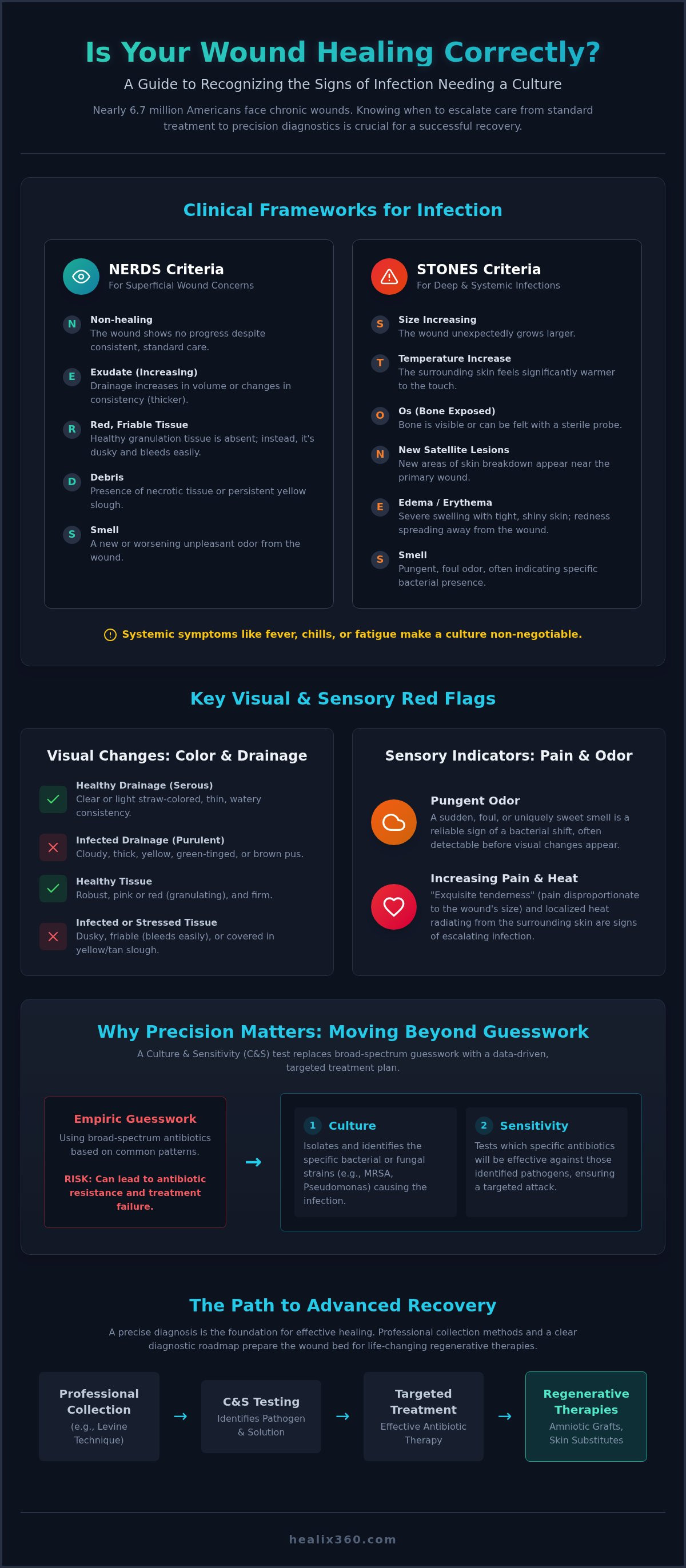
For superficial concerns, clinicians often rely on the "NERDS" criteria:
- Non-healing status despite consistent, standard care.
- Exudate that increases in volume or changes in consistency.
- Redness that begins to migrate away from the wound edges.
- Debris, such as necrotic tissue or yellow slough, that persists.
- Smell that indicates a shift in the bacterial environment.
Deep infections require even more vigilance and follow the "STONES" criteria:
- Size increase, where the wound unexpectedly grows larger.
- Temperature spikes in the skin surrounding the injury.
- Os, meaning bone is visible or can be felt with a probe.
- New satellite lesions or skin breakdown nearby.
- Edema that creates a tight, shiny appearance on the skin.
- Smell that becomes increasingly pungent.
When systemic symptoms like fever, chills, or sudden, unexplained fatigue appear, a diagnostic culture becomes non-negotiable. These signs suggest the bacteria have moved beyond the local site and are attempting to enter the bloodstream. Acting quickly with professional Wound evaluation and diagnostics ensures that we identify the specific pathogen before it can cause systemic complications.
Visual Red Flags: Color and Drainage Changes
A shift in the type of fluid leaving the wound provides a direct window into its internal health. While clear, straw-colored serous fluid is typical, a transition to purulent discharge, characterized by cloudy, thick, or green-tinged pus, is a primary indicator that the wound environment has shifted. You should also watch for "slough," which is yellow or tan devitalized tissue that harbors bacteria and prevents new skin from forming. Healthy tissue should be robust and pink, but if it looks dusky and bleeds easily when touched, it's often a sign of high bacterial stress that requires a formal culture.
Sensory Indicators: Odor and Increasing Pain
Your senses often detect an infection before visual changes become obvious. A sudden, pungent change in wound odor is one of the most reliable triggers for culturing, as certain bacteria produce distinct volatile organic compounds. Pain also tells a story. Watch for "exquisite tenderness," which is pain that feels disproportionate to the wound's actual size or appearance. Localized heat radiating from the skin surrounding the wound indicates an escalating bacterial load as the body's immune system struggles to contain the spread. Recognizing these signs of wound infection needing a culture empowers you to seek the precision care necessary for life-changing outcomes.
Why Precision Matters: The Role of Wound Culture and Sensitivity Testing
Precision is the hallmark of modern clinical excellence. A Wound Culture and Sensitivity (C&S) test is a sophisticated, two-part diagnostic process that replaces medical intuition with hard data. Once you or your caregiver identify the signs of wound infection needing a culture, this test becomes the primary tool for navigating the complexities of bacterial colonization. It effectively bridges the gap between observing a non-healing wound and implementing a cure that works.
The "Culture" phase involves isolating the specific bacterial or fungal strains causing the delay. Whether it's the resilient Methicillin-resistant Staphylococcus aureus (MRSA) or the aggressive Pseudomonas, identifying the pathogen's identity is vital. Relying on empiric antibiotic use, which is essentially guessing the bacteria based on common patterns, carries significant risk. It often leads to antibiotic resistance and allows the infection to strengthen while an ineffective medication is being processed by your system.
The "Sensitivity" report is perhaps the most empowering part of the process. This document provides a personalized list of which medications will actually kill the specific infection isolated from your wound. By using this roadmap, specialists can prescribe targeted therapies that ensure a higher probability of success. If you've observed persistent signs of wound infection needing a culture, our board-certified specialists can perform bedside wound evaluations to provide the diagnostic clarity your recovery requires.
The Science of Biofilms and Bacterial Load
Bacteria are highly adaptive organisms that don't just sit on the surface of a wound. They often create biofilms, which are protective, microscopic shields that resist standard cleaning and even systemic antibiotics. These structures allow bacteria to thrive in a low-oxygen environment, creating a high bacterial load that stalls the body's natural ability to knit skin back together. Because these colonies are often embedded deep within the tissue, surface appearances can be deceptive, making professional culturing essential to reveal the true biological state of the wound.
Medicare Coverage for At-Home Diagnostics
Securing elite-level diagnostics shouldn't be complicated by travel or logistics. Medicare Part B typically covers medically necessary wound cultures as part of a comprehensive treatment plan. Healix360 manages the coordination with insurance and home health agencies to ensure these tests are performed at your bedside. To understand how these benefits apply to your specific situation, read our guide on Does Medicare Cover At-Home Wound Treatment? and learn how we bring the laboratory to your home.
Culture Methods: Swabs vs. Biopsies in Professional Wound Care
Selecting the precise diagnostic method is as critical as recognizing the signs of wound infection needing a culture. Specialists don't just collect a sample; they strategically choose a technique that ensures the most accurate biological data for your recovery. While surface swabs are common, they must be executed with specific clinical rigor to be effective. The goal is to move beyond surface-level colonization to identify the true pathogens stalling your healing process.
The Levine Technique is the recognized gold standard for wound swabbing. This method involves rotating a swab over a 1cm² area of clean, viable tissue for five seconds with enough pressure to express internal fluid. By avoiding superficial pus or slough, this technique captures the pathogens actually responsible for the infection. This provides a much higher degree of accuracy than a simple surface sweep, which often only picks up harmless environmental bacteria.
When an infection is suspected deep within the tissue or bone, a punch biopsy may be superior to a swab. This procedure involves taking a small tissue sample to identify pathogens that aren't present on the surface. For cases involving cellulitis or a localized abscess where the skin hasn't broken, needle aspiration allows clinicians to collect fluid from directly beneath the surface. Specialists determine the best method based on your wound's location, depth, and the specific clinical red flags identified during your initial assessment.
Is Wound Culturing Painful?
Patient comfort is a core pillar of our care philosophy. While a swab involves only mild, brief pressure, a punch biopsy is performed using local anesthetics to ensure a completely painless experience. It's helpful to remember that the temporary sensation of a diagnostic test is a small investment compared to the chronic, escalating pain of an untreated infection. Our board-certified specialists prioritize a calm, measured approach that addresses your anxiety while securing the data needed for your recovery.
The Importance of Sharp Debridement Before Culturing
An accurate culture requires access to the wound's true biological environment. This is why sharp debridement, the professional removal of necrotic tissue and slough, is essential before any sample is taken. By clearing away the "bio-burden" of dead tissue, specialists ensure the culture reflects the pathogens living in viable tissue rather than just surface debris. This level of Advanced Surgical Wound Care in Southern California is what allows for the precision necessary to identify signs of wound infection needing a culture and move toward a definitive, life-changing cure.
At-Home Wound Culture Services in Southern California
High-level diagnostics shouldn't require a stressful journey to a hospital. Mobile wound care logistics have evolved, allowing Healix360 to bring the laboratory directly to your bedside in Glendale, Los Angeles, and the surrounding areas. When you observe the signs of wound infection needing a culture, the ability to receive professional sampling at home significantly reduces the risk of cross-contamination. By avoiding crowded hospital waiting rooms, you protect your compromised immune system from secondary pathogens while receiving the same scientific rigor found in a traditional clinical setting.
The process is designed for seamless integration into your daily life. Our specialists perform cultures in various residential settings, including private homes and assisted living facilities, using sterile, portable equipment. Once the sample is collected, it is processed with a focus on speed and accuracy. You can typically expect a transition from at-home collection to a data-backed treatment adjustment within a matter of days. This rapid turnaround is essential for preventing localized infections from escalating into systemic health crises.
If you're currently managing a non-healing injury, don't wait for complications to worsen. Our team is ready to provide the precision diagnostics you need. Schedule a mobile wound evaluation to secure your personalized roadmap to recovery.
Mobile Care in Glendale and Beyond
Serving the diverse Southern California community requires a commitment to both board-certified expertise and logistical flexibility. We partner with home health agencies and case managers to provide specialized diagnostic layers that general home care may lack. By integrating our advanced services into your existing care plan, we ensure that every detail of your healing is monitored by a specialist. For more information on our service areas, explore our guide on Expert Mobile Wound Care in Los Angeles & Glendale.
The Role of the Wound Specialist
A dedicated wound specialist offers a depth of knowledge that general primary care often cannot match for chronic conditions. We take a visionary approach, using diagnostic data to predict and prevent severe complications like gangrene before they manifest. Mobile specialists bridge the gap between hospital discharge and home recovery by providing continuous, expert-level oversight in the comfort of your own environment. This specialized focus ensures that the signs of wound infection needing a culture are identified immediately, allowing for the implementation of life-changing regenerative strategies that prioritize your long-term physical excellence.
From Diagnosis to Recovery: Regenerative Treatments After the Culture
Identifying the signs of wound infection needing a culture serves as the critical pivot point where reactive treatment becomes proactive restoration. Once the laboratory identifies the specific microbial profile, specialists can effectively clear the "bio-burden" that previously stalled your progress. This preparation is essential because even the most advanced regenerative materials cannot thrive in an actively infected environment. By neutralizing the specific pathogens identified in the culture, we transform a hostile wound bed into a receptive foundation for growth.
The synergy between infection control and amniotic membrane grafts represents a new horizon in limb preservation and physical excellence. By utilizing the Sensitivity report to guide targeted antimicrobial therapy, we ensure the wound is biologically optimized before applying bio-engineered skin substitutes. These advanced grafts provide the necessary scaffolding and growth factors to restart the healing clock, particularly for non-healing diabetic ulcers that have resisted traditional therapies. This data-driven roadmap ensures that every step of your recovery is intentional, moving you steadily toward the goal of total-body health and long-term vitality.
Regenerative Medicine for Chronic Wounds
Modern wound care has moved beyond simple dressings to embrace the power of regenerative science. Stem cell therapies and amniotic allografts accelerate healing in wounds that have been 'stalled' for months by providing a biological jumpstart to the tissue repair process. These treatments work by reducing localized inflammation and promoting the rapid growth of healthy new skin. To learn more about how these technologies can redefine your recovery, explore our guide on Advanced Skin Substitute Treatments in Southern California.
Your Next Steps for Expert Care
If you suspect you're seeing the signs of wound infection needing a culture, acting quickly is the most effective way to avoid hospital readmission and systemic complications. Proactive prevention isn't just a clinical strategy; it's a commitment to your quality of life and long-term physical autonomy. Our mobile specialists are equipped to perform comprehensive bedside evaluations, ensuring you receive elite-level diagnostic data without leaving your home. Don't let a non-healing wound dictate your future. Schedule a mobile wound assessment with Healix360 today to begin your personalized journey toward a definitive cure.
Securing Your Roadmap to Precision Healing
Mastering the biological nuances of recovery means knowing when to transition from observation to action. By recognizing the specific signs of wound infection needing a culture, you ensure that your treatment plan is built on diagnostic certainty rather than general assumptions. Identifying the precise pathogen allows for targeted antimicrobial therapy, clearing the path for life-changing regenerative solutions like amniotic membrane grafts that accelerate your return to physical excellence.
Healing is a partnership between advanced science and proactive care. As a Medicare Part B provider and mobile regenerative medicine leaders, we bring board-certified wound specialists directly to your home to provide the expert oversight your vitality deserves. This bedside approach eliminates the logistical barriers to high-level diagnostics, allowing you to focus entirely on your long-term health outcomes without the stress of clinic travel.
Take the first step toward a definitive recovery today. Request a Mobile Wound Assessment in Southern California and experience the precision of expert-led, in-home care. You have the power to reclaim your health, and we have the tools to guide you there.
Frequently Asked Questions
What are the most common signs that my wound needs a culture?
Clinical indicators like increased exudate, a sudden foul odor, and stalled healing progress are the primary signs of wound infection needing a culture. While redness is a common marker, specialists also look for "friable" granulation tissue that bleeds easily upon touch or a sudden increase in localized tenderness. These subtle shifts suggest that the bacterial load has moved from simple colonization to an active, clinical infection that requires a targeted diagnostic roadmap.
How long does it take to get results back from a wound culture?
Preliminary results typically emerge within 24 to 48 hours, while a comprehensive sensitivity report usually takes 72 hours to five days. This duration allows the laboratory to isolate the specific bacterial strains and test them against various antimicrobial agents to determine which medications will be most effective. While traditional methods are the standard, newer molecular analysis techniques can sometimes provide faster pathogen identification in complex cases.
Can a wound be infected without showing redness or swelling?
Yes, especially in chronic wounds where the body's inflammatory response may be blunted by underlying conditions like diabetes or poor circulation. You should monitor for "silent" signs of wound infection needing a culture, such as a plateau in healing for over two weeks, a change in the color of the wound bed, or an increase in clear drainage. These indicators often signal a high bacterial bio-burden even in the absence of traditional swelling.
Is a wound culture covered by Medicare Part B for home visits?
Medicare Part B typically covers wound culture and sensitivity testing when it's deemed medically necessary by a board-certified specialist. Healix360 operates as a Medicare-compliant provider, coordinating these essential diagnostics at your bedside to ensure you receive elite-level care without the logistical stress of clinic travel. This coverage is part of a comprehensive, personalized treatment plan designed to promote long-term physical excellence.
What is the difference between a wound swab and a tissue biopsy?
A wound swab uses the Levine Technique to collect fluid and pathogens from a small area of viable tissue, whereas a tissue biopsy involves taking a physical sample of the wound bed. While swabs are less invasive and highly effective for most infections, a punch biopsy is often utilized when a specialist suspects a deep-seated infection or bone involvement that surface-level sampling might miss. Both methods prioritize accuracy to guide your recovery.
What happens if a wound infection is left untreated without a culture?
Untreated infections can escalate rapidly, leading to systemic complications such as cellulitis, bone infection (osteomyelitis), or sepsis. Without the precision data provided by a culture, you may be prescribed broad-spectrum antibiotics that don't effectively kill the specific bacteria present, allowing the infection to persist. This delay increases the risk of significant tissue loss and, in severe cases, can lead to the necessity of surgical intervention or amputation.
Can I take antibiotics before my wound culture is performed?
It's ideal to collect the culture sample before starting a new course of antibiotics to ensure the most accurate laboratory results. Taking medication beforehand can suppress bacterial growth in the sample, potentially leading to a false negative that masks the true cause of the infection. If you're already on antibiotics, your specialist will note this to help the lab interpret the findings and adjust your treatment strategy accordingly.
How does Healix360 treat an infection once the culture results are in?
Once the sensitivity report identifies the specific pathogen, we implement a targeted antimicrobial strategy alongside sharp debridement to clear the bio-burden. This clinical precision ensures the wound bed is biologically optimized, allowing our specialists to move forward with regenerative therapies. By using culture results to guide the application of amniotic membrane grafts or bio-engineered skin substitutes, we create a clear path toward limb preservation and life-changing healing.


