
What if the persistent, yellowish material covering your wound isn't a natural part of the scabbing process, but a sophisticated biological barrier that's stalling your recovery? For the 6.5 million Americans living with chronic wounds, this material, known as slough, often represents the primary obstacle between stagnation and systemic healing. It's natural to feel a sense of unease when looking at a non-healing injury, especially when the fear of severe infection or the logistical burden of frequent clinic visits weighs heavily on your daily life. You deserve a solution that prioritizes both clinical excellence and your personal convenience.
This guide is designed to help you master the complexities of wound slough removal, providing the clarity you need to distinguish between healthy tissue and dangerous debris. We'll show you how professional mobile debridement serves as a catalyst for tissue regeneration, offering a precise medical intervention that unlocks your body's innate ability to repair itself. By the end of this article, you'll have a clear roadmap to full wound closure and an understanding of how advanced bedside care can bring the latest breakthroughs in regenerative medicine directly to your home.
Key Takeaways
- Learn to distinguish between healthy granulation and the bio-mechanical barrier of slough to accurately assess your healing progress.
- Understand how the inflammatory cycle triggered by nonviable tissue stalls regeneration and increases your risk of systemic infection.
- Discover why professional wound slough removal is a necessary medical intervention to transition a chronic wound into an active state of repair.
- Identify the critical "must-call" symptoms that signal a transition from a stable wound to an urgent clinical crisis requiring specialist care.
- Explore how mobile advanced wound care brings precision debridement and regenerative grafts directly to your home for seamless, elite recovery.
What is Wound Slough? Identifying the Bio-Mechanical Barrier to Healing
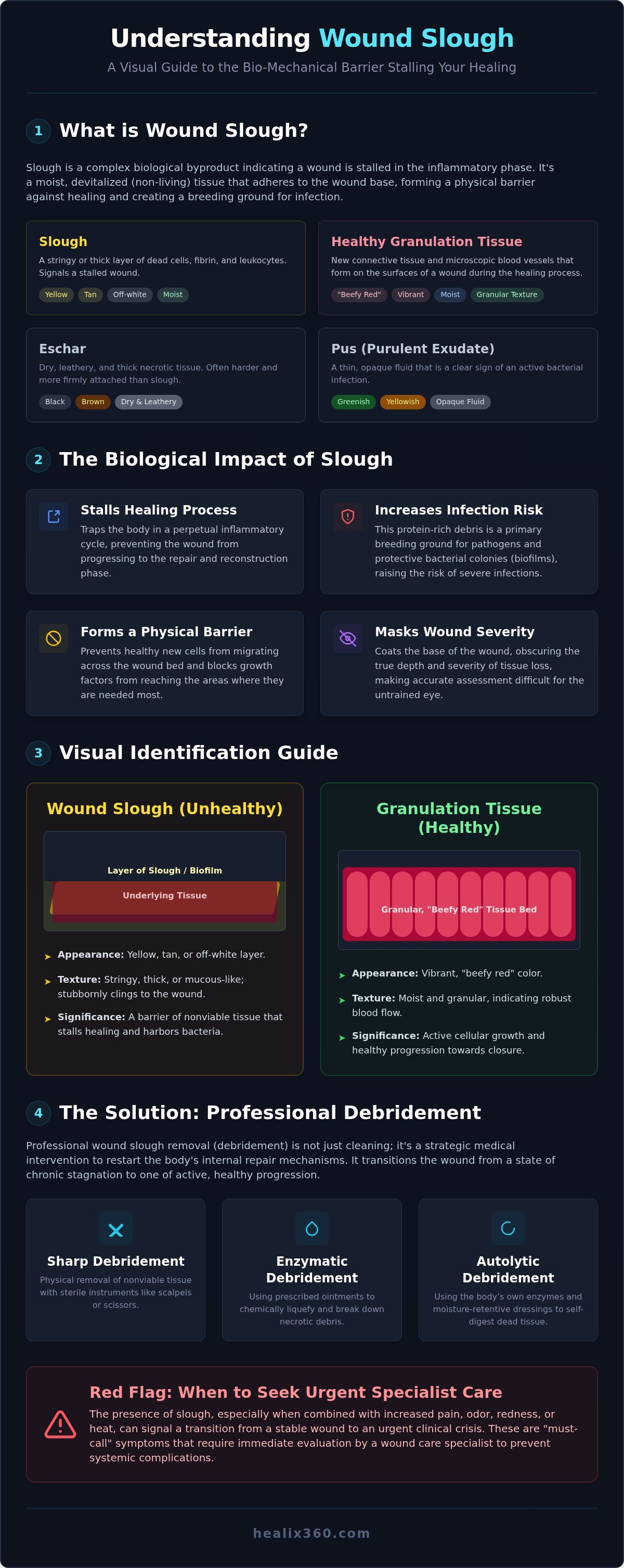
Slough is more than just a surface level blemish; it's a complex biological byproduct that signals a wound in distress. This moist, devitalized tissue typically presents as a yellow, tan, or off-white layer that adheres to the wound base. While it might appear similar to other wound characteristics, it is distinct from eschar, which is dry, leathery, and typically black or brown. It's also different from pus, the thin, opaque fluid that indicates an active infection. When slough persists, it indicates that the Wound healing process has stalled in the inflammatory phase. Instead of moving toward reconstruction, the body remains trapped in a cycle of defense, unable to lay down the new cellular foundations required for closure.
To achieve total tissue regeneration, the wound bed must be pristine. A clean wound bed serves as the essential canvas for new skin cells to migrate and thrive. When slough accumulates, it creates a bio-mechanical barrier that prevents growth factors from reaching the areas where they are needed most. This is why professional wound slough removal is not merely a cosmetic cleaning of the injury, but a strategic medical intervention designed to restart the body's internal repair mechanisms. By clearing away this nonviable material, we transition the wound from a state of chronic stagnation to one of active, healthy progression.
Slough vs. Healthy Granulation Tissue
Visual clarity is your first tool in effective wound management. Healthy granulation tissue is characterized by a vibrant, "beefy red" appearance and a moist, granular texture that signifies robust blood flow and active cellular growth. In contrast, slough appears as a stringy, thick, or even mucous-like substance that stubbornly clings to the wound bed. This material acts as a physical shield. Because healthy cells cannot migrate across or through a layer of necrotic debris, effective wound slough removal is the only way to allow that healthy red tissue to fill the wound void and lead to eventual closure.
The Composition of Slough: More Than Just 'Gunk'
At a microscopic level, slough is a dense matrix of fibrin, leukocytes, and dead cellular remnants. This composition is particularly problematic because it serves as an ideal reservoir for biofilm, a protective colony of bacteria that is highly resistant to traditional antibiotics. The presence of slough often correlates with increased wound exudate, or drainage, as the body attempts to flush out the debris. This excess moisture can macerate the surrounding skin, potentially expanding the area of injury. Understanding that slough is a living, breathing barrier to your vitality helps reframe debridement as a vital step in reclaiming your physical excellence.
The Biological Impact of Slough on Tissue Regeneration and Infection Risk
Slough acts as a deceptive veil that obscures the true landscape of a chronic injury. By coating the base of a wound, this nonviable material masks the actual depth and severity of the tissue loss, making accurate assessment nearly impossible for the untrained eye. Beyond simple visibility, the presence of slough traps the body in a perpetual inflammatory cycle. While your immune system is designed to move from defense to repair, the constant presence of dead tissue signals a state of emergency that prevents the proliferative phase from ever beginning. Effective wound slough removal is the catalyst that breaks this cycle, shifting the biological environment from one of stagnant defense to one of active reconstruction.
Leaving slough untreated isn't just a barrier to healing; it's a significant risk factor for systemic complications. This protein-rich debris serves as a primary breeding ground for pathogens, drastically increasing the likelihood of cellulitis or deeper bone infections. To reach the vital, vascularized tissue necessary for closure, a clinician must employ precise Clinical wound debridement methods. Only by stripping away this necrotic burden can we reveal the healthy margins required for the body’s natural regenerative processes to take hold.
Slough as a Host for Biofilms
Biofilms are microscopic bacterial shields that embed themselves within the matrix of wound slough. These strongholds are remarkably resilient; they create a protective barrier that renders most topical antibiotics and standard cleansers ineffective. When bacteria transition into a biofilm state, they become thousands of times more resistant to treatment than free-floating bacteria. Disrupting these strongholds requires more than just surface cleaning. It necessitates the physical removal of the slough that houses them, ensuring that the bacterial load is reduced to a level the immune system can manage. If you're struggling with a wound that won't close, our mobile wound care specialists can provide the expert assessment needed to disrupt these bacterial barriers at your bedside.
Impeding the Path to Regenerative Grafts
Modern medicine offers extraordinary tools for healing, but they require a specific biological environment to succeed. High-tech skin substitutes and amniotic membrane grafts are designed to integrate with living cells to stimulate rapid tissue growth. However, if these grafts are placed over slough, they'll fail to "take" because there's no vascular connection to the underlying tissue. Think of wound slough removal as the essential site preparation for a sophisticated construction project. Sharp debridement creates the clean, "bleeding" wound bed that allows these bio-engineered products to anchor and thrive, turning a non-healing ulcer into a success story of modern regenerative science.
Clinical Debridement Methods: Evaluating Autolytic, Enzymatic, and Sharp Removal
Debridement is the essential medical act of clearing nonviable tissue to reveal the life beneath. While the body possesses an innate ability to heal, chronic wounds often require external intervention to overcome biological stagnation. This process involves the strategic removal of slough, biofilm, and necrotic debris to transform a stagnant wound into a productive healing environment. Selecting the right method for wound slough removal depends on the clinical urgency, the patient's overall health, and the specific goals of the regenerative plan. Each technique offers a different balance of speed, precision, and comfort.
Autolytic debridement represents the most conservative approach, utilizing moisture-retentive dressings to harness the body's own enzymes. While painless and highly selective, it's a slow process that may take weeks to show results. Enzymatic debridement introduces exogenous chemical agents, such as collagenase, to systematically dissolve the protein bonds holding slough to the wound bed. Mechanical debridement, which often involves irrigation or wet-to-dry dressings, remains a common option; however, it's frequently criticized for being non-selective and potentially damaging to the fragile, healthy granulation tissue we aim to preserve.
The Speed and Precision of Sharp Debridement
Sharp debridement stands as the gold standard for rapid, precise intervention. During this procedure, a board-certified specialist uses a scalpel, scissors, or curette to selectively remove only the nonviable tissue. This method provides an immediate shift from a chronic, stalled state to an acute, healing state by triggering a fresh inflammatory response. By physically stripping away the barriers to recovery, sharp debridement allows for the immediate assessment of the wound’s true depth and prepares the site for advanced therapies like amniotic grafts. It's an elite level of care that prioritizes physical excellence and rapid results.
Choosing the Right Method for Your Lifestyle
Your choice of debridement should align with your long-term vitality goals and medical needs. For high-risk individuals, such as those requiring an diabetic ulcer treatment guide, autolytic methods are often too slow to prevent the escalating risk of infection. Rapid intervention is frequently the most prudent path to avoid complications. The following table compares the primary clinical methods to help you visualize the most effective roadmap for your recovery.
| Method | Speed of Results | Precision Level | Primary Benefit |
|---|---|---|---|
| Sharp | Immediate | Very High | Rapidly restarts healing |
| Enzymatic | Days to Weeks | High | Targeted chemical breakdown |
| Autolytic | Weeks | High | Painless and conservative |
| Mechanical | Variable | Low | Removes surface debris |
Effective wound slough removal is a sequence where debridement serves as the foundational move. Whether you require a conservative approach or a high-precision sharp procedure, the goal remains the same: clear the path for your body to reclaim its health.
Red Flags: When Wound Slough Indicates a Need for Urgent Specialist Care
Distinguishing between the expected presence of devitalized tissue and an escalating medical emergency is critical for maintaining your long term vitality. While some slough is a natural byproduct of a wound's initial inflammatory phase, certain changes indicate that the injury is no longer just "stalled" but actively deteriorating. One of the most deceptive clinical signs is "undermining," a condition where the wound bed extends beneath the visible skin edges. This creates a hidden pocket for bacteria to flourish; making professional wound slough removal essential to expose the full extent of the injury and prevent deep tissue destruction.
You must remain vigilant for specific "must-call" symptoms that signal a transition toward systemic risk. If left unaddressed, these red flags can lead to cellulitis or even sepsis. Contact a professional if you observe any of the following:
- A foul or unusual odor that persists after cleaning the wound.
- Increasing, localized pain or a throbbing sensation that wasn't previously present.
- Spreading redness, known as erythema, or intense warmth in the surrounding skin.
- A sudden increase in drainage volume or a change in the fluid's color and consistency.
- Systemic signs of distress, such as fever, chills, or unexplained fatigue.
The Dangers of Home 'Scrubbing'
It's tempting to attempt DIY wound slough removal using household tools or aggressive scrubbing techniques. However, this often leads to traumatic injury of the fragile new blood vessels and granulation tissue trying to form underneath. Improper cleaning can easily introduce new pathogens into the deep tissue layers, escalating a manageable situation into a severe infection. While gentle irrigation with sterile saline is appropriate for daily hygiene, any significant removal of adherent tissue requires the precision and sterile instruments of a clinical expert.
Specialist Assessment: The First Line of Defense
A board certified wound specialist offers more than just debridement; they provide a comprehensive diagnostic strategy. This includes culture testing to identify specific bacterial strains and assessing vascular flow to ensure the area has enough oxygenated blood to support healing. Before aggressive debridement occurs, we must confirm that the underlying circulatory system can sustain the regenerative process. Use this 5 point checklist during your daily inspections to stay proactive about your recovery:
- Is the surrounding skin cool or abnormally hot to the touch?
- Has the odor changed significantly since your last dressing change?
- Is the redness spreading further away from the wound margin?
- Does the slough appear thicker, darker, or more abundant than yesterday?
- Are you experiencing new, sharp pain when the wound is touched?
If you identify any of these markers, request a professional bedside evaluation immediately to prevent further complications and secure your path to closure.
Mobile Advanced Wound Care: Precision Debridement and Regenerative Grafts in Southern California
Healing is a personal journey that should begin in the sanctuary of your home, not in a sterile hospital waiting room. Healix360 redefines the patient experience by bringing a comprehensive wound center directly to your bedside. This mobile model eliminates the physical and emotional strain of frequent travel, allowing our board certified specialists to perform precise wound slough removal in a setting where you feel most secure. By utilizing sharp debridement at the bedside, we provide a sophisticated, painless intervention that immediately prepares the wound bed for the next phase of regenerative science. We believe that elite medical care should adapt to your life, not the other way around.
For residents in Glendale, Los Angeles, and the surrounding communities, this high end service is fully integrated with Medicare Part B. We navigate the complexities of 2026 CMS guidelines to ensure your care is both compliant and effective. Our specialists don't work in isolation; we coordinate seamlessly with your home health agencies and primary care physicians to create a unified front against chronic stagnation. This collaborative approach ensures that every detail of your systemic health is considered, from the initial assessment to the successful integration of bio-engineered skin substitutes.
Bedside Excellence in Glendale and Los Angeles
The logistical challenge of transporting a patient with limited mobility is often a barrier to consistent care, especially for those managing complex bed sores. Our mobile model solves this by delivering hospital grade sharp debridement in your living room or bedroom. This personalized approach allows our specialists to spend more time understanding your specific environment and lifestyle, which are critical factors in long term recovery. By removing the stress of transport, we allow your body to focus its energy entirely on the biological task of tissue repair.
A Roadmap to Wound Closure and Vitality
Successful wound closure is a sequence of intentional, data driven steps. Once the foundational step of wound slough removal is complete, our specialists implement a customized roadmap that may include Negative Pressure Wound Therapy (NPWT), specialized compression, and the application of amniotic membrane grafts. These regenerative therapies work in harmony to stimulate cellular growth and accelerate closure. We invite you to take a proactive stance on your recovery. Your health is your most valuable asset, and it deserves a strategy that prioritizes physical excellence and life changing outcomes. Contact Healix360 for a mobile wound assessment today and begin your transition from chronic care to complete vitality.
Reclaiming Your Path to Regeneration and Vitality
Your journey toward complete tissue regeneration begins with the strategic decision to clear the biological obstacles standing in your way. We've explored how slough acts as a complex bio-mechanical barrier that stalls the body's natural repair cycle and increases the risk of systemic infection. By prioritizing professional wound slough removal, you aren't just cleaning a surface; you're initiating a sophisticated sequence of healing that unlocks the potential of advanced regenerative graft technology. This proactive intervention is the essential first move in transitioning from chronic stagnation to active recovery.
As a Medicare Part B provider, Healix360 is dedicated to delivering this elite level of clinical care directly to your home. Our mobile specialists serve Glendale and the greater L.A. County area, ensuring that mobility challenges never limit your access to board-certified expertise and innovative bedside treatments. You possess the power to transform a non-healing wound into a narrative of physical excellence and long-term health.
We invite you to Schedule a Mobile Wound Assessment in Southern California to take the first definitive step toward closure. You deserve a healthcare partner who treats your vitality as a primary asset and provides the scientific rigor necessary to protect it. Let's begin your personalized roadmap to healing today.
Frequently Asked Questions
Is wound slough the same thing as an infection?
Slough is not an infection itself, but rather a collection of dead cells, fibrin, and leukocytes that indicates the healing process has stalled. While it isn't bacteria, this material provides a fertile environment where pathogens can easily thrive and form resilient colonies. If you notice a foul odor or spreading redness alongside this debris, the wound may have transitioned into an active infectious state that requires immediate clinical attention.
Does it hurt to have slough removed by a specialist?
Professional debridement is typically a painless procedure because the clinician focuses exclusively on nonviable tissue that lacks active nerve endings. In cases where the wound is particularly sensitive or deep, our board-certified specialists use localized numbing agents to ensure your total comfort. Most patients report a sense of immediate relief once the heavy, necrotic burden is removed from the injury site, allowing the area to finally breathe and begin repair.
Can I use hydrogen peroxide to remove slough at home?
You shouldn't use hydrogen peroxide for wound slough removal because it is cytotoxic, meaning it kills the healthy cells and new blood vessels necessary for reconstruction. While the bubbling action might look effective, it actually causes chemical trauma that stalls the healing process and creates more debris. Safe irrigation with sterile saline is the only recommended home method until a professional can perform a precise, sterile clinical debridement.
How long does it take for a wound to heal after debridement?
Healing timelines are highly individualized and depend on the underlying cause of the wound and your overall systemic health. However, debridement serves as the essential catalyst that shifts a chronic wound into an acute, active healing state immediately. By clearing the biological barriers, we allow advanced therapies and your body's natural growth factors to begin the reconstruction process much faster than conservative management would allow.
Does Medicare cover mobile wound slough removal and debridement?
Medicare Part B generally covers mobile debridement and wound slough removal when a specialist determines the procedure is medically necessary for chronic or non-healing wounds. As a Medicare-compliant provider, Healix360 coordinates with your insurance to ensure these essential bedside services are accessible without the burden of hospital transport. Coverage typically includes the specialist visit, the procedure itself, and the advanced dressings required to maintain a pristine wound bed.
What happens if slough is left in the wound for too long?
Leaving slough in a wound bed indefinitely creates a permanent barrier that prevents oxygen and vital nutrients from reaching the living tissue. This stagnation leads to the development of resilient biofilms and significantly increases the risk of deep-tissue infections like osteomyelitis. Over time, the wound may expand in size and depth, complicating the eventual path to closure and increasing the risk of systemic health complications.
How often does a wound need to be debrided?
The frequency of debridement depends on how quickly your body accumulates nonviable tissue and the specific goals of your personalized treatment plan. Many chronic wounds require weekly or bi-weekly sessions to keep the wound bed clear and the bacterial load at a manageable level. Your specialist will adjust this cadence based on the visible progress of granulation tissue and the successful integration of any regenerative grafts.
Will my insurance cover regenerative grafts after the slough is gone?
Many insurance providers cover advanced regenerative grafts once the wound bed is properly prepared and cleared of all nonviable tissue. These bio-engineered skin substitutes are typically authorized for wounds that haven't shown significant progress after 30 days of standard conservative care. Our team handles the meticulous documentation required to prove medical necessity, ensuring you have access to the latest breakthroughs in regenerative medicine once debridement is complete.


