
What if the most effective way to heal a deep, Stage 3 pressure injury wasn't found in a hospital bed, but in the comfort of your own home? For many families, the logistics of transporting an immobile patient to a wound center are nearly impossible, often leading to delayed care and worsening conditions. Fortunately, modern medical advancements have transformed stage 3 pressure ulcer treatment at home into a viable, clinical reality. You don't have to settle for basic bandage changes when advanced mobile medical intervention can bring specialized expertise directly to your bedside.
We understand the anxiety that comes with seeing a wound progress into the deeper layers of skin and fat. It's natural to worry about infection or the risk of amputation. This guide will show you how to manage these complex injuries safely by utilizing professional debridement and bio-engineered grafts. You'll learn why the right clinical partnership is the key to closing deep craters and preventing the progression to Stage 4, all while maintaining the patient's comfort and dignity in their own environment. We'll explore the essential roles of regenerative skin substitutes and mobile medical specialists who bring hospital-grade healing to you.
Key Takeaways
- Identify the clinical markers of a Stage 3 pressure injury, specifically full-thickness tissue loss where subcutaneous fat becomes visible in a deep crater.
- Discover how advanced clinical interventions like sharp debridement and regenerative grafts make stage 3 pressure ulcer treatment at home both safe and effective.
- Master essential daily management protocols, including the "Rule of 30" for repositioning and the implementation of specialized pressure-reducing support surfaces.
- Recognize critical systemic red flags such as fever or sudden confusion that indicate a need for immediate specialist intervention to prevent sepsis.
- Learn how mobile wound care specialists bring hospital-level expertise to Southern California homes, coordinating directly with home health agencies for seamless recovery.
What Defines a Stage 3 Pressure Ulcer?
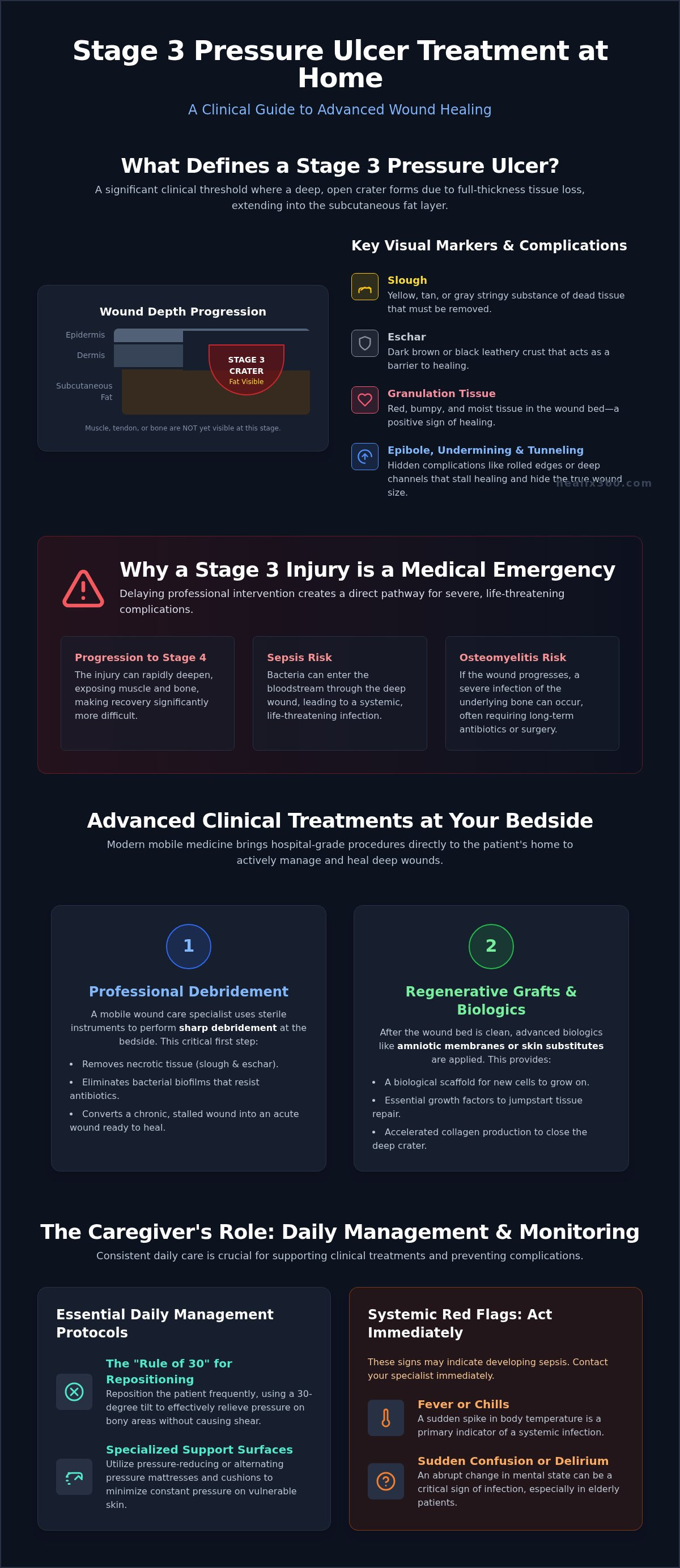
A Stage 3 pressure injury represents a significant clinical threshold where the skin's protective layers are entirely breached. At this stage, the wound presents as a deep, open crater. Unlike Stage 1 or 2 injuries, which involve superficial redness or shallow blisters, Stage 3 involves full-thickness tissue loss. This means the damage has extended through the epidermis and dermis into the subcutaneous fat layer. While adipose tissue (fat) may be visible, the wound has not yet reached the underlying muscle, tendon, or bone. Effective stage 3 pressure ulcer treatment at home focuses on stabilizing this deep tissue loss before it expands further.
Identifying the specific characteristics of the wound bed is essential for clinical management. Caregivers often observe slough, which is a yellow, tan, or gray stringy substance consisting of dead white blood cells and debris. In some cases, the wound may be covered by eschar, a dark brown or black leathery crust. Both slough and eschar must be managed professionally by a specialist; they harbor bacteria and create a physical barrier that prevents new tissue from forming. Planning stage 3 pressure ulcer treatment at home requires a clear understanding of these visual indicators to ensure the right medical interventions are applied.
Visual Markers and Warning Signs
A primary indicator of a Stage 3 injury is the presence of granulation tissue, which appears as red, bumpy, and moist tissue in the wound bed. This is a sign of healing, but it can be hindered by epibole, or "rolled wound edges." When the skin edges roll inward, the body mistakenly believes the wound is closed, which stalls the healing process. According to the NPIAP standard, a Stage 3 pressure injury is defined as full-thickness loss of skin, in which adipose is visible in the ulcer and granulation tissue and epibole are often present. Beyond the visible surface, clinicians must assess for undermining, where the wound expands under the skin surface, and tunneling, which creates narrow passageways into deeper tissue. These structural complications hide the true extent of the injury from the untrained eye.
Why Stage 3 Injuries Are a Medical Emergency
Leaving a Stage 3 ulcer unmanaged is a high-risk decision that can lead to life-threatening complications. Without immediate intervention, the injury can quickly progress to Stage 4, exposing bone and muscle and significantly increasing the difficulty of recovery. Deep tissue damage provides a direct pathway for bacteria to enter the bloodstream, potentially leading to sepsis or osteomyelitis, which is a serious bone infection. For elderly patients with compromised immune systems, a "wait and see" approach is dangerous. Early intervention with specialized mobile wound care is necessary to stabilize the wound bed and initiate the healing process before the damage becomes irreversible or requires hospitalization.
Advanced Clinical Treatments for Bedsores at Home
Healing a Stage 3 crater requires more than standard gauze and antiseptic. Because these injuries involve full-thickness tissue loss, the biological environment of the wound must be actively managed. Modern stage 3 pressure ulcer treatment at home now incorporates clinical procedures that were once restricted to inpatient surgical suites. These advanced modalities focus on removing barriers to healing and providing the cellular building blocks necessary for tissue regeneration.
The Role of Professional Debridement
Necrotic tissue, such as slough or eschar, acts as a physical and biological blockade. It harbors biofilms, which are complex bacterial communities that protect themselves from topical antibiotics. Professional sharp debridement is the most efficient method to clear this debris. Unlike chemical debridement, which relies on slow-acting enzymes, sharp debridement involves a specialist using sterile instruments to remove non-viable tissue at the bedside. This process immediately converts a chronic, stalled wound into an acute wound that is ready to heal. You can explore more about what is wound debridement and why it is a prerequisite for advanced therapies.
Regenerative Grafts and Biologics
After debridement, regenerative medicine provides the next step in recovery. Amniotic membrane grafts and bio-engineered skin substitutes act as a biological scaffold. These grafts contain essential growth factors and cytokines that jumpstart cellular migration and collagen production. As of January 1, 2026, Medicare has streamlined access to these biologics with a flat reimbursement rate of $127.28 per square centimeter for most skin substitute products. This regulatory change allows patients to receive sophisticated stem-cell-derived therapies in their own living rooms, bypassing the need for clinic visits. These advanced grafts provide a protective barrier and accelerate the closure of deep ulcers that have failed traditional treatments.
For wounds with high levels of exudate or drainage, Negative Pressure Wound Therapy (NPWT) is often utilized. A portable "Wound VAC" device applies constant, controlled sub-atmospheric pressure to the wound bed through a specialized foam dressing. This mechanism removes excess fluid, reduces localized swelling, and significantly promotes the formation of healthy granulation tissue. By 2026, these devices have become more compact and user-friendly for home use, allowing for continuous therapy without limiting a patient's comfort. Utilizing mobile advanced wound care services ensures that even the most complex Stage 3 ulcers receive the clinical rigor required for a full recovery without the need for hospital admission.
Daily Management: The Caregiver’s Role in Home Treatment
While advanced procedures like sharp debridement and regenerative grafting are performed by specialists, the success of stage 3 pressure ulcer treatment at home depends on the daily environment provided by the caregiver. Clinical outcomes are directly tied to the consistency of wound hygiene and the management of external stressors. Maintaining a sterile environment is paramount; caregivers should avoid basic soap and water, which can disrupt the wound's pH and introduce contaminants. Instead, use sterile saline or physician-recommended antimicrobial solutions to irrigate the crater. This process removes loose debris without damaging the fragile new granulation tissue forming at the base of the injury.
Selecting the Right Wound Dressing
The choice of dressing is not a one-size-fits-all decision. For Stage 3 ulcers with heavy drainage, or exudate, calcium alginate dressings are highly effective. These dressings, derived from seaweed, can absorb many times their weight in fluid and turn into a gel that maintains a moist healing environment. If a local infection is suspected or if the bacterial load is high, silver-impregnated dressings provide a sustained antimicrobial effect. You can find more detailed protocols in our comprehensive guide to bed sores and ulcer treatment, which outlines how to match dressing types to specific wound characteristics.
Moisture management extends beyond the wound bed to the surrounding skin, known as the periwound area. Excessive drainage can cause maceration, where the skin becomes white, soft, and prone to breakdown. Applying a moisture barrier ointment or film to the periwound skin protects it from the corrosive effects of wound enzymes. Additionally, nutritional support is a non-negotiable component of recovery. A diet high in protein and calories is essential, as the body requires these building blocks to produce the collagen needed to fill a deep Stage 3 crater. Without adequate protein intake, even the most advanced medical grafts may fail to integrate properly.
Pressure Redistribution Strategies
Healing cannot occur if the affected area continues to sustain pressure. Caregivers should implement the "Rule of 30," which involves elevating the head of the bed to no more than 30 degrees and tilting the patient's body at a 30-degree angle to offload the sacrum and hips. Utilizing a high-specification foam or an alternating pressure mattress is critical for stage 3 pressure ulcer treatment at home. These surfaces constantly redistribute weight, preventing the localized ischemia that caused the original injury. When moving or repositioning the patient, always use a "draw sheet" or transfer device. Sliding a patient across bed linens creates friction and shear, which can tear new tissue and expand the dimensions of the ulcer.
Monitoring for Complications and Infection
Monitoring the recovery process requires a high degree of clinical vigilance. During stage 3 pressure ulcer treatment at home, the risk of localized infection evolving into a systemic crisis is a constant concern. Local indicators of infection include spreading erythema, increased skin temperature around the wound perimeter, and a distinct foul odor that persists even after thorough irrigation. However, relying solely on these visible signs can be misleading, especially in elderly or immunocompromised patients who may not mount a typical inflammatory response.
Systemic red flags often manifest before the wound itself shows dramatic changes. Caregivers should watch for sudden confusion or delirium, a loss of appetite, or a low-grade fever. If these symptoms appear, bedside Wound Culture and Sensitivity Testing is necessary to identify the specific pathogen and determine which antibiotics will be effective. Without this diagnostic precision, there's a significant risk of the infection reaching the bone, a condition known as osteomyelitis. This complication often requires surgical intervention and long-term intravenous antibiotics, making early detection at the bedside vital for avoiding hospitalization.
Identifying Biofilm and Chronic Inflammation
Biofilm is a major obstacle in chronic wound care. It's a microscopic, slimy layer of bacteria that adheres to the wound surface, creating a biological shield that is highly resistant to both topical and systemic antibiotics. Distinguishing between healthy exudate and purulent discharge is vital for effective monitoring. Normal drainage is typically thin and clear or slightly pink, whereas purulent discharge is thick, opaque, and often yellow or green. If you observe new redness spreading more than two centimeters from the wound edge, you must contact your medical specialist within 24 hours.
Preventing Progression to Stage 4
The first 14 days of specialist intervention represent a critical window for recovery. During this time, the primary goal of advanced mobile wound care is to stabilize the wound bed and prevent the "crater" from deepening into muscle or bone. Successful healing is marked by granulation, where red, beefy tissue begins to fill the cavity from the bottom up. This indicates that the blood supply is returning and the body is actively rebuilding the lost adipose layer. If you notice the wound bed becoming pale or the depth increasing, immediate clinical reassessment is required. To ensure your loved one receives hospital-grade monitoring without leaving their bedroom, contact the mobile wound care specialists at Healix360 for professional bedside evaluations and personalized treatment plans.
Mobile Wound Care: Bringing the Specialist to Southern California Homes
The logistical challenge of transporting an immobile patient to a wound center often delays critical stage 3 pressure ulcer treatment at home. For patients in Southern California, particularly those with advanced age or neurological conditions, a trip to a clinic involves ambulance transport or complex vehicle transfers that cause physical pain and emotional distress. Healix360 eliminates this barrier by delivering board-certified wound specialists directly to the patient's bedside. This model ensures that specialized procedures, including sharp debridement and regenerative grafting, are accessible without the trauma of transportation.
Our specialists coordinate seamlessly with existing Home Health Agencies and Case Managers to create a unified care plan. This collaborative approach ensures that the daily management protocols, such as pressure redistribution and moisture control, align with the advanced clinical interventions provided during mobile visits. By treating the patient in their own environment, we also significantly reduce the risk of hospital-acquired infections (HAIs), which are a major concern in inpatient settings. Every treatment plan is personalized to the specific home environment, accounting for the patient's existing support system and available equipment.
Expert Care in Los Angeles and Glendale
Residents of Los Angeles and Glendale have access to a specialized level of care that bridges the gap between general home health and hospital wound centers. Our board-certified practitioners bring diagnostic tools and advanced biologics to the bedside, ensuring that stage 3 pressure ulcer treatment at home meets the highest clinical standards. You can learn more about our specific regional services in our guide to Expert Mobile Wound Care in Los Angeles & Glendale. This regional focus allows for consistent follow-up and a rapid response to changing wound conditions.
Getting Started with Healix360
Navigating the financial aspects of advanced wound care is often a primary concern for families. Healix360 is a Medicare Part B provider, which is critical for accessing modern regenerative therapies. In 2026, the Medicare Part B annual deductible is $283, and coverage typically includes 80% of approved amounts for medically necessary services. We manage the clinical documentation required for Medicare compliance, simplifying the process for both the patient and their primary care physician. The process begins with a simple referral from a doctor or a direct inquiry from a family member. During the initial bedside evaluation, a specialist will perform a comprehensive assessment of the ulcer and develop a personalized healing trajectory. To begin the recovery process, contact Healix360 today for an at-home wound assessment.
Advancing Toward Recovery and Long-Term Healing
Successful stage 3 pressure ulcer treatment at home is no longer limited to basic wound management. By integrating clinical procedures like sharp debridement and regenerative grafts into the home environment, patients can achieve hospital-grade results without the physical toll of ambulance transport. It's essential to remember that consistent pressure redistribution and professional monitoring are the primary safeguards that prevent progression to Stage 4. These interventions don't just treat the wound; they restore the patient's quality of life.
Healix360 operates a dedicated Southern California specialist network focused on bringing advanced regenerative grafts directly to the bedside. As a Medicare Part B provider, we ensure that sophisticated medical interventions remain accessible and clinically compliant for our patients. You don't have to navigate this complex recovery journey alone or risk the complications associated with hospital-acquired infections. Schedule a Mobile Wound Care Consultation with Healix360 to secure the specialized expertise required for complex wound closure. Healing is a realistic goal when the right clinical team meets you in the comfort of your own home.
Frequently Asked Questions
Can a Stage 3 pressure ulcer heal without surgery?
Many Stage 3 injuries heal without traditional inpatient surgery through advanced mobile interventions. Procedures like sharp debridement and the application of bio-engineered skin substitutes are performed at the patient's bedside to stimulate tissue growth. These regenerative therapies provide a biological scaffold that allows the wound to close naturally. While surgical flap procedures are sometimes necessary for Stage 4 wounds, Stage 3 ulcers often respond well to a structured, clinical stage 3 pressure ulcer treatment at home.
Does Medicare cover at-home treatment for Stage 3 bedsores?
Medicare Part B generally covers medically necessary wound care services provided in the home setting. As a Medicare-compliant provider, Healix360 bills for professional evaluations and specialized procedures such as debridement and graft application. In 2026, the annual Part B deductible is $283, after which Medicare typically covers 80% of the approved amount. This coverage allows patients to receive high-level care without the financial burden of a hospital stay or outpatient facility fees.
How long does it typically take for a Stage 3 pressure ulcer to heal at home?
The healing trajectory for a Stage 3 injury typically spans between one and four months, though individual health factors play a significant role. Glycemic control and protein intake can accelerate or stall progress. Consistent stage 3 pressure ulcer treatment at home, including specialized air mattresses and regenerative biologics, is required to meet these timelines. Without professional intervention to manage biofilm, healing can be delayed indefinitely or lead to serious systemic complications.
What is the best dressing for a Stage 3 pressure ulcer with heavy drainage?
For Stage 3 ulcers with heavy drainage, calcium alginate or hydrofiber dressings are the most effective clinical choices. These materials absorb large volumes of exudate while maintaining a moist environment that promotes granulation. If drainage remains excessive, Negative Pressure Wound Therapy (NPWT) may be utilized. A portable Wound VAC device uses controlled suction to remove fluid and reduce swelling, which is often a more efficient solution than standard bandages for high-exudate wounds in a home setting.
How often should a Stage 3 wound be cleaned and redressed?
Cleaning and dressing frequency depends on the wound's drainage levels and the type of dressing used. High-absorbency dressings like alginates may remain in place for two to three days, while standard gauze often requires daily changes. Every redressing should include irrigation with sterile saline to remove surface bacteria. A specialist will provide a personalized schedule during the bedside evaluation to ensure the wound bed remains stable without being disturbed too frequently, which can lower tissue temperature.
What should I do if the wound starts to smell or changes color?
A foul odor or a change in wound color, such as turning yellow, green, or dark brown, requires immediate medical assessment. These are often indicators of a localized infection or the development of a bacterial biofilm. Systemic symptoms like fever or sudden confusion are also critical warnings. If you observe these changes, your specialist may perform a bedside Wound Culture and Sensitivity Test to identify the pathogen and prescribe the most effective targeted antibiotic treatment.
Can amniotic grafts be applied at home for pressure ulcers?
Yes, amniotic membrane grafts are frequently applied in the home setting by board-certified specialists. These regenerative biologics contain growth factors that jumpstart the body's natural healing process in stalled or chronic wounds. Healix360 specialists bring these advanced grafts directly to patients in Southern California, applying them at the bedside after the wound has been properly debrided. This process allows for sophisticated tissue engineering without the need for the patient to travel to a specialized surgical center.
Is a Stage 3 pressure ulcer considered a medical emergency?
A Stage 3 pressure injury is a serious clinical condition that requires urgent medical attention to prevent life-threatening complications. While it may not always require an emergency room visit, it is a medical priority because the skin's protective barrier is entirely breached. Without specialized intervention, the wound can rapidly progress to Stage 4 or lead to sepsis and osteomyelitis. Immediate consultation with a mobile wound care specialist is the safest way to stabilize the injury.


