
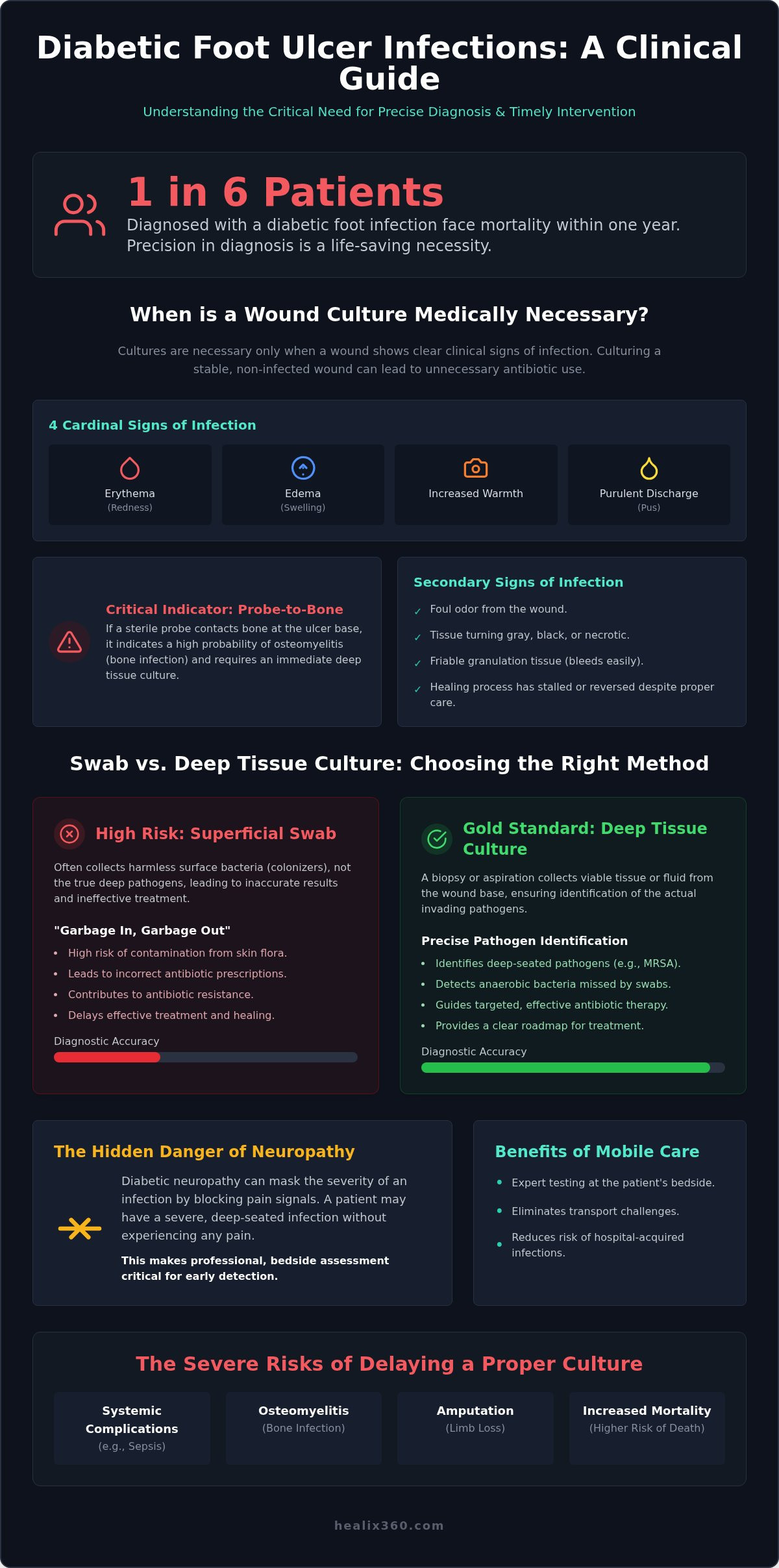
Nearly one in six patients diagnosed with a diabetic foot infection face mortality within a single year. This sobering statistic underscores why precision in diagnosis is a life-saving necessity rather than a clinical preference. If you are managing a non-healing wound at home, the anxiety regarding potential amputation is often compounded by the logistical difficulty of transporting a patient with mobility issues to a traditional clinic. You likely worry about the risks of hospital-acquired infections and simply want a clear path forward that prioritizes both safety and accuracy.
Understanding exactly when is a wound culture needed for a diabetic foot ulcer is the first step in preventing systemic complications. This 2026 clinical guide details the specific indicators that necessitate a culture, such as purulent drainage or localized warmth. We also examine the vital distinction between a superficial swab and a professional deep tissue culture. As a Medicare Part B provider specializing in advanced mobile wound care across Southern California, Healix360 delivers these specialized diagnostic services directly to the patient's bedside. You will learn how expert testing at home ensures a precise treatment plan while maintaining the highest standards of clinical rigor and patient convenience.
Key Takeaways
- Identifying when is a wound culture needed for a diabetic foot ulcer requires monitoring for clinical signs such as purulent drainage, localized warmth, or stalled healing.
- Understand why deep tissue cultures are medically superior to superficial swabs for accurately identifying deep-seated pathogens like MRSA or Pseudomonas.
- Learn how neuropathy can mask the severity of an infection, making professional bedside assessment critical even when the patient experiences no pain.
- Discover how mobile wound care specialists provide expert diagnostic testing at home, eliminating the risks and logistical challenges of transporting patients with mobility issues.
- Gain clarity on how sensitivity reports serve as a precise roadmap for selecting the most effective antibiotic therapy to prevent systemic complications like sepsis.
Clinical Indicators: When a Wound Culture is Medically Necessary
A wound culture is a specialized laboratory procedure designed to isolate and identify specific bacteria or fungi within a diabetic foot ulcer. It isn't a screening tool for every wound. Clinical guidelines for 2026 emphasize the "Clinical Infection Rule," which states that cultures are only medically necessary when a wound exhibits clear signs of infection. Culturing a clinically stable, "quiet" wound often results in identifying harmless surface bacteria rather than true pathogens.
Determining when is a wound culture needed for a diabetic foot ulcer depends on identifying the four cardinal signs of infection. These include erythema (redness extending beyond the wound border), edema (localized swelling), increased warmth, and purulent discharge (pus). If a patient in Los Angeles or Glendale notices these symptoms, a bedside assessment by a Healix360 specialist is the next logical step to ensure clinical accuracy without the need for hospital transport.
Another critical indicator is the "probe-to-bone" test. During a clinical evaluation, if a sterile medical probe makes contact with hard bone at the base of the ulcer, the probability of osteomyelitis, or bone infection, increases significantly. This finding necessitates an immediate deep tissue culture. Reaching the bone is a serious clinical milestone that requires precise diagnostic mapping to prevent systemic complications or amputation.
Secondary Signs of DFU Infection
In many cases, infection presents through more subtle, secondary indicators. A foul odor or tissue that turns gray or black often suggests the presence of anaerobic bacteria or necrotic changes. You might also notice friable granulation tissue, which is wound tissue that bleeds easily during routine dressing changes. If a wound fails to show measurable progress despite proper offloading and standard care, it's a strong indicator that a deeper infection is hindering the healing process. Our board-certified specialists evaluate these nuances during mobile bedside assessments across Southern California to determine the appropriate diagnostic path.
When to Skip the Culture
It's vital to distinguish between colonization and active infection. Every chronic wound contains a biofilm, a complex community of bacteria that lives on the surface. Culturing these "quiet" wounds often leads to the over-prescription of antibiotics, which can cause more harm than good. This practice contributes to antibiotic resistance and doesn't improve healing outcomes. Healix360 specialists use their clinical expertise to determine if a wound is truly infected or simply colonized. This ensures that Medicare Part B resources are used appropriately and that patients only receive the treatments they actually need for their specific clinical situation.
Swab vs. Deep Tissue Culture: Choosing the Right Method
Selecting the appropriate collection technique is as critical as identifying when is a wound culture needed for a diabetic foot ulcer. Clinical accuracy depends entirely on the quality of the specimen. While superficial swabs are common in many general care settings, they frequently fail to capture the true pathogens responsible for deep-seated infections. These swabs often pick up colonizing bacteria on the skin surface rather than the microorganisms invading the underlying tissue.
Deep tissue biopsy remains the gold standard for diagnosing diabetic foot infections. This method involves collecting a small sample of viable tissue from the wound base, which allows for the identification of anaerobic bacteria that don't survive on the surface. In cases where a localized abscess is present, our specialists utilize the aspiration method. By using a sterile needle to collect fluid directly from the infected pocket, we ensure the laboratory receives a concentrated, uncontaminated sample for analysis.
The Dangers of 'Garbage In, Garbage Out' Swabs
Superficial contaminants often lead to "garbage in, garbage out" results. When a lab identifies harmless skin flora instead of the actual pathogen, clinicians may prescribe broad-spectrum antibiotics that aren't necessary. This poorly targeted treatment increases the risk of antibiotic resistance and delays the healing of the actual infection. Contamination occurs when non-pathogenic microorganisms residing on the skin surface are inadvertently collected, leading to false-positive results that don't reflect the true source of the tissue invasion.
The Role of Sharp Debridement in Culturing
Accurate culturing and effective wound management are inseparable. Before collecting a sample, our board-certified specialists often perform sharp debridement to remove necrotic tissue and biofilm. This process clears away the "noise" of dead cellular debris and surface colonization, revealing the healthy, bleeding wound base where the most relevant pathogens reside.
There is a powerful clinical synergy between cleaning a wound and diagnosing its microbiology. By sampling the tissue immediately after debridement, we obtain the most reliable data possible. Healix360 provides these specialized mobile wound care assessments at the patient's bedside throughout Los Angeles and Beverly Hills. This high-level diagnostic approach ensures that your personalized treatment plan is based on precise evidence rather than clinical guesswork, significantly reducing the risk of complications like osteomyelitis.
Interpreting Culture & Sensitivity Results
Once a clinician determines when is a wound culture needed for a diabetic foot ulcer and completes the sampling, the resulting laboratory report provides the definitive roadmap for treatment. These reports are divided into two critical components: the identification of the pathogen and the sensitivity analysis. Unlike simple skin infections, diabetic ulcers are frequently polymicrobial. This means the wound hosts a complex community of multiple bacterial species that work together to resist the body's immune response and standard treatments.
The "Pathogen List" identifies the specific microorganisms found within the tissue. Common findings include Staphylococcus aureus, MRSA, and Pseudomonas aeruginosa. While initial treatment often begins with broad-spectrum antibiotics to cover a wide range of potential threats, the sensitivity report allows the medical team to pivot toward a more precise, narrow-spectrum approach. This transition is vital for patient safety, as it ensures the medication being administered is actually capable of eradicating the specific bacteria present in the ulcer.
Common Pathogens in Diabetic Foot Ulcers
Diabetic foot infections typically involve a mix of Gram-positive and Gram-negative organisms. Gram-positive bacteria like Staphylococcus aureus are the most common early colonizers. However, as an ulcer becomes chronic, Gram-negative organisms like Pseudomonas often join the infection. Methicillin-resistant Staphylococcus aureus (MRSA) is a particular concern in Southern California healthcare environments, requiring aggressive, specialized antibiotic intervention. If deep tissue cultures remain positive for these pathogens despite ongoing therapy, it serves as a clinical red flag for osteomyelitis, or bone infection, which requires a significantly longer and more intensive course of treatment.
Targeted Antibiotic Stewardship
Effective antibiotic stewardship focuses on using the narrowest effective antibiotic to minimize systemic side effects and prevent the development of "superbugs." The laboratory typically requires 48 to 72 hours to return complete sensitivity results, as the bacteria must be grown in the presence of various medications to observe their reaction. During this window, Healix360 specialists maintain close communication with home health agencies to monitor the patient's clinical status. The sensitivity portion of the report is the most critical element for treatment planning because it identifies exactly which antibiotics will kill the bacteria and which ones the infection has already learned to resist. By following this roadmap, our board-certified specialists in Los Angeles and Beverly Hills can provide Medicare-compliant care that is both clinically responsible and highly effective.
The Risks of Delaying a Culture for Diabetic Ulcers
Delaying the decision on when is a wound culture needed for a diabetic foot ulcer can have catastrophic consequences for limb preservation. Because many diabetic patients suffer from peripheral neuropathy, they often lack the protective sensation of pain that typically alerts a person to a worsening infection. This "silent" progression means an ulcer can transition from a localized issue to a deep-seated bone infection without the patient feeling a single twinge of discomfort. Clinical data suggests that the median time from the initial ulcer diagnosis to the development of an invasive infection is approximately 80 days. Waiting until symptoms are undeniable often means the window for early, effective intervention has already closed.
Early diagnosis via deep tissue culturing is the cornerstone of limb salvage. By identifying the specific bacterial profile before the infection spreads to the bone or bloodstream, clinicians can implement targeted therapies that prevent the need for surgical intervention. Healix360 board-certified specialists focus on this preventative window, providing bedside diagnostics in Glendale and Los Angeles to ensure that mobility-impaired patients don't have to wait for clinic appointments to receive critical care.
Systemic Complications: Sepsis and Hospitalization
When a localized infection is left unmanaged, it can rapidly become systemic. You should monitor for signs such as fever, chills, or unexplained spikes in blood sugar levels, which often indicate the body's systemic response to a spreading pathogen. Sepsis is a life-threatening emergency that frequently results from untreated diabetic foot infections. Medicare prioritizes home-based diagnostics precisely to avoid these expensive and dangerous ER admissions. By conducting bedside cultures early, we help patients avoid the high readmission rates associated with diabetic foot complications, which currently hover around 40% for infected ulcers.
Preparing for Regenerative Medicine
A precise culture is also a mandatory prerequisite for advanced skin substitute treatments. These regenerative therapies are highly effective but require a "clean" wound bed to succeed. Applying amniotic membrane grafts to an actively infected wound significantly increases the risk of graft failure. Our specialists ensure the wound is free of pathogenic bacteria through rigorous culture and sensitivity testing before proceeding with these advanced biologics. This coordination between diagnosis and regenerative therapy is what allows Healix360 to achieve superior outcomes in chronic wound management. If you are concerned about a non-healing ulcer, you can schedule a mobile wound evaluation to determine if a culture is necessary for your recovery.
Mobile Wound Culture Services in Southern California
Healix360 specializes in bridging the gap between advanced clinical diagnostics and patient convenience. For many individuals in Southern California, the logistical challenge of traveling to a specialized clinic is a significant barrier to effective treatment. Understanding when is a wound culture needed for a diabetic foot ulcer is only half the battle; the other half is ensuring that the culture is performed with the precision that only a specialist can provide. Our mobile model brings board-certified expertise directly to your bedside, ensuring that clinical standards are never compromised by the setting of care.
As a dedicated Medicare Part B provider, Healix360 coordinates closely with home health agencies and hospital referral sources. This collaboration ensures that in-home wound assessments and cultures are fully integrated into the patient's broader care plan. By providing these services at home, we eliminate the "transport barrier" for patients with mobility issues, reducing the physical strain on the patient and the administrative burden on their family. This approach also minimizes the risk of exposure to hospital-acquired pathogens, which is a critical consideration for immunocompromised diabetic patients.
Mobile Wound Care Glendale & Los Angeles
Our service brings the capabilities of a specialized wound center directly into your living room or assisted living facility. We serve communities across Glendale, Los Angeles, and Beverly Hills, providing immediate bedside debridement and sampling. Because our specialists are board-certified, they can perform the necessary sharp debridement required to reach the true wound base before sampling. This ensures that the laboratory receives the highest quality tissue specimen, leading to more accurate sensitivity results and better-targeted antibiotic therapy. Receiving this level of specialized care at home provides a sense of quiet confidence and reliability during a stressful recovery process.
How to Access At-Home Wound Testing
Accessing our mobile services is a straightforward process that typically begins with a referral from your primary care physician or your current home health agency. Once the referral is received, a Healix360 specialist schedules a visit to your residence. During this initial mobile visit, the specialist performs a comprehensive bedside wound evaluation to determine the current status of the ulcer and identify any clinical indicators of infection. If the assessment confirms that a culture is medically necessary, the sampling is performed immediately. This methodical approach answers your most pressing clinical questions while maintaining the highest professional standards. If you or a loved one are managing a non-healing wound, you can Schedule a mobile wound assessment with Healix360 today to begin your path toward recovery.
Ensuring Precision in Diabetic Wound Recovery
Determining when is a wound culture needed for a diabetic foot ulcer is a clinical decision that directly impacts limb salvage and long-term health. By focusing on cardinal signs of infection and utilizing deep tissue sampling rather than superficial swabs, patients receive the targeted antibiotic therapy necessary to prevent systemic complications. Accurate diagnostics are the foundation of effective wound management, particularly when preparing for advanced regenerative therapies like amniotic membrane grafts and bio-engineered skin substitutes.
As a Medicare Part B provider, Healix360 eliminates the logistical barriers to specialized care. Our board-certified specialists provide expert bedside assessments and cultures throughout Los Angeles, Glendale, and Beverly Hills. This mobile approach ensures that mobility issues don't stand in the way of high-quality treatment while reducing exposure to hospital-acquired pathogens. We maintain the clinical rigor of a specialized wound center in the safety and comfort of your home.
Take the first step toward specialized healing today. You can Request a Mobile Wound Care Consultation in Southern California to ensure your treatment plan is guided by precise evidence and professional expertise. Your recovery is our focused mission.
Frequently Asked Questions
Is a wound culture painful for a patient with diabetic neuropathy?
Sampling a diabetic ulcer is typically painless for patients with peripheral neuropathy due to the significant loss of protective sensation in the lower extremities. Our specialists perform bedside collections with minimal disruption to the surrounding tissue. This lack of pain is exactly why clinical monitoring is so important, as patients can't rely on discomfort to signal a worsening infection. Professional assessments in Glendale ensure that even "silent" infections are identified before they progress.
How long does it take to get wound culture results back?
Laboratory results for a wound culture and sensitivity test generally require 48 to 72 hours for a final report. While preliminary findings may be available within 24 hours, the full sensitivity analysis takes longer because the lab must observe how the specific bacteria react to various antibiotics. This timeframe is standard across Southern California diagnostic facilities. Once the final report is ready, our board-certified specialists immediately adjust your personalized treatment plan to target the identified pathogens.
Does Medicare cover the cost of a wound culture performed at home?
Yes, Medicare Part B covers the cost of medically necessary wound cultures performed at home by a qualified provider. Healix360 is a Medicare Part B provider serving Los Angeles and Beverly Hills, allowing us to bill insurance directly for professional bedside assessments and diagnostic testing. This coverage includes both the clinical collection of the specimen and the subsequent laboratory analysis. Patients are responsible for their standard deductibles and co-insurance as determined by their specific plan.
Can I take antibiotics before the wound culture is taken?
You should avoid starting new antibiotics before a sample is collected whenever possible. Initiating therapy early can suppress bacterial growth in the lab, leading to a false-negative result that fails to identify the actual pathogen. If you are already on antibiotics and the wound isn't healing, our specialists can still perform a culture to see if the current medication is ineffective. Determining when is a wound culture needed for a diabetic foot ulcer often involves waiting for this diagnostic window.
What is the difference between a wound swab and a tissue biopsy culture?
A wound swab only collects microorganisms from the very surface of the ulcer, while a tissue biopsy involves sampling the deeper, viable tissue at the wound base. Swabs are frequently contaminated by harmless skin flora, leading to inaccurate results. A deep tissue biopsy is the gold standard because it identifies the pathogens actually invading the body. Our mobile team in Southern California prioritizes these deeper samples to ensure your antibiotic treatment is based on the most accurate data.
What happens if my wound culture comes back positive for MRSA?
If a culture identifies Methicillin-resistant Staphylococcus aureus (MRSA), your clinical team will switch your treatment to a specific class of antibiotics that are effective against this resistant strain. MRSA is a common pathogen in chronic ulcers and requires careful management to prevent it from spreading to the bone. Our specialists monitor these cases closely, often coordinating with home health agencies to ensure strict wound hygiene and adherence to the targeted medication roadmap provided by the sensitivity report.
Why did my doctor say I don't need a culture if my ulcer looks okay?
Clinical guidelines state that a culture is only indicated when visible signs of infection are present, such as redness, swelling, or purulent drainage. Culturing a "quiet" or clinically stable wound often identifies colonization rather than an active infection. Your doctor is likely following the "Clinical Infection Rule" to prevent the over-prescription of antibiotics. Identifying when is a wound culture needed for a diabetic foot ulcer requires professional judgment to distinguish between harmless surface bacteria and a true clinical threat.
How often should a diabetic foot ulcer be cultured?
There is no set schedule for culturing a diabetic foot ulcer; it should only be performed when the clinical status of the wound changes. If a previously stable wound develops new redness, starts to drain pus, or if healing suddenly stalls despite proper offloading, a new culture is warranted. Routine culturing of a healthy-looking wound is not recommended. Our specialists provide bedside evaluations in Glendale to determine if your specific wound progress necessitates a new laboratory analysis.


