
What if the most critical step in saving a non-healing limb didn't require a stressful, painful trip to the clinic? For families managing chronic ulcers or post-surgical complications, the logistical challenge of transporting a patient often leads to delayed treatment. You understand that a wound won't heal if it's trapped under devitalized tissue, yet the fear of infection or even amputation remains a constant weight. Professional wound debridement at home is the clinical solution that bridges this gap, transforming a stagnant, non-healing environment into one primed for recovery. By removing necrotic material and biofilm at the bedside, specialists jumpstart the cellular repair process without the risks associated with hospital transport.
This guide explains why professional debridement is a surgical necessity and how mobile specialists bring hospital-grade technology directly to your home. With an estimated 6.7 million people worldwide suffering from chronic wounds, the shift toward mobile, advanced care is a vital evolution in patient safety and clinical outcomes. You'll discover how these specialized interventions lead to faster healing, significant pain reduction, and a lower risk of hospital readmission. We'll outline the specific methods used by board-certified providers to ensure your recovery stays on track in the comfort and privacy of your own environment.
Key Takeaways
- Professional wound debridement at home serves as a clinical "reset button" by removing necrotic tissue that prevents the natural healing process.
- Sharp debridement is the gold standard for the rapid removal of devitalized material, while autolytic methods utilize the body's own enzymes to support recovery.
- Recognizing warning signs such as black eschar, yellow slough, or a wound that has not improved in two weeks is critical for preventing serious complications.
- Mobile specialists reduce the risk of hospital-acquired infections by providing advanced clinical care directly to patients with mobility challenges in Southern California.
- Integrating regenerative solutions like amniotic membrane grafts and bio-engineered skin substitutes at the bedside can significantly accelerate the healing of chronic ulcers.
The Essentials of Professional Wound Debridement at Home
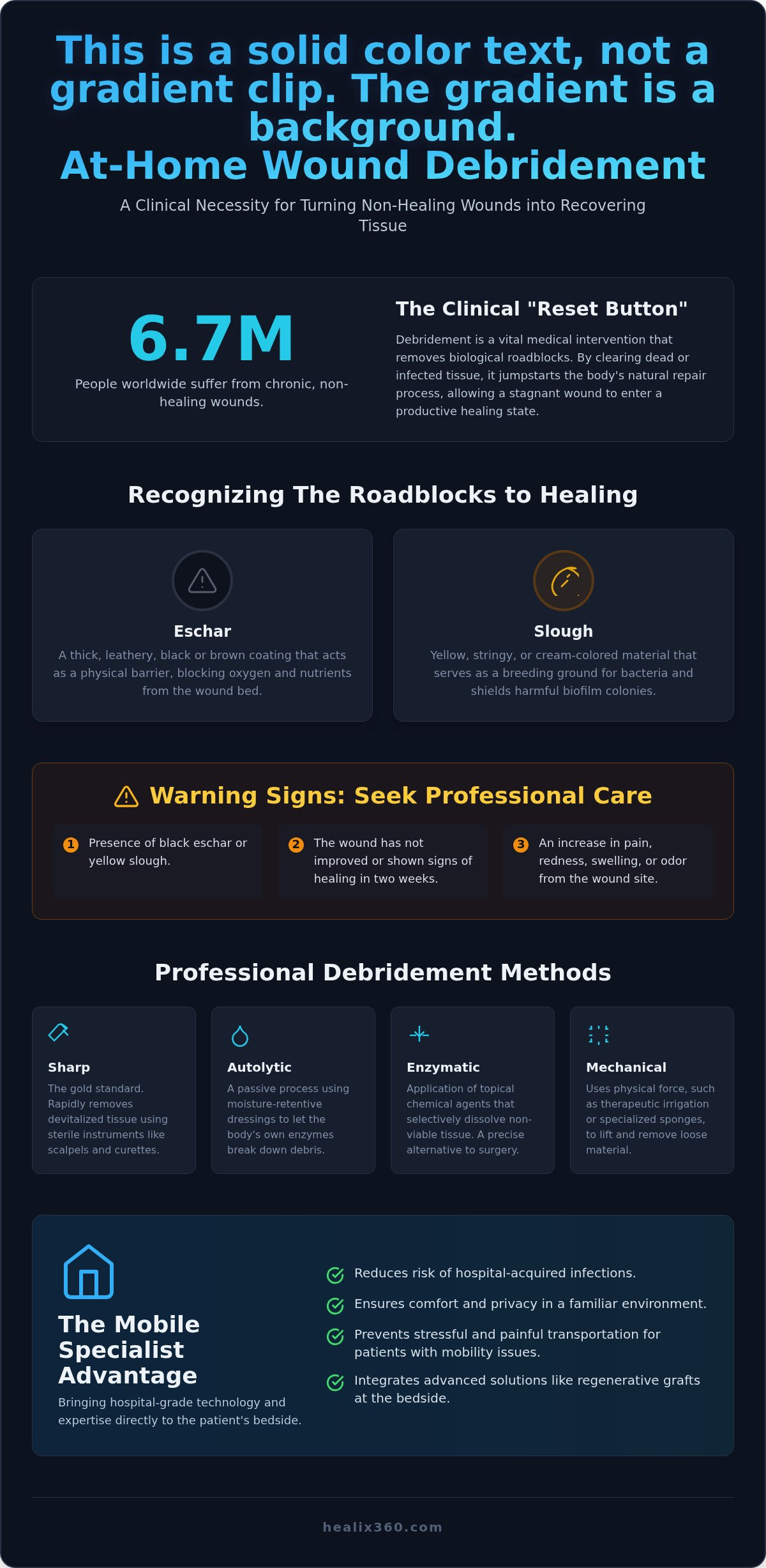
Professional wound debridement at home is more than a simple cleaning procedure; it's a vital clinical intervention. Debridement is the medical removal of dead, damaged, or infected tissue from a wound site. When a wound becomes chronic, it often gets stuck in the inflammatory phase of healing. This tissue acts as a biological roadblock, preventing the body's natural repair mechanisms from functioning. Specialists view debridement as a "reset button" that clears away these obstacles, allowing the wound bed to transition into a productive healing state.
Attempting to manage deep or complex wounds without professional oversight is dangerous. DIY debridement often leads to accidental trauma to healthy tissue or, more severely, the introduction of pathogens into the bloodstream. This can result in sepsis, a life-threatening systemic infection. Mobile specialists eliminate this risk by maintaining a strictly sterile field within a residential setting, using the same surgical standards found in outpatient clinics. They ensure the environment is controlled and the procedure is precise, which is essential for patients with compromised immune systems or limited mobility.
Why Necrotic Tissue Prevents Healing
Necrotic tissue typically presents in two forms: eschar and slough. Eschar is a thick, leathery, black or brown coating, while slough appears as yellow, stringy, or cream-colored material. Both substances act as physical barriers that block oxygen and nutrients from reaching the wound bed. They also serve as a breeding ground for bacteria. These pathogens often organize into a biofilm, which is a significant reason why many wounds fail to respond to standard antibiotics.
Biofilm is a protective layer for bacteria that requires physical removal. Without the mechanical intervention of debridement, these bacterial colonies remain shielded from the body's immune response and topical treatments. Removing this layer is the only way to reduce the bacterial load and allow new skin cells to migrate across the wound surface.
The Role of Mobile Wound Specialists
A mobile wound specialist brings a sophisticated suite of surgical instruments and diagnostic tools directly to the patient's bedside. This level of care is distinct from basic home health visits. While a home health nurse focuses on general monitoring and dressing changes, a wound specialist performs sharp debridement and advanced assessments. These providers often use curettes, scalpels, and specialized forceps to selectively remove non-viable tissue while preserving the healthy granular bed beneath.
Effective care requires seamless coordination. Specialists at Healix360 work in close partnership with existing home health agencies and primary care physicians in Glendale and Los Angeles. This collaborative approach ensures that the personalized treatment plan is followed consistently between visits. By bridging the gap between hospital discharge and long-term recovery, mobile specialists provide the clinical rigor necessary to prevent hospital readmissions and promote faster closure of complex injuries.
Understanding the Different Methods of Debridement
Selecting the appropriate method for wound debridement at home depends on the tissue characteristics and the patient's medical history. The NIH Wound Debridement Overview details how clinicians choose between various interventions to prepare the wound bed for closure. Specialists must determine if a wound requires immediate surgical clearing or a more conservative, long-term strategy to ensure safety and efficacy.
Sharp debridement is the most direct approach, using surgical instruments to excise necrotic tissue immediately. Autolytic debridement is a more passive process, utilizing moisture-retentive dressings to facilitate the body's own enzymatic breakdown of debris. Mechanical debridement uses physical force, such as irrigation or specialized sponges, to lift loose material. Enzymatic debridement involves applying topical chemical agents that selectively dissolve non-viable tissue, offering a precise alternative for sensitive patients or those with specific contraindications to surgery.
When Sharp Debridement is Necessary
Sharp debridement is vital when a wound is covered by "hard" eschar, a leathery layer that blocks other treatments from reaching the healthy tissue. This method is the preferred choice for infected wounds because it rapidly reduces the bacterial load and prevents the spread of pathogens. Specialists manage the clinical environment to ensure safety and comfort at the bedside. They utilize localized pain management techniques, such as topical anesthetics, to make these procedures manageable for the patient while maintaining surgical precision.
Combining Techniques for Optimal Results
Achieving total wound closure often requires a combination of these methods over several weeks. This "Debridement Loop" ensures that any new slough or biofilm is addressed promptly before it can stall the healing process. Specialists might perform a sharp debridement and then prescribe autolytic or enzymatic dressings to maintain the wound bed between visits. This integrated approach is especially effective for diabetic ulcer treatment, where healing is often complicated by poor circulation and high infection risks.
Mobile providers focus on delivering these complex therapies with the same precision found in a hospital setting. This ensures that every session of wound debridement at home is tailored to the patient's specific healing trajectory and comfort levels. If you are managing a complex injury that isn't showing signs of improvement, scheduling a professional evaluation is the first step toward a successful and sustainable recovery.
The Clinical Advantages of Mobile Wound Debridement in Southern California
Receiving professional wound debridement at home eliminates the clinical risks associated with traditional facility-based care. In densely populated areas like Glendale and Los Angeles, the logistical burden of transporting a patient with mobility issues can be overwhelming. Mobile wound care removes the physical and emotional stress of ambulance or medical van transport, which often causes unnecessary pain and exhaustion for the patient. By staying home, patients also significantly reduce their exposure to Hospital-Acquired Infections (HAIs) like MRSA or C. diff, which are prevalent in crowded inpatient settings.
A major clinical benefit of the mobile model is the ability for specialists to assess the patient's actual living environment. When a provider visits the home, they can identify environmental factors contributing to wound stagnation, such as improper seating surfaces or inadequate pressure redistribution. This real-world evaluation leads to more effective, personalized treatment plans that go beyond the wound bed itself. Specialists can offer immediate, practical advice on offloading and nutrition that is specific to the patient's daily routine, ensuring that the healing environment is optimized 24/7.
Preventing Complications and Amputations
Early debridement is a primary defense against limb-threatening infections. By removing devitalized tissue before it becomes a nidus for bacteria, specialists can prevent minor ulcers from escalating into systemic crises. Consistent wound debridement at home is directly correlated with lower hospital readmission rates, as it ensures the wound remains in a proliferative state. This proactive approach is particularly effective in bed sores ulcer management, where frequent, high-quality interventions are necessary to reverse deep tissue damage and prevent osteomyelitis.
Medicare and Insurance Coverage for At-Home Visits
Mobile wound care through Healix360 is a covered Medicare Part B benefit, making advanced clinical treatment accessible without the high costs of emergency room visits. Many families don't realize that the same surgical debridement and regenerative therapies provided in clinics are fully reimbursable in a residential setting. Healix360 manages the insurance billing process for consultations and procedures, ensuring that the focus remains on patient recovery. This model is exceptionally cost-effective; treating a wound at home prevents the massive financial burden of a serious infection requiring hospitalization, which can often cost tens of thousands of dollars.
When to Seek Professional In-Home Debridement: Warning Signs
Recognizing the clinical indicators that a wound has stalled is essential for timely intervention. Identifying when to request wound debridement at home can be the difference between a routine recovery and a systemic complication. While some level of drainage is expected, visual cues like the presence of black, leathery tissue or yellow, stringy material suggest that the wound bed is no longer capable of self-healing. A foul odor is another significant warning sign, often indicating a high bacterial load or deep-seated infection that requires immediate professional attention.
Stagnation is a primary reason for specialist referral. If a wound has not decreased in size or shown signs of new, pink granulation tissue for over two weeks, it is medically considered chronic. You should also monitor the perimeter of the wound for increased redness, warmth, or swelling. While pain is a common symptom, a sudden loss of sensation can be even more concerning. For patients with neuropathy, the absence of pain doesn't mean the wound is healing; it often masks the progression of deep tissue damage that only a specialist can identify through a bedside evaluation.
Identifying Necrotic Tissue at Home
It is vital to distinguish between a healthy scab and dangerous necrotic tissue. A scab is typically dry, thin, and eventually detaches as new skin forms underneath. In contrast, eschar is thick, leathery, and firmly adherent to the wound bed, acting as a cap that traps bacteria. Slough appears as a cream-colored or yellow film that cannot be simply washed away with standard saline; it requires mechanical or sharp removal to clear the path for cellular repair. Use this self-assessment guide to determine if your surgical wound care requires specialist intervention:
- The wound bed is covered in more than 25 percent yellow slough or black eschar.
- There is a persistent, unpleasant odor even after the wound is cleaned.
- The wound has shown zero measurable shrinkage over a 14-day period.
- You notice a significant increase in thick, cloudy, or discolored drainage.
Preparing for Your Mobile Specialist Visit
To ensure a thorough assessment, prepare a brief summary of the patient's medical history and a current list of all medications, including blood thinners. Clinical precision during wound debridement at home requires a well-lit and comfortable area where the specialist can easily access the wound site. During the initial bedside assessment, don't hesitate to ask about the expected healing timeline and the specific frequency of debridement sessions required for your condition. If you notice any of the warning signs mentioned above, contact our mobile wound specialists to schedule a professional evaluation and prevent further complications.
Advanced Regenerative Solutions: The Healix360 Mobile Approach
Healing a chronic wound requires more than just removing dead tissue. While wound debridement at home is the essential first step, advanced cases often need biological assistance to achieve full closure. Healix360 integrates skin substitute technology at the bedside, providing a sophisticated alternative to traditional dressings. These bio-engineered products act as a structural scaffold, encouraging the body's own cells to migrate and repair the injury. This transition from simple maintenance to active regeneration is what distinguishes our clinical model.
For patients with venous ulcers or complex pressure injuries, we utilize amniotic membrane grafts. These grafts are rich in growth factors and cytokines that suppress inflammation and accelerate the proliferative phase of healing. Additionally, our team manages Negative Pressure Wound Therapy (NPWT), commonly known as a Wound VAC, in a residential setting. This therapy uses sub-atmospheric pressure to remove excess fluid and promote the formation of healthy granulation tissue. It's a service once reserved for inpatient surgical wards that we now deliver in a home environment.
Regenerative Medicine at the Bedside
Bio-engineered grafts provide a biological scaffold that mimics the extracellular matrix, facilitating rapid tissue growth in stagnant wounds. This is especially beneficial for diabetic foot ulcers, where stem cell-derived therapies help overcome the cellular deficiencies caused by poor glucose control. These advanced modalities reduce the time to closure and help prevent the progression toward amputation. Healix360 brings these "hospital-only" therapies directly to Glendale homes, ensuring that patients receive the highest standard of regenerative care without the need for clinical transport.
The Healix360 Difference in Southern California
Our approach is built on clinical rigor and board-certified expertise. We understand that wound care isn't a one-time event but a longitudinal journey that requires constant monitoring and adjustment. By partnering with Southern California home health agencies, we provide 360-degree care that coordinates every aspect of the recovery process, from nutritional support to pressure relief. This collaboration ensures that the specialized wound debridement at home performed by our team is supported by consistent daily care.
To begin your path toward recovery, you can schedule a bedside evaluation today. Our specialists are ready to develop a personalized treatment plan that prioritizes your comfort, mobility, and long-term health in the Los Angeles area.
Transitioning Toward Effective Bedside Recovery
Achieving total wound closure requires a proactive clinical strategy that begins with the removal of devitalized tissue. Professional wound debridement at home serves as the critical foundation for this process, ensuring that chronic ulcers are cleared of biofilms and necrotic barriers that stall natural repair. By moving advanced care from the hospital to the residence, patients in Glendale, Los Angeles, and Beverly Hills can avoid the physical toll of medical transport while receiving hospital-grade interventions in a sterile, familiar environment.
Healix360 is a dedicated Medicare Part B provider specializing in these advanced mobile services. Our board-certified specialists bring more than just standard cleaning; they provide regenerative solutions like amniotic membrane grafts and bio-engineered skin substitutes directly to your bedside. This comprehensive approach minimizes the risk of hospital readmission and focuses on long-term limb preservation. Don't let a stagnant wound dictate your quality of life. Schedule a Professional Bedside Wound Assessment with Healix360 to begin your personalized healing journey today. With the right clinical oversight, faster recovery and reduced pain are within reach.
Frequently Asked Questions
Is wound debridement painful when done at home?
Bedside debridement is generally well-tolerated because specialists utilize localized pain management techniques like topical anesthetics. Since the procedure primarily targets necrotic tissue that lacks a nerve supply, many patients experience minimal sensation during the process. Our board-certified specialists prioritize patient comfort throughout the visit. We monitor response levels closely and adjust the technique as needed. This ensures the experience remains manageable while achieving necessary clinical outcomes.
How often does a wound need to be debrided?
The frequency of wound debridement at home is determined by the rate at which necrotic tissue or biofilm accumulates in the wound bed. Most chronic wounds require professional intervention on a weekly or bi-weekly basis to maintain a proliferative healing state. Your specialist will perform a bedside evaluation during each visit to assess if further removal of devitalized tissue is necessary. Consistent maintenance prevents the wound from becoming stagnant and helps accelerate the overall healing timeline.
Does Medicare Part B cover mobile wound debridement?
Yes, mobile wound debridement is a covered benefit under Medicare Part B when performed by a qualified specialist. As a Medicare-compliant provider, Healix360 handles the professional billing for bedside consultations and procedures directly. This coverage ensures that patients in Southern California can access advanced clinical care without high out-of-pocket costs. We coordinate with families and insurance providers to verify eligibility. This ensures essential treatments remain accessible in a residential setting.
Can a home health nurse perform sharp debridement?
Most home health nurses are limited to conservative wound care such as dressing changes and basic irrigation. Sharp debridement requires specialized surgical instruments and board certification that falls outside the standard scope of practice for general home health nursing. Healix360 specialists partner with your existing home health agency to provide this advanced level of care. This collaboration ensures the patient receives both daily maintenance and specialized surgical interventions in a seamless partnership.
What is the difference between slough and eschar?
Slough and eschar are both forms of necrotic tissue, but they differ in appearance and texture. Slough typically appears as yellow, tan, or cream-colored material that is often stringy or moist. Eschar is a thick, leathery, and dry layer that is usually black or dark brown. Both substances act as physical barriers to healing. They must be removed through professional wound debridement at home to allow new skin cells to migrate across the wound bed.
What happens if a wound is not debrided?
Leaving a wound un-debrided allows necrotic tissue to become a breeding ground for bacteria and biofilm. This significantly increases the risk of localized infection, which can quickly escalate into systemic sepsis or bone infections like osteomyelitis. Without the removal of these barriers, the wound remains in a chronic, non-healing state. This stagnation often leads to limb-threatening complications. These may eventually require surgical amputation or prolonged hospitalization to manage severe, deep-seated infections.
How long does a typical in-home debridement visit take?
A typical in-home debridement visit usually takes between 30 and 60 minutes. This timeframe includes the initial bedside assessment, the debridement procedure itself, and the application of advanced dressings or regenerative grafts. The exact duration depends on the complexity of the wound and the number of sites requiring treatment. Our specialists work efficiently to minimize disruption to the patient's daily routine. We ensure every clinical standard for a sterile and thorough procedure is met.
Are amniotic grafts available for home-based patients?
Yes, Healix360 brings advanced amniotic membrane grafts directly to patients in Southern California homes. These regenerative grafts were previously only available in specialized wound centers or hospitals. By applying these grafts at the bedside, we provide a biological scaffold that significantly accelerates the healing of chronic diabetic ulcers and pressure injuries. This service is part of our commitment to delivering the highest level of regenerative medicine to patients who face mobility challenges or prefer residential care.


