
For decades, the hospital-managed outpatient clinic was the undisputed gold standard for chronic ulcer treatment, but in 2026, the most effective recovery path might actually be your own living room. Many families struggle with the logistical burden of transporting patients to frequent appointments, which often leads to missed treatments and higher hospitalization rates for diabetic or pressure injuries. Deciding between a traditional wound care center vs mobile wound care requires understanding more than just location. It's about distinguishing between simple medical supply delivery and advanced clinical intervention that brings the specialist directly to the bedside.
You likely recognize that clinical consistency is the key to healing, yet the physical toll of travel often compromises that very goal. This article helps you navigate the complex landscape of specialized providers and explains why mobile services are currently redefining patient outcomes through advanced regenerative medicine. We'll examine how Southern California specialists navigate the 2026 CMS reimbursement shift of approximately $127 per square centimeter for skin substitutes while maintaining strict Medicare Part B compliance. We will also preview how bedside procedures like sharp debridement and amniotic membrane grafts are now accessible without the trauma of hospital transport, ensuring a faster, more professional path to recovery.
Key Takeaways
- Learn to distinguish between medical supply manufacturers and specialized clinical providers who deliver active bedside treatment.
- Compare the logistical and clinical advantages of a wound care center vs mobile wound care to minimize the physical toll of patient transport.
- Discover how regenerative medicine, including amniotic membrane grafts, is redefining recovery for diabetic and pressure ulcers within the home setting.
- Ensure financial and clinical compliance by verifying your provider's Medicare Part B status and their adherence to 2026 reimbursement standards.
- Assess the importance of board-certified expertise and localized geographic coverage when selecting a mobile specialist in the Southern California region.
Understanding the Landscape of Wound Care Companies
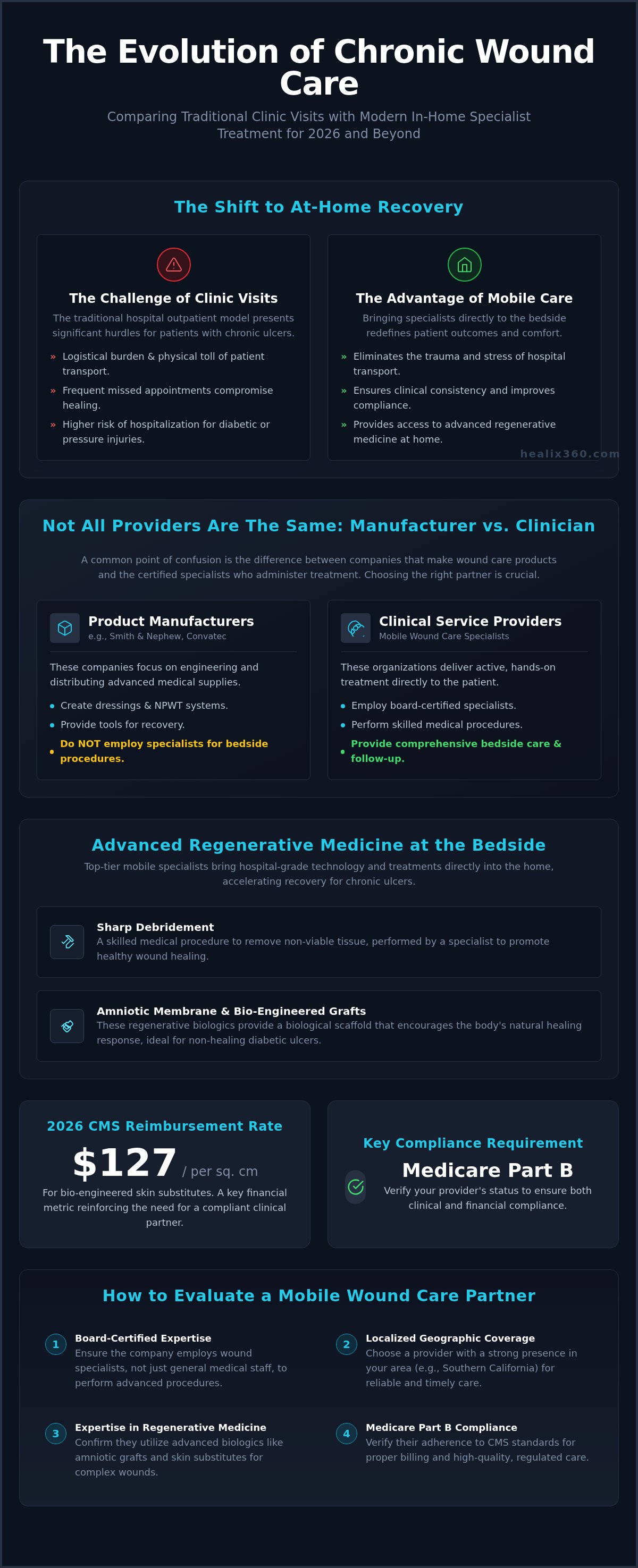
The distinction between a medical manufacturer and a clinical service provider is often blurred for patients and their families. Many recognizable medical device names, such as Smith & Nephew or Convatec, are frequently mistaken for treatment centers. In reality, these organizations focus on the engineering and distribution of advanced dressings and bio-engineered products. They don't employ the board-certified specialists who perform the bedside procedures necessary for long-term recovery.
Product Manufacturers vs. Clinical Service Providers
While industry leaders provide essential tools like negative pressure wound therapy (NPWT) systems, a high-quality dressing is only one component of a successful recovery. Clinical expertise is required to evaluate the wound healing process and determine when aggressive intervention is needed. For instance, sharp debridement and the application of amniotic membrane grafts are skilled medical acts that a product manufacturer cannot perform. Patients must look beyond the brand name on a box of gauze to find a clinical partner capable of delivering specialized bedside care.
The Rise of Specialized Mobile Wound Care
The healthcare environment in 2026 has shifted toward value-based outcomes, making the choice between a wound care center vs mobile wound care a pivotal decision. Traditional hospital clinics often face high overhead and scheduling bottlenecks. Mobile wound care companies have emerged as a vital bridge between hospital discharge and home recovery, especially for patients with mobility challenges. By bringing advanced regenerative medicine directly to the patient's residence, these providers significantly improve treatment compliance and patient comfort.
Southern California has become a hub for this modern delivery model. Local specialists in areas like Los Angeles and Glendale now utilize mobile consultations to treat chronic diabetic ulcers and pressure injuries. These services are often delivered by Medicare Part B providers who follow strict clinical protocols. This shift ensures that patients receive hospital-grade treatment, such as bio-engineered skin substitutes, without the logistical stress of clinic visits. The current 2026 CMS reimbursement rate of approximately $127 per square centimeter for skin substitutes highlights the complexity of the field, reinforcing the need for a partner who understands both clinical excellence and administrative compliance.
Key Features of Top-Tier Wound Care Service Companies
Top-tier wound care companies distinguish themselves by moving beyond basic dressing changes to provide highly specialized clinical interventions. While Wound care centers offer essential outpatient services, the choice between a wound care center vs mobile wound care often depends on the level of advanced technology available at the bedside. Leading providers today integrate comprehensive diagnostic capabilities, such as wound culture and sensitivity testing, directly into the home or facility. These bedside assessments allow for immediate adjustments to treatment plans, which is vital for managing chronic ulcers before complications arise.
Regenerative Medicine and Advanced Biologics
The use of advanced biologics represents a significant advancement in chronic wound management. Amniotic membrane grafts and bio-engineered skin substitutes are no longer reserved for hospital settings. These regenerative treatments provide a biological scaffold that encourages the body's natural healing response, particularly in non-healing diabetic ulcers. Since January 1, 2026, the CMS reimbursement rate for skin substitutes has stabilized at approximately $127 per square centimeter. This financial landscape makes it crucial to partner with a specialist who understands the clinical application of these high-value grafts. Stem cell therapy is also transforming the prognosis for venous and arterial ulcers by addressing the cellular deficiencies that often stall recovery.
Clinical Expertise and Specialized Certification
A clinical provider's qualifications are as important as the technology they use. Patients should prioritize companies that employ board-certified wound specialists rather than general medical staff. These experts possess the specific training required to perform bedside sharp debridement and complex assessments that a generalist might overlook. Specialized management reduces the risk of infection and significantly lowers amputation rates for high-risk patients. It's the difference between simple maintenance and an active pursuit of closure.
Effective recovery also requires seamless coordination with existing care teams. Top providers act as clinical consultants for home health agencies, case managers, and skilled nursing facilities. This collaborative approach ensures that personalized treatment plans are followed correctly between specialist visits. If you are seeking professional intervention for a chronic condition, consider an advanced mobile wound care specialist to bridge the gap in clinical care. By focusing on evidence-based protocols and specialized certification, these companies ensure that patients receive hospital-grade outcomes in the comfort of their own environment.
Comparing Wound Care Delivery Models: Centers vs. Mobile
Choosing between a wound care center vs mobile wound care involves weighing clinical necessity against the physical and emotional toll on the patient. A traditional Wound care center provides a centralized location for diverse medical resources. These facilities are often integrated into larger hospital systems and offer a wide range of diagnostic tools. However, the requirement for frequent travel can undermine recovery for patients with chronic ulcers or limited mobility. The logistical burden often leads to missed appointments, which directly correlates with higher hospitalization rates.
Virtual wound care has gained traction in 2026 due to new CPT codes for remote patient monitoring and AI-supported assessments. While these technology-only solutions are useful for visual tracking, they fall short when physical intervention is required. A specialist cannot perform sharp debridement or apply bio-engineered skin substitutes through a screen. For this reason, mobile bedside care remains the gold standard for elderly and immobile populations, combining the convenience of technology with hands-on clinical expertise.
Traditional Clinics vs. Mobile Bedside Services
Transporting a patient with advanced pressure ulcers is a complex logistical challenge. It often requires specialized medical transport and the assistance of multiple caregivers. The physical stress of the journey can exacerbate the wound site and increase patient discomfort. Beyond logistics, clinic environments present a higher risk of exposure to healthcare-associated infections compared to the controlled environment of a patient's own home or assisted living facility.
Treating patients in their natural living environment allows the specialist to observe environmental factors that contribute to non-healing wounds, such as seating surfaces, bedding, or nutritional habits. This holistic view leads to more accurate, personalized treatment plans. In Southern California, this model has proven highly cost-effective by preventing the complications that lead to emergency room visits and inpatient admissions.
Technology-Enabled Care Coordination
Modern mobile providers utilize advanced data tracking to monitor wound progression with high precision. By documenting surface area changes and tissue health through 2026-standard multispectral imaging, clinicians provide real-time updates to the patient's entire medical team. This coordination is essential when working alongside home health agencies or case managers to ensure clinical protocols are followed between specialist visits.
Negative Pressure Wound Therapy is a critical tool for mobile providers that utilizes a vacuum dressing to promote healing by removing excess fluid and stimulating the growth of healthy granulation tissue.
This integration of technology and physical care ensures that mobile specialists deliver the same clinical rigor found in a traditional hospital setting. By utilizing Medicare Part B compliant protocols, specialized mobile services in 2026 are bridging the gap between patient convenience and advanced regenerative medicine.
How to Evaluate a Wound Care Partner in Southern California
Evaluating a clinical partner requires a thorough assessment of their specialized capabilities and administrative standing. In the complex landscape of wound care center vs mobile wound care, the most critical factor is often the provider's ability to deliver hospital-grade interventions at the bedside. You should prioritize specialists who offer a comprehensive suite of procedures, including sharp debridement, Negative Pressure Wound Therapy (NPWT), and the application of bio-engineered skin substitutes. A partner's clinical depth determines whether a chronic ulcer heals or progresses toward a more serious complication.
Navigating Insurance and Medicare in 2026
Financial compliance is just as vital as clinical expertise. In 2026, Medicare Part B continues to cover mobile medical consultations when they're performed by qualified specialists. This coverage is essential for patients who require high-value regenerative medicine, such as amniotic membrane grafts. Because the CMS reimbursement rate for skin substitutes is approximately $127 per square centimeter, your provider must possess sophisticated billing expertise to ensure these treatments remain accessible. Top-tier companies handle the prior authorization process and ensure all documentation meets the latest regulatory standards, removing the administrative burden from the patient and their family.
Local Access and Continuity of Care
When weighing the benefits of a wound care center vs mobile wound care for a patient in L.A. County, geographic proximity and response times are essential. When searching for a provider in Los Angeles, Glendale, or Beverly Hills, verify their ability to provide rapid bedside assessments. A local specialist who understands the Southern California healthcare ecosystem can coordinate more effectively with your existing primary care team. This local presence is a cornerstone in preventing hospital readmissions by identifying infection risks early.
Continuity of care is particularly important during the transition from hospital discharge to home recovery. Your chosen partner should facilitate a seamless handoff from the hospital referral source to the home setting. This ensures that personalized treatment plans aren't interrupted, which is the leading cause of stalled healing. If you're ready to secure a higher standard of clinical intervention, you should contact a Medicare-compliant wound specialist to begin your bedside evaluation. By focusing on these core criteria, you ensure your recovery is managed by an authoritative expert dedicated to patient convenience and clinical excellence.
Healix360: Leading the Next Generation of Mobile Wound Care
Healix360 represents the clinical evolution of wound management by eliminating the physical barriers to specialized recovery. While the debate between a wound care center vs mobile wound care often focuses on convenience, our mission is centered on clinical outcomes. We provide board-certified expertise and advanced regenerative medicine directly in the patient's home, assisted living facility, or skilled nursing center. This model ensures that high-risk patients in Southern California receive consistent, hospital-grade care without the trauma of frequent transport.
Our clinicians specialize in the management of chronic and non-healing wounds, specifically diabetic ulcers and pressure injuries. By delivering personalized treatment plans at the bedside, we reduce the risk of infection and the likelihood of hospitalization. We act as a dedicated clinical partner for home health agencies and case managers, providing the specialized oversight required for complex cases that exceed the scope of general nursing.
Advanced Bedside Procedures in SoCal
The technical capabilities of Healix360 include the application of amniotic membrane grafts and bio-engineered skin substitutes within the home environment. These regenerative biologics provide the necessary scaffold for cellular growth in wounds that have stalled in the inflammatory phase. Our specialists are also trained in sharp debridement, a critical procedure for removing necrotic tissue and biofilm to promote healthy granulation.
Post-operative recovery also requires precise management to prevent dehiscence or infection. We provide advanced surgical wound care for patients transitioning from a hospital setting to home-based recovery. This specialized focus ensures that surgical sites are monitored with clinical rigor, significantly improving the timeline for total wound closure.
Partnering for Better Patient Outcomes
Healix360 is a Medicare Part B provider, ensuring that our services are accessible and compliant with current 2026 reimbursement standards. We support assisted living and skilled nursing facilities by providing on-site wound evaluations and assessments that help facilities maintain high standards of care. When comparing the efficacy of a wound care center vs mobile wound care for elderly populations, the ability to maintain clinical consistency in a low-stress environment is often the deciding factor in successful closure.
Every patient receives a personalized treatment plan designed to prevent amputation and promote long-term stability. Our focus on evidence-based protocols ensures that we address the root causes of non-healing wounds, from venous insufficiency to arterial complications. If you or a loved one requires specialized intervention, you can contact our advanced wound care specialists for a comprehensive bedside evaluation. We are committed to redefining the standard of care in Southern California through clinical excellence and patient-centered delivery.
Securing Specialized Care for Long-Term Recovery
Choosing the right clinical partner is a decision that directly impacts both healing timelines and overall quality of life. The healthcare landscape of 2026 has clearly shifted toward patient-centered delivery, emphasizing the need for specialized intervention over simple supply management. When weighing the benefits of a wound care center vs mobile wound care, the primary considerations should be clinical consistency and the availability of advanced regenerative medicine. Mobile specialists now provide the same rigor as hospital clinics without the logistical burden of travel.
Healix360 is a dedicated Medicare Part B Provider specializing in regenerative medicine, including amniotic membrane grafts and bio-engineered skin substitutes. By serving the Los Angeles and Glendale areas, we ensure that patients with chronic ulcers receive board-certified attention in the comfort of their own environment. This approach reduces the risk of infection and prevents the complications that lead to hospitalization. You don't have to manage a non-healing wound alone. You are invited to Schedule a Bedside Wound Evaluation with Healix360 Today to begin your personalized path toward recovery. Reclaiming your health starts with choosing a provider that prioritizes your convenience and clinical success.
Frequently Asked Questions
What is the difference between a wound care product company and a service company?
A wound care product company focuses on manufacturing and distributing medical supplies like specialized dressings or NPWT devices. In contrast, a clinical service provider like Healix360 employs board-certified specialists who perform medical procedures. While manufacturers provide the tools, service companies provide the expertise required for sharp debridement and graft application. Choosing a service provider ensures that a qualified clinician is actively managing the recovery process rather than just supplying bandages.
Does Medicare cover at-home wound treatment from specialized companies?
Medicare Part B provides coverage for professional medical consultations and specialized procedures performed at a patient's residence. This includes mobile visits to private homes, assisted living facilities, and skilled nursing centers in Southern California. To ensure reimbursement, the provider must be a registered Medicare Part B participant. This coverage allows patients to receive advanced regenerative treatments without the out-of-pocket burden associated with non-compliant providers or supply-only companies.
How do I know if a wound care company is qualified to perform debridement?
You should verify that the clinician is a board-certified wound specialist with the appropriate medical licensure to perform surgical acts. Sharp debridement requires a high level of clinical precision to remove necrotic tissue while preserving healthy skin. Qualified companies will provide documentation of their specialists' credentials and experience. It's essential to ask about their specific protocols for managing complications and their track record in treating complex diabetic or pressure injuries.
What are the advantages of mobile wound care over a traditional clinic?
When comparing a wound care center vs mobile wound care, the primary advantage is the elimination of patient transport. Mobile services reduce the physical stress on patients with mobility issues and lower the risk of exposure to clinic-based infections. Additionally, specialists can assess the patient's natural environment to identify factors that hinder healing. This model encourages better treatment compliance and allows for more personalized, hands-on care in a comfortable, low-stress setting.
Can mobile wound care companies treat diabetic foot ulcers with skin substitutes?
Mobile wound care specialists are fully equipped to treat diabetic foot ulcers using bio-engineered skin substitutes and amniotic membrane grafts at the patient's bedside. These advanced biologics act as a scaffold to stimulate cellular repair in chronic wounds. In 2026, these procedures are standard for mobile providers who focus on limb salvage and infection prevention. This bedside approach ensures that high-risk diabetic patients receive aggressive intervention without the logistical hurdles of clinic visits.
How do I refer a patient to a mobile wound care specialist in Los Angeles?
Referring a patient to a mobile specialist in Los Angeles or Glendale involves a direct clinical intake process. Healthcare facilities, home health agencies, and families can contact Healix360 to schedule a bedside evaluation. The specialist will coordinate with existing primary care physicians and hospital referral sources to ensure a seamless transition of care. This collaborative approach ensures that the patient's personalized treatment plan is implemented quickly to prevent further complications or hospital readmissions.
What happens if a wound care company doesn’t accept Medicare Part B?
If a provider doesn't accept Medicare Part B, the patient may be responsible for the full cost of professional consultations and high-value procedures. This is particularly significant for advanced treatments like regenerative grafts, which involve substantial medical decision-making and specialized products. Medicare Part B compliance is a hallmark of a reputable service provider. It ensures that the clinical care meets federal standards and that the financial burden on the family is minimized through proper reimbursement.
Are amniotic grafts considered a standard treatment for non-healing wounds in 2026?
Amniotic membrane grafts are recognized as a standard regenerative treatment for non-healing chronic wounds in 2026. These grafts provide essential growth factors and a biological matrix that facilitates tissue repair in stalled ulcers. They are frequently used for diabetic, venous, and pressure injuries that haven't responded to traditional therapy. Mobile specialists routinely apply these allografts during bedside visits, providing hospital-grade technology to patients who cannot easily access a traditional outpatient facility.


