
You notice a dark, leathery patch on your loved one’s heel or lower back and wonder if it's a protective scab or a sign of something far more serious. It's common to feel overwhelmed when a wound turns black, especially when the physical difficulty of transporting an immobile patient makes a traditional clinic visit feel impossible. You're right to be concerned, as this tough tissue, known as eschar, acts as a biological mask that conceals the true depth of the injury from view.
Understanding the necessity of specialized unstageable pressure ulcer treatment is the first step in preventing life-threatening complications like sepsis or systemic infection. While the black surface may look stable, it often hides underlying decay that requires professional intervention to heal. This guide will help you identify necrotic eschar, explain the clinical "unstageable" classification, and show how advanced mobile wound care can manage these risks. We'll also preview how Southern California residents can access board-certified specialists for bedside debridement and regenerative therapies without leaving their homes. By the end of this article, you'll have a clear path toward unmasking the wound and starting the recovery process safely.
Key Takeaways
- Distinguish between superficial scabs and necrotic eschar by identifying key clinical features like leathery texture and dark coloration.
- Understand the "unstageable" classification and why devitalized tissue must be removed to accurately assess the severity of a pressure injury.
- Learn why professional sharp debridement is considered the clinical gold standard for unstageable pressure ulcer treatment to initiate the healing process.
- Discover the advantages of mobile wound care services that bring board-certified specialists and advanced regenerative therapies directly to the patient's bedside.
- Recognize how Medicare Part B coverage facilitates access to specialized in-home treatments, eliminating the logistical burden of transporting immobile patients.
What is Eschar? Defining Necrotic Tissue in Chronic Wounds
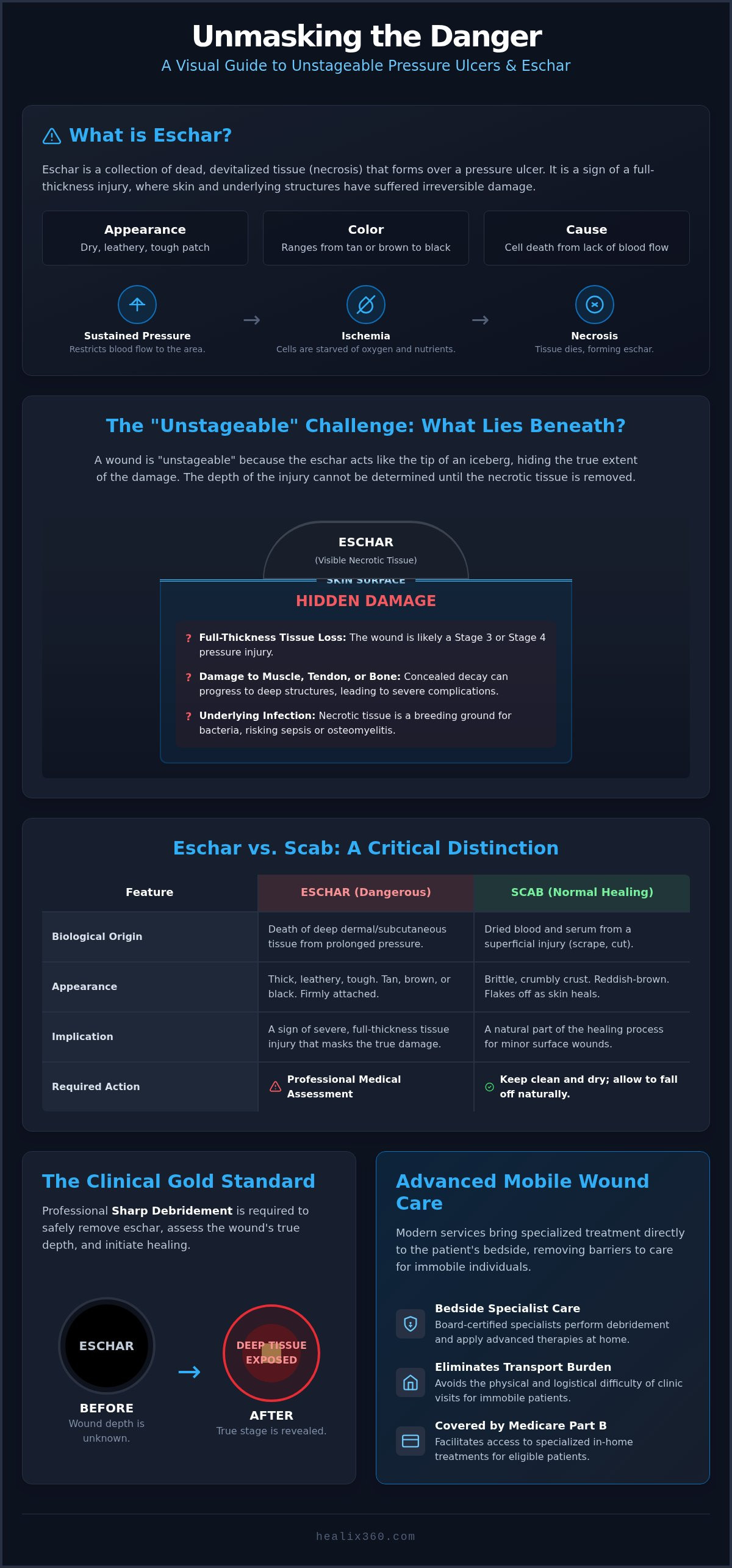
Eschar refers to a collection of devitalized, necrotic tissue that has lost its blood supply and subsequently died. In the context of a chronic pressure ulcer, eschar represents a full-thickness injury where the skin and underlying structures have suffered irreversible damage. This tissue typically presents as a dry, leathery covering that can range in color from tan or brown to deep black. The formation of this necrotic cap is the direct result of prolonged ischemia. When sustained pressure restricts blood flow to a specific area, the cells are starved of oxygen and nutrients. The cells simply starve. This biological failure is a hallmark of advanced pressure injuries and arterial ulcers, signaling that the damage has progressed beyond the superficial layers of the skin.
Identifying this tissue is the critical first step in determining the appropriate unstageable pressure ulcer treatment. Because the eschar completely obscures the wound bed, clinicians cannot see how deep the damage goes. This is why these injuries are classified as unstageable. The presence of necrotic tissue acts as a biological mask, hiding potential damage to muscle, tendon, or bone. Professional assessment is required to determine if the tissue is stable or if it requires immediate intervention to prevent systemic complications.
Visual Characteristics: Is it Eschar or Slough?
It's vital to distinguish eschar from other types of necrotic material, such as slough. While slough is typically moist, stringy, and yellow or cream-colored, eschar is firm and desiccated. When assessing the wound, specialists look for erythema or induration around the edges. These signs of redness and firmness often indicate that the body is attempting to wall off the necrotic area or that an underlying infection is present. The specific color of the tissue provides clues about the severity of the vascular compromise. Darker, blacker tissue often suggests deeper, more extensive necrosis compared to lighter tan patches, reflecting a total absence of perfusion in the affected zone.
The Biological Difference Between Eschar and Scabs
Caregivers often mistake eschar for a common scab, but the biological origins are entirely different. A scab is a superficial crust formed by dried blood and serum following a minor injury to the top layers of the skin. In contrast, eschar involves the death of deep dermal or subcutaneous tissue. It's a sign of significant trauma rather than a routine part of surface healing. Mistaking thick, necrotic eschar for a harmless scab often leads to a dangerous delay in seeking professional unstageable pressure ulcer treatment, allowing underlying infections to progress toward the bone or bloodstream.
The Unstageable Pressure Ulcer Treatment Challenge
The classification of a wound as "unstageable" is a specific clinical designation used by the National Pressure Injury Advisory Panel (NPIAP) and Medicare. It indicates that the full extent of tissue damage cannot be determined because the wound bed is obscured by slough or eschar. This creates a significant hurdle for effective unstageable pressure ulcer treatment, as the underlying severity remains unknown. Until the necrotic tissue is removed, the wound is technically an unknown quantity. Clinicians cannot assign a stage (1 through 4) because the base of the wound is not visible.
The physical barrier created by eschar often hides Stage 4 injuries. These are the most severe forms of pressure injuries, involving damage to muscle, tendon, or bone. Without a specialist's assessment, caregivers might assume the wound is stable when it's actually deteriorating beneath the surface. Professional evaluation is the only way to unmask the true depth of the injury and prevent complications like osteomyelitis. For a deeper look at how these wounds are categorized, refer to our comprehensive guide to bed sores ulcer treatment in Southern California 2026.
Ischemia and the Role of Poor Circulation
Ischemia, or a lack of blood supply, is the primary driver behind tissue necrosis. Arterial insufficiency often complicates the healing process, as the body cannot deliver the necessary oxygen to repair the damaged site. This is particularly prevalent in diabetic patients, where peripheral neuropathy may mask the pain of a developing injury. In these cases, the body may produce a dry, stable eschar as a result of poor perfusion. Understanding the complexities of bedsore diagnosis and treatment is essential for managing these high-risk scenarios, as poor circulation can turn a minor pressure point into a chronic, non-healing wound.
Stable vs. Unstable Eschar: When to Leave it Alone
Not all necrotic tissue requires immediate removal. Clinical guidelines identify a specific exception known as Stable Heel Eschar. When eschar on the heel is dry, intact, and shows no signs of redness or fluctuance, it serves as a natural, protective cover. In this specific anatomical location, keeping the eschar in place may be safer than debridement if the blood supply is significantly compromised. It acts as a biological dressing while the body attempts to heal underneath.
However, signs of unstable eschar require urgent attention. If the tissue feels "boggy" or soft to the touch, or if you notice a foul odor or purulent drainage, the wound is likely infected. Leaving unstable necrotic tissue untreated creates a reservoir for bacteria, which can lead to systemic infection or sepsis. If you're unsure about the stability of a wound, consulting with mobile wound care specialists can provide a definitive diagnosis at the patient's bedside. Professional intervention ensures that the appropriate unstageable pressure ulcer treatment is initiated before the condition worsens.
Eschar vs. Scabs: A Comparison for Patients and Caregivers
Distinguishing between a standard scab and necrotic eschar is a common challenge for those managing care at home. While they may appear similar at a glance, their biological origins couldn't be more different. A scab forms from the superficial collection of dried blood and serum following a minor skin injury. It sits on the surface and eventually flakes off as the skin underneath repairs itself. Eschar, however, is the result of deep tissue necrosis. It's not a sign of healing. It's a sign of localized tissue death. This leathery, often dark material is tightly integrated into the wound base, making it a primary focus of unstageable pressure ulcer treatment.
The textures also vary significantly. Scabs are typically thin, brittle, and crusty. Eschar is thick, dense, and has a leathery quality that doesn't easily soften. Because eschar is anchored to the deeper layers of the body, it won't simply fall off on its own. Instead, it forms a cap that traps bacteria and moisture underneath, creating a high risk for infection. While a scab is a protective barrier for a healthy wound, eschar is a barrier to healing that must be managed by a professional. It's an obstacle that prevents the body from closing the injury.
Warning Signs: When Eschar Becomes an Emergency
It's vital to monitor the area for signs that the necrotic tissue is becoming unstable. One of the most concerning symptoms is fluctuance, which is a spongy or liquid sensation when pressure is applied to the eschar. This often indicates that pus or fluid has collected beneath the cap. If the patient develops systemic symptoms like a high fever, sudden confusion, or an increased heart rate, the situation has moved beyond routine care. You should never attempt to pick at or remove the tissue yourself. Disturbing the eschar without sterile tools and clinical expertise can push bacteria deeper into the body, potentially causing osteomyelitis, a dangerous bone infection.
The Role of Wound Culture and Sensitivity
When a specialist arrives for a bedside evaluation, they often perform wound culture and sensitivity testing. This diagnostic step is essential because the space beneath the necrotic tissue is an ideal breeding ground for anaerobic bacteria. By identifying the specific pathogens present, clinicians can move beyond broad-spectrum approaches and implement targeted unstageable pressure ulcer treatment. This precision medicine ensures that any prescribed antibiotics are actually effective against the specific strain of bacteria involved. Effective Pressure Ulcer Management relies on these data-driven insights to clear the infection before proceeding with advanced healing therapies like grafts or negative pressure wound therapy.
Professional Debridement: Safe Management of Necrotic Tissue
The primary objective of professional debridement is to transform a chronic, stagnant wound into an acute healing environment. Necrotic tissue, like the leathery eschar discussed earlier, keeps the wound in a state of chronic inflammation. By removing this devitalized material, specialists "reset" the healing clock. This allows the body’s natural repair mechanisms and advanced therapies to reach the viable tissue underneath. Effective unstageable pressure ulcer treatment relies on this selective clearing to reveal the true wound base and initiate the growth of new, healthy granulation tissue.
Sharp debridement remains the clinical gold standard for the rapid removal of thick, leathery eschar. It provides the most immediate results, allowing for instant staging and assessment of the injury. For patients with high surgical risk or those who can't tolerate sharp procedures, autolytic and enzymatic options offer a gentler, though slower, alternative. Once the necrotic tissue is cleared, managing wound bed moisture becomes the next priority. A balanced environment prevents the remaining tissue from drying out while ensuring excess fluid doesn't cause skin maceration. Maintaining this equilibrium is vital for preventing the wound from regressing back into a necrotic state.
Mobile Sharp Debridement: Specialist Care at the Bedside
Board-certified specialists perform sharp debridement using sterile instruments, such as scalpels or curettes, to selectively remove dead tissue without damaging healthy structures. At Healix360, we bring this surgical precision directly to the patient's residence. Our mobile protocols mirror hospital safety standards, utilizing sterile fields and specialized lighting to ensure a controlled environment in homes or assisted living facilities. This bedside approach significantly reduces the need for difficult hospital transfers and prevents the risks associated with inpatient surgical procedures. If you are managing a non-healing wound, you can request a bedside wound evaluation from our specialized team to start the recovery process.
Enzymatic Debridement and Specialized Dressings
Enzymatic debridement involves the application of topical agents that chemically break down the collagen bonds holding necrotic tissue to the wound bed. Specialists often prescribe collagenase-based ointments for patients who require a non-invasive approach or have compromised blood flow that makes sharp debridement risky. This method works over several days or weeks to liquefy the eschar. During this process, protecting the periwound skin is essential. We use barrier creams and specialized dressings to ensure the enzymes only target the dead tissue, preventing irritation of the healthy skin surrounding the ulcer. Combining these agents with the right moisture-retentive dressings creates the ideal conditions for unstageable pressure ulcer treatment to succeed in a home-based setting.
Advanced Mobile Wound Care: Healing Unstageable Wounds at Home
For patients in Glendale and Los Angeles, the traditional path to wound recovery often involves exhausting trips to hospital based clinics. These transfers are particularly difficult for individuals with limited mobility, often causing physical pain and increasing the risk of secondary injuries. Healix360 addresses these challenges by delivering specialized unstageable pressure ulcer treatment directly to the patient's residence. By bringing board certified specialists to the bedside, we eliminate the logistical burden on families while ensuring that critical necrotic tissue is managed with the same clinical rigor found in a surgical center. This model is specifically designed to prevent hospital readmissions by providing early, aggressive intervention before complications like sepsis can develop.
Accessing this level of care is facilitated through our status as a Medicare Part B provider. Many families aren't aware that in home specialist consultations and procedures are covered under these benefits. The 2026 Noridian LCD revisions have actually expanded the list of ICD-10 codes that qualify for medical necessity, making it easier for patients with chronic wounds to receive mobile debridement and assessment. We work in close coordination with home health agencies and primary care physicians to ensure a seamless transition of care, providing the specialized expertise that generalist providers may not have the tools to manage.
Regenerative Medicine: Amniotic Grafts After Debridement
Once the necrotic eschar is successfully removed, the wound bed is often deep and vulnerable. This is where regenerative medicine becomes a critical component of the recovery plan. We utilize bio engineered skin substitutes and amniotic membrane grafts to provide a biological scaffold that encourages new tissue growth. These advanced grafts contain essential growth factors that accelerate the healing of the exposed wound bed. You can learn more about these options in our guide to advanced skin substitute treatments in Southern California, which details how we transition from debridement to active wound closure.
Scheduling a Bedside Evaluation with Healix360
Starting the process is straightforward for residents in Beverly Hills, Glendale, or the greater Los Angeles area. During the initial bedside assessment, our specialists perform a comprehensive evaluation of the unstageable wound, looking for signs of underlying infection and assessing the stability of the necrotic tissue. We develop a personalized treatment plan that may include sharp debridement, wound cultures, or advanced dressings, all performed at your location. For more information on our service areas and how we partner with local healthcare providers, see our guide on expert mobile wound care in Los Angeles & Glendale. Professional unstageable pressure ulcer treatment doesn't have to be a logistical nightmare; it's a specialized service that we bring to you.
Take the First Step Toward Wound Recovery at Home
Managing a wound covered in dark, leathery eschar requires more than just standard dressing changes. It demands a clinical approach that addresses the underlying tissue death and unmasks the true depth of the injury. By understanding that eschar is a barrier rather than a protective scab, you can make informed decisions about seeking professional unstageable pressure ulcer treatment. Early intervention through debridement and regenerative medicine is essential for preventing systemic infection and promoting long term healing.
Healix360 simplifies this process by bringing hospital grade care directly to your bedside. As a Medicare Part B provider, our team of board-certified wound specialists offers mobile sharp debridement and regenerative grafts throughout Southern California. We focus on patient convenience and clinical excellence to ensure your loved one receives the highest standard of care without the stress of clinic transport. Schedule a mobile wound assessment with a Healix360 specialist today to begin a personalized path toward healing. You don't have to manage this complex condition alone.
Frequently Asked Questions
Is eschar a good sign of healing in a pressure ulcer?
No, eschar is not a sign of healing; it's a collection of necrotic tissue that indicates a full-thickness injury. While a common scab signifies the body is repairing a superficial wound, eschar suggests that the blood supply has been severely compromised. It acts as a biological mask that prevents clinicians from assessing the wound's true depth. Professional unstageable pressure ulcer treatment is required to remove this barrier and initiate the recovery process.
What happens if eschar is not removed from an unstageable wound?
If unstable eschar remains on a wound, it can trap bacteria and moisture, creating a high risk for systemic infection or sepsis. This necrotic cap prevents the application of healing therapies and obscures underlying damage to muscle or bone. Without removal, the wound remains in a chronic inflammatory state, which can lead to progressive tissue decay. Timely debridement is essential to unmask the wound bed and prevent life-threatening complications.
Can I remove eschar at home with over-the-counter products?
You should never attempt to remove eschar at home with over-the-counter products or manual "picking." Removing necrotic tissue requires sterile instruments and specialized clinical expertise to avoid damaging healthy structures. Home attempts often introduce new bacteria or cause uncontrolled bleeding, potentially leading to a bone infection known as osteomyelitis. Safe unstageable pressure ulcer treatment must be performed by board-certified specialists in a controlled, sterile environment to ensure patient safety.
Does Medicare cover mobile wound debridement services in California?
Yes, Medicare Part B typically covers mobile wound debridement services for patients in California who meet medical necessity requirements. Healix360 is a Medicare-compliant provider that performs these procedures at the patient's location, whether in a private home or assisted living facility. Recent 2026 Noridian LCD revisions have expanded the specific ICD-10 codes eligible for coverage, facilitating easier access to specialized bedside care and regenerative therapies without the need for hospital transport.
How long does it take for a wound to heal after eschar removal?
Healing times vary significantly based on the patient's overall health, nutritional status, and the depth of the underlying injury. Once the eschar is removed, the wound is "staged," and a personalized plan is developed. For some, granulation tissue may appear within weeks; however, full closure of a deep Stage 4 ulcer can take several months. Utilizing advanced therapies like amniotic membrane grafts or negative pressure wound therapy can often accelerate this biological repair process.
Can eschar lead to gangrene or amputation if left untreated?
Yes, untreated necrotic tissue can progress to gangrene if the underlying ischemia is not addressed or if a severe infection develops. When bacteria proliferate under the eschar, they can cause widespread tissue death that eventually necessitates surgical amputation to save the patient's life. This risk is particularly high for diabetic patients with peripheral arterial disease. Early specialist intervention and bedside debridement are critical strategies for limb salvage and infection control.
What is the difference between slough and eschar?
The primary difference lies in texture and moisture content. Slough is typically moist, stringy, and yellow, tan, or green in color, consisting of inflammatory byproducts and dead white blood cells. Eschar is dry, thick, and leathery, often appearing dark brown or black. Both are forms of necrotic tissue that must be managed, but they require different debridement techniques. A specialist assessment is necessary to identify which tissue type is present and determine the best removal method.
How do I know if the black tissue on a heel should be removed?
Determining if black tissue on the heel requires removal depends on its stability. Clinical guidelines suggest that dry, intact, and stable eschar on the heel should often be left alone to act as a natural protective cover, especially if blood flow is poor. However, if you notice redness, swelling, foul odor, or a "boggy" texture, the tissue is likely infected and must be removed. A mobile wound specialist can provide a definitive bedside evaluation to ensure safety.


